In 2025, expectations for workplace cleanliness are at an all-time high. Businesses face new challenges as cleaning office buildings directly impacts employee health, productivity, and company reputation.
This complete guide equips you with everything you need to succeed in cleaning office buildings, from essential practices and cutting-edge technology to compliance with evolving standards and sustainable solutions.
Discover step-by-step processes, the latest equipment, eco-friendly methods, and expert strategies to keep your office spotless and compliant. Ready to meet the demands of modern workplaces? Dive in and transform your approach with practical guidance for the year ahead.
The Importance of Office Cleaning in 2025
Maintaining high standards for cleaning office buildings is more crucial than ever in 2025. As workspaces evolve, expectations for cleanliness continue to rise, impacting every aspect of commercial operations.
Evolving Workplace Expectations
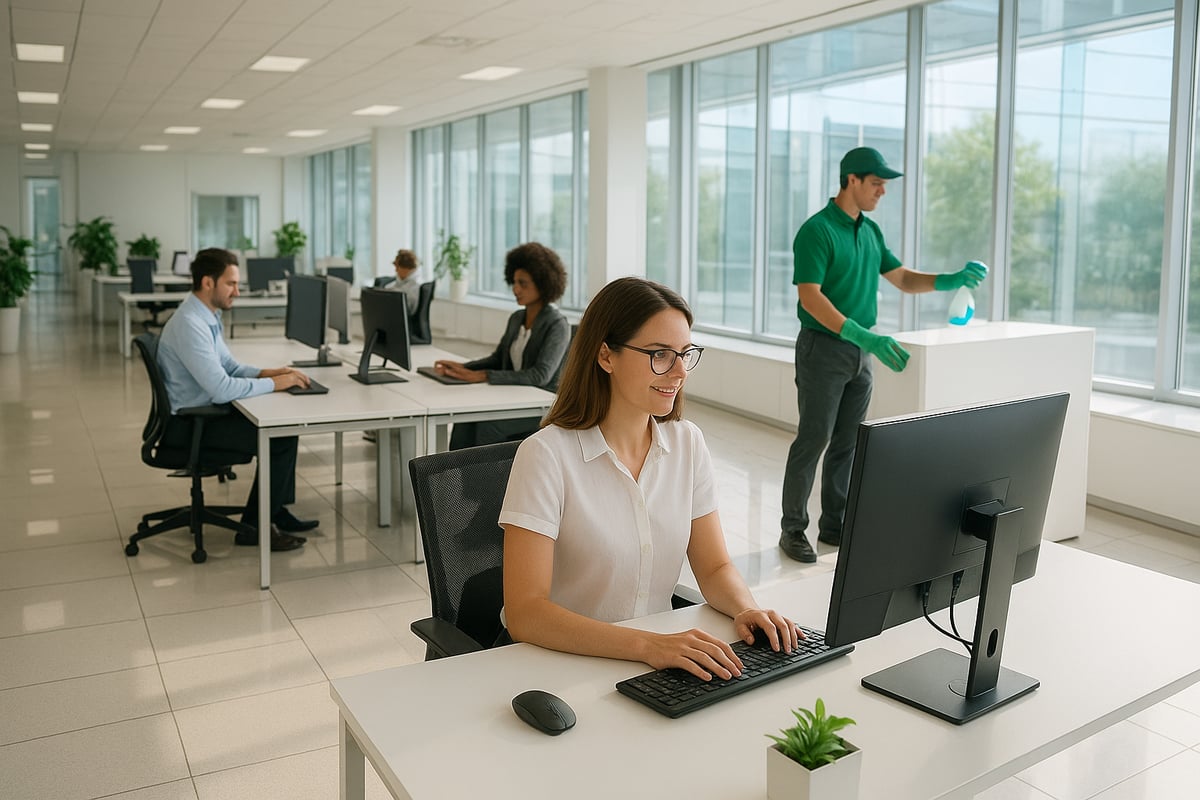
Hybrid work models and increased occupancy rates mean businesses must adapt their cleaning office buildings strategies. Employees now expect visible cleanliness, with frequent sanitation of desks, shared spaces, and high-touch points. Companies also recognize that a clean office is essential for attracting and retaining talent, as well as maintaining a positive business reputation.
- Flexible cleaning schedules for varied occupancy
- Employee health and morale linked to visible hygiene
- Cleanliness influences talent retention
Health, Safety, and Productivity Impacts
A clean office environment directly influences employee well-being and productivity. According to The Importance of Regular Office Cleaning in 2025, regular cleaning reduces absenteeism and illness by minimizing allergens, bacteria, and viruses. This leads to improved focus, reduced stress, and a more productive workforce.
- Fewer sick days due to reduced pathogens
- Enhanced focus and job satisfaction
- Lower stress in hygienic workplaces
Regulatory and Compliance Requirements
In 2025, cleaning office buildings requires strict adherence to UK workplace hygiene standards and COSHH regulations. Employers must carry out risk assessments, maintain documentation, and ensure all cleaning processes are compliant. Failure to meet these legal obligations can result in penalties, making audit trails and thorough reporting essential.
- Compliance with updated hygiene laws
- Documented cleaning procedures
- Risk assessments for all areas
Brand Image and Client Perception
First impressions matter more than ever in commercial environments. Clean offices project professionalism and reliability to clients and visitors. Studies confirm that business partners and stakeholders often assess a company's credibility based on the cleanliness of its workspace, which fosters trust and strengthens relationships.
- Cleanliness reflects organizational values
- Positive client and visitor perceptions
- Trust building through visible hygiene
Sustainability and Environmental Responsibility
Corporate social responsibility is driving businesses to adopt eco-friendly cleaning practices. Many companies now use green cleaning products, reduce chemical use, and implement resource-saving technologies. Sustainability has become a competitive differentiator, with clients and employees valuing environmentally responsible workplaces.
- Biodegradable and non-toxic cleaning agents
- Energy and water conservation
- Green certifications as business assets
Data and Trends
Recent data shows 83% of UK businesses have increased their cleaning budgets since the pandemic. Additionally, 65% of employees now rank cleanliness as a top priority at work. The industry is moving toward integrated cleaning and facility management, reflecting a broader commitment to health and safety in commercial spaces.
| Statistic | Value |
|---|---|
| Businesses increasing cleaning budgets | 83% |
| Employees prioritizing office cleanliness | 65% |
| Shift to integrated facility management | Significant |
These trends highlight the ongoing evolution and growing importance of cleaning office buildings in 2025.
Essential Office Cleaning Processes and Checklists
Maintaining high standards for cleaning office buildings in 2025 requires a systematic approach. Structured processes and detailed checklists ensure no area is overlooked, while also supporting compliance, health, and productivity goals.
Daily Cleaning Tasks
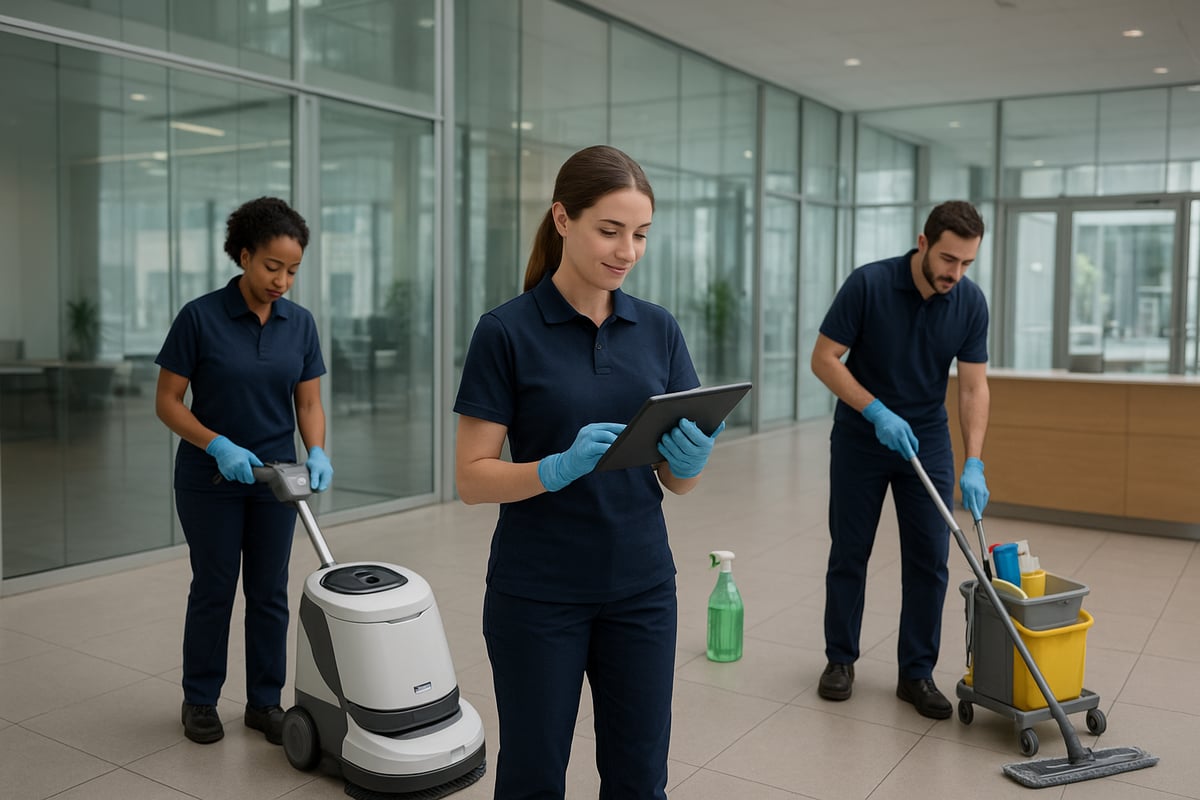
Daily cleaning tasks are the foundation of a spotless office. For effective cleaning office buildings, staff should focus on:
- Disinfecting desks, tables, and shared surfaces
- Removing waste from bins and recycling points
- Checking and restocking restrooms
- Wiping high-touch points like door handles, switches, and communal equipment
- Maintaining reception, lobby, and other high-traffic zones
Routine attention to these details not only prevents dirt buildup but also reassures employees and visitors of ongoing hygiene. For an overview of daily best practices and professional support, see the Office Cleaning Services Overview.
Weekly and Monthly Deep Cleaning
Beyond daily routines, cleaning office buildings involves scheduled deep cleans. Each week, teams should:
- Vacuum carpets and spot clean stains
- Clean interior glass, windows, and mirrors
- Dust blinds, vents, and ledges
Monthly tasks include sanitizing kitchen and breakroom appliances, addressing hard-to-reach areas, and polishing floors. These steps protect indoor air quality and extend the lifespan of office assets.
Specialty and Periodic Services
Some areas require specialized attention to maintain optimal conditions. Specialty services for cleaning office buildings may include:
- Upholstery and curtain steam cleaning
- Stripping, waxing, or buffing hard floors
- Cleaning air ducts, HVAC systems, and high-level surfaces
Periodic services can be scheduled quarterly or as needed based on usage and environmental factors. These interventions ensure a consistently healthy workspace.
Cleaning Checklists and Scheduling
Comprehensive checklists are critical for cleaning office buildings efficiently. Digital tools and apps allow teams to:
- Customize checklists for each area or department
- Schedule rotational deep cleans for thorough coverage
- Track completion and accountability in real time
Well-organized schedules minimize disruption and ensure no area is missed. Customizable templates help teams adapt to changing needs and occupancy patterns.
Quality Control and Inspection
Quality assurance is vital for maintaining standards in cleaning office buildings. Supervisors should:
- Conduct regular inspections and audits
- Gather employee feedback for continuous improvement
- Keep detailed records of all cleaning activities
Documented processes support compliance and transparency, while ongoing feedback ensures service evolves with client expectations. Consistent oversight reduces risk and enhances workplace satisfaction.
Advanced Cleaning Technologies and Equipment for 2025
Modern cleaning office buildings in 2025 requires more than just traditional tools. Today’s facilities demand advanced technologies to meet higher standards, improve efficiency, and align with sustainability goals. Let’s explore the innovations transforming commercial cleaning.
Automation and Robotics
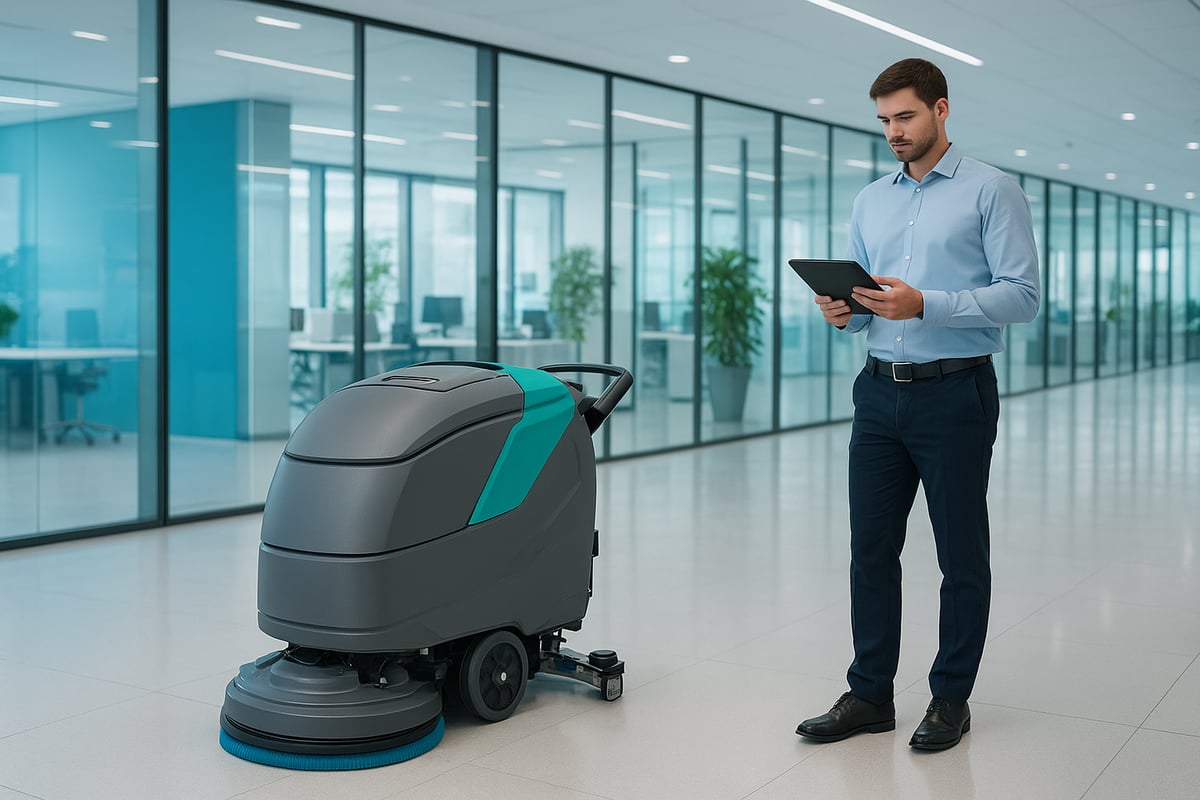
Robotic vacuums, floor scrubbers, and automated window cleaners are now common in cleaning office buildings. These machines operate autonomously, handling repetitive tasks while staff focus on detailed work. UK offices increasingly use robotics to cover large areas efficiently, reducing labour costs and human error.
Benefits include:
- Consistent, thorough coverage of large spaces
- Real-time monitoring for maintenance alerts
- Integration with facility management systems
Technological advancements like these align with How Clean is ‘Clean Enough’ in 2025?, highlighting how automation meets evolving cleanliness standards in commercial environments.
Smart Cleaning Systems and IoT
IoT-enabled dispensers and occupancy sensors are revolutionizing cleaning office buildings. These devices track usage and foot traffic, triggering on-demand cleaning for high-traffic zones. Data-driven insights help optimise cleaning routes, manage supply levels, and reduce resource waste.
Key features include:
- Automated supply monitoring
- Custom cleaning schedules based on real-time occupancy
- Seamless integration with building automation systems
This approach ensures cleaning resources are allocated precisely where and when they are needed, improving both efficiency and hygiene.
Eco-Friendly and Sustainable Equipment
Sustainability is central to cleaning office buildings today. Equipment like HEPA-filtered vacuums and low-water-use scrubbers minimize environmental impact. Battery-powered and low-emission machines reduce energy consumption and air pollution.
Look for green certifications such as EU Ecolabel or Green Seal to ensure equipment meets strict environmental standards. Using sustainable equipment not only supports corporate social responsibility but also appeals to eco-conscious clients.
Disinfection and Air Quality Solutions
Office hygiene now relies on advanced disinfection and air purification. Electrostatic sprayers distribute disinfectant evenly over surfaces, while UV-C light devices target high-risk areas for germ elimination. Air purifiers with HEPA filters maintain healthy indoor air quality by capturing allergens and pathogens.
These solutions are vital for maintaining a safe workplace, especially in shared spaces where the risk of illness transmission is higher. Regular use of such technologies reassures both staff and visitors.
Training and Safety for New Technologies
Adopting new equipment for cleaning office buildings requires thorough staff training. Personnel must learn correct operation and safety procedures for robotics, IoT devices, and advanced disinfectants. COSHH compliance is essential when introducing new chemicals or technologies.
Ongoing education programs ensure cleaning teams stay current with evolving equipment and safety standards. This commitment to training not only boosts performance but also reduces the risk of accidents or regulatory breaches.
Eco-Friendly and Sustainable Cleaning Practices
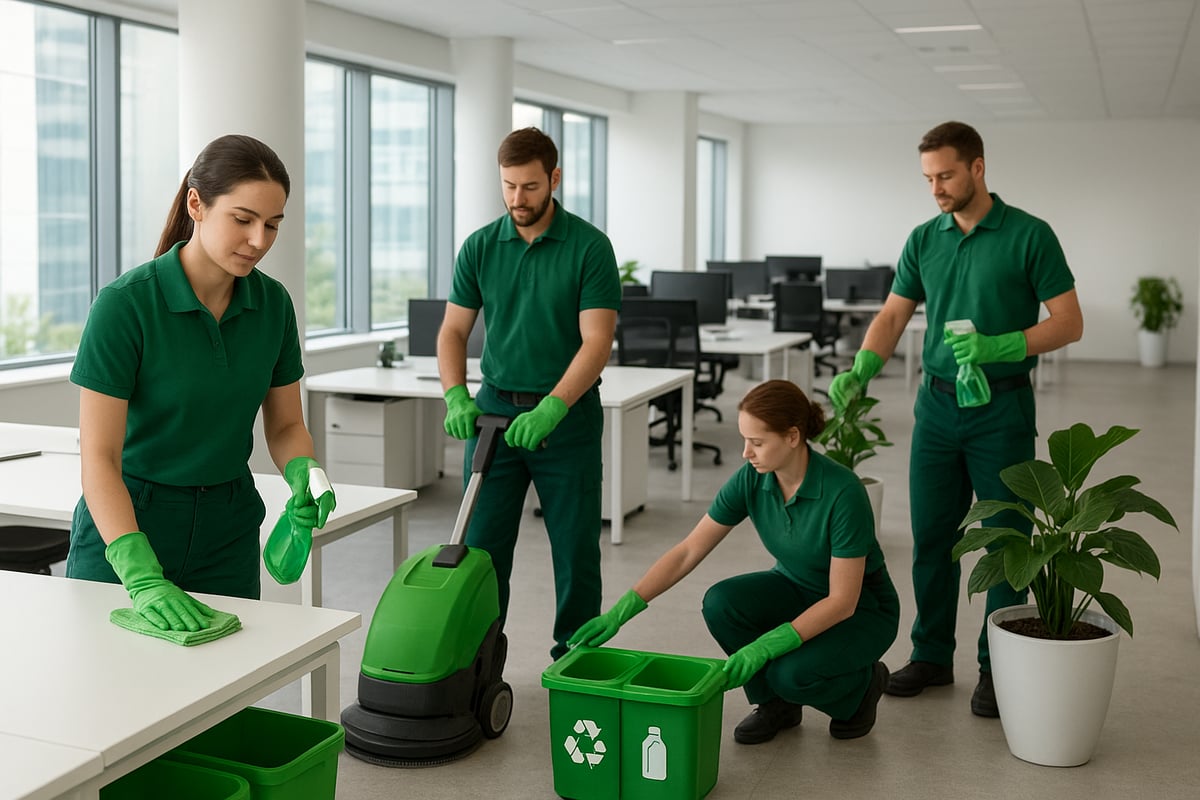
Modern businesses recognise that eco-friendly and sustainable cleaning practices are essential for maintaining healthy workspaces and meeting stakeholder expectations. As the demand for responsible cleaning office buildings grows, commercial cleaning services are adapting to deliver greener solutions that support both the environment and business goals.
Green Cleaning Products and Materials
Switching to biodegradable and non-toxic cleaning agents is a cornerstone of sustainable cleaning office buildings. Look for certifications such as the EU Ecolabel, Green Seal, and BREEAM compliance to ensure products meet strict environmental standards.
- Biodegradable cleaning chemicals
- Reusable microfiber cloths and mops
- Low-impact packaging
Reducing exposure to harsh chemicals benefits both cleaning staff and building occupants. For more details on sustainable solutions, see Eco-Friendly Cleaning Services.
Waste Reduction and Recycling
Effective waste management is crucial for sustainable cleaning office buildings. Implement recycling programs for paper, plastics, and glass, and ensure proper segregation of materials.
- Clearly labelled recycling bins
- Regular staff training on waste separation
- Composting organic waste from kitchens and breakrooms
According to BICS, 70% of UK offices now have established recycling initiatives, reducing landfill impact and supporting corporate responsibility.
Water and Energy Conservation
Adopting low-water cleaning methods and energy-saving equipment can significantly cut resource consumption in cleaning office buildings.
- Microfiber technology for efficient cleaning
- Battery-powered, energy-efficient machines
- Scheduling tasks during off-peak hours
Smart meters help monitor water and energy use, enabling offices to track progress and identify new savings opportunities.
Staff Training in Sustainable Methods
Ongoing education ensures cleaning teams understand and implement green protocols. Incentivising sustainable practices, such as rewarding teams for resource conservation, fosters a culture of responsibility.
- Workshops on eco-friendly cleaning techniques
- Sharing case studies of reduced environmental impact
- Regular updates on best practices
A well-trained team is essential for maintaining consistent sustainability standards in cleaning office buildings.
Communicating Sustainability to Stakeholders
Transparency about green cleaning efforts builds trust with clients and employees. Share achievements in sustainability reports and marketing materials to demonstrate commitment.
- Publish green cleaning policies and achievements
- Offer sustainability updates in client communications
- Highlight eco-friendly initiatives during office tours
Promoting your sustainable approach to cleaning office buildings can provide a competitive edge and foster long-term loyalty.
Step-by-Step Guide: Cleaning Office Buildings in 2025
Keeping up with the demands of cleaning office buildings in 2025 requires a structured, modern approach. With new technologies, regulations, and sustainability requirements, following a step-by-step process is essential for consistent results and compliance.
Step 1: Initial Assessment and Planning
The first step in cleaning office buildings is a thorough site assessment. Start by walking through the premises and noting high-traffic areas, shared equipment, and surfaces that require frequent attention. Conduct a risk assessment to identify potential hazards or compliance needs.
Develop a tailored cleaning plan based on office layout, occupancy, and business activities. Include cleaning frequencies, product choices, and areas needing special attention. Many businesses benefit from consulting professional Office and Commercial Cleaning Services to design effective plans.
A well-crafted plan keeps cleaning office buildings efficient, compliant, and responsive to evolving workplace needs.
Step 2: Daily Maintenance and Hygiene Protocols
Daily routines are the backbone of cleaning office buildings. Prioritize desks, restrooms, lobbies, and communal areas with high-touch surfaces. Use color-coded cloths and mops to prevent cross-contamination between spaces such as kitchens and washrooms.
Ensure staff follow proper hand hygiene, wear appropriate PPE, and use approved disinfectants. Regularly empty waste bins, sanitize door handles, and replenish hygiene supplies. Referencing Workplace Cleanliness Best Practices for 2025 can help standardize your daily cleaning office buildings processes.
Consistent daily protocols help maintain a healthy, productive environment for all occupants.
Step 3: Deep Cleaning and Disinfection
Deep cleaning office buildings involves scheduled, intensive tasks. Plan weekly or monthly sessions for carpets, upholstery, and hard floors, using advanced equipment like HEPA vacuums or steam cleaners. Pay special attention to high-risk areas such as break rooms and meeting spaces.
Apply advanced disinfection techniques, such as electrostatic spraying or UV-C light, to critical zones. Maintain detailed records of all deep cleaning activities for compliance and audit purposes.
Regular deep cleaning office buildings ensures long-term hygiene and meets regulatory expectations.
Step 4: Waste Management and Recycling
Managing waste is integral to cleaning office buildings. Set up clearly labeled bins for recycling, general waste, and hazardous items. Train staff on correct segregation and disposal methods to maximize recycling rates and minimize contamination.
Monitor waste output and report volumes for sustainability tracking. Encourage composting of organic waste from kitchens and breakrooms where possible.
Effective waste management supports cleaning office buildings goals and demonstrates environmental responsibility.
Step 5: Quality Assurance and Continuous Improvement
Quality assurance is crucial for cleaning office buildings to remain effective and compliant. Conduct regular supervisory inspections, gather client and employee feedback, and update protocols as regulations evolve.
Use digital tools for real-time reporting, checklist management, and accountability. Benchmark performance against industry standards and adjust processes as needed.
For ongoing improvement, reference Workplace Cleanliness Best Practices for 2025 to stay ahead of industry trends and expectations. Continuous improvement ensures cleaning office buildings remains efficient and future-proof.
Outsourcing vs. In-House Cleaning: Making the Right Choice
Balancing quality, compliance, and value is crucial when deciding how to manage cleaning office buildings. Should you outsource to a commercial cleaning provider or build an in-house team? Let us break down the key considerations to help you make an informed choice.
Pros and Cons of Outsourcing
Outsourcing cleaning office buildings brings expertise and access to advanced equipment, but it is important to weigh the flexibility and control you might give up. Here is a quick comparison:
| Factor | Outsourcing | In-House |
|---|---|---|
| Expertise | High, professional staff | Varies, requires training |
| Equipment | Latest technology provided | Investment needed |
| Flexibility | Service can be scaled as needed | Less flexible, fixed staff |
| Control | Less day-to-day oversight | Full control |
| Compliance | Managed by provider | Must be managed internally |
Outsourcing is often ideal for large or multi-site cleaning office buildings needing consistent standards.
In-House Cleaning Teams: Benefits and Challenges
Managing your own cleaning team gives direct oversight and the ability to tailor routines. Small offices may benefit from cost savings and a familiar team. However, recruitment, training, and equipment costs can add up quickly.
You will need to handle all compliance and documentation internally. Staff turnover and absence can disrupt routines, impacting cleaning office buildings if not managed proactively.
Cost Considerations and ROI
When evaluating cleaning office buildings, compare all costs: wages, equipment, cleaning supplies, and management time. Outsourcing typically reduces HR overhead and training expenses, but may include premium fees for specialist services.
Hidden costs, such as increased absenteeism due to substandard cleaning, can impact productivity and reputation. A professional approach can deliver long-term value by protecting staff health and business image.
Service Level Agreements and Performance Metrics
Clear service level agreements (SLAs) are essential for accountability. SLAs outline cleaning frequencies, response times, and performance standards for cleaning office buildings. Key performance indicators might include quality audits, incident response, and client feedback.
Regular reviews and transparent reporting ensure your provider delivers as promised. Referencing standards such as the National standards of healthcare cleanliness 2025 can help benchmark your cleaning protocols for offices requiring higher hygiene levels.
Choosing the Right Cleaning Partner
Selecting a partner for cleaning office buildings involves assessing experience, accreditations, and client references. Look for providers who offer tailored solutions and demonstrate local expertise.
Before signing a contract, ask about staff training, sustainability practices, and digital reporting tools. For a comprehensive overview of what a professional service can deliver, review Cleaning Services for Commercial Buildings to ensure your office meets the highest standards.
After exploring the latest cleaning standards, technologies, and sustainable practices for office buildings in 2025, you’re now equipped with expert insights to create a healthier, more productive workspace. If you want tailored support or have questions about putting these strategies into action, our experienced team at Ablou Facilities is here to help. With over 30 years of expertise serving Devon and surrounding areas, we offer professional solutions that prioritize your security, compliance, and cleanliness goals. Let’s work together to elevate your office environment—Contact the team today to discuss your needs or request a bespoke consultation.