
In 2025, commercial businesses face a surge in complex security threats, from cyber-physical incidents to targeted property crimes. Security guards have become essential, acting as the first line of defense for assets, employees, and brand reputation. This guide offers a clear, up-to-date overview for business leaders on hiring, managing, and understanding security guards in today’s fast-changing environment. Explore new roles, technology integration, legal updates, industry-specific needs, and proven best practices. Ready to safeguard your business with confidence? Read on for actionable strategies and expert insights.
The Evolving Role of Security Guards in 2025
The commercial security landscape in 2025 is more challenging and dynamic than ever. Security guards now face a wider array of threats, from cyber-physical risks to organized crime targeting business assets. Their evolving role demands a proactive, highly skilled approach to safeguarding properties, people, and reputations.
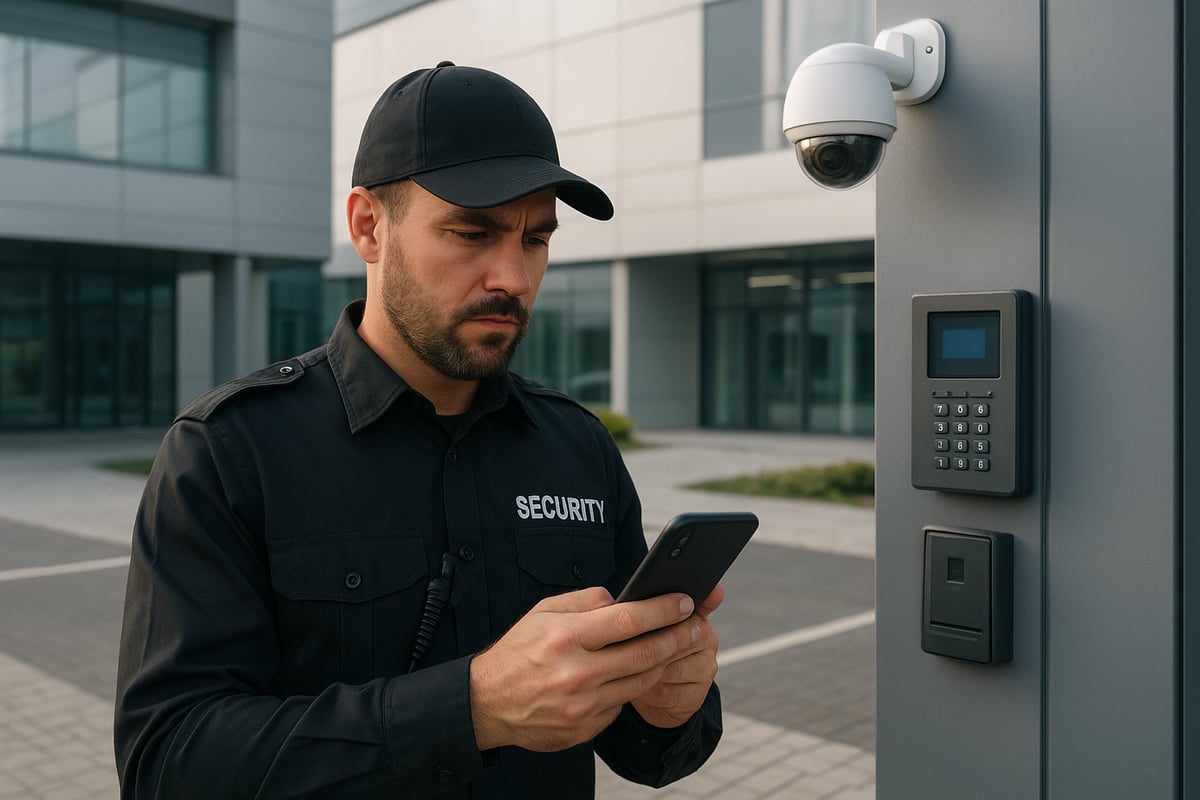
Changing Threat Landscape and Security Demands
Commercial properties are now prime targets for complex threats, including cyber-physical attacks, workplace violence, and organized criminal activity. Security guards are no longer just passive observers; they are crucial in active prevention and rapid response.
Adaptability and continuous training are essential as the risk environment changes. For example, the rise in incidents at commercial sites has led to new response strategies, such as real-time coordination with law enforcement and crisis management teams. According to Future of Security Guarding Predictions 2025, security guards are expected to take on more strategic roles, emphasizing both physical presence and intelligence gathering.
The demand for security guards is surging, particularly in sectors like construction, retail, and logistics. Competitors are increasingly focusing on tailored security solutions for these environments, reflecting the need for guards who can address sector-specific risks.
Integration of Technology and Human Skills
Technology is transforming how security guards protect commercial sites. AI-powered cameras, drones, and smart patrol systems now work alongside guards to enhance coverage and efficiency. Guards are trained as both operators and interpreters of these advanced tools.
The balance between automation and human judgment is vital. While technology can detect anomalies and automate routine patrols, only security guards can assess context and make critical decisions in real time. For instance, mobile patrol apps and digital reporting tools empower guards to document incidents instantly and coordinate with management, increasing transparency and accountability.
As the industry advances, the ability of security guards to adapt to new technologies sets the standard for modern commercial security.
Expanding Duties and Soft Skills
Today’s security guards are expected to go beyond traditional surveillance and incident response. They are often the first point of contact for employees, visitors, and clients, making customer service a key part of their role.
Conflict de-escalation, emergency response, and clear communication are now essential skills. Security guards act as brand ambassadors, representing the professionalism and values of the businesses they protect. In commercial environments, their ability to remain calm and provide guidance during emergencies—such as evacuations at office parks or shopping centers—proves invaluable.
Professionalism and strong interpersonal skills distinguish effective security guards, ensuring both safety and a positive experience for everyone on site.
Types of Security Guards and Their Specializations
Commercial environments in 2025 require a variety of security guards, each bringing unique expertise to address evolving risks. Understanding these specializations helps businesses select the right protection for their assets, staff, and operations.
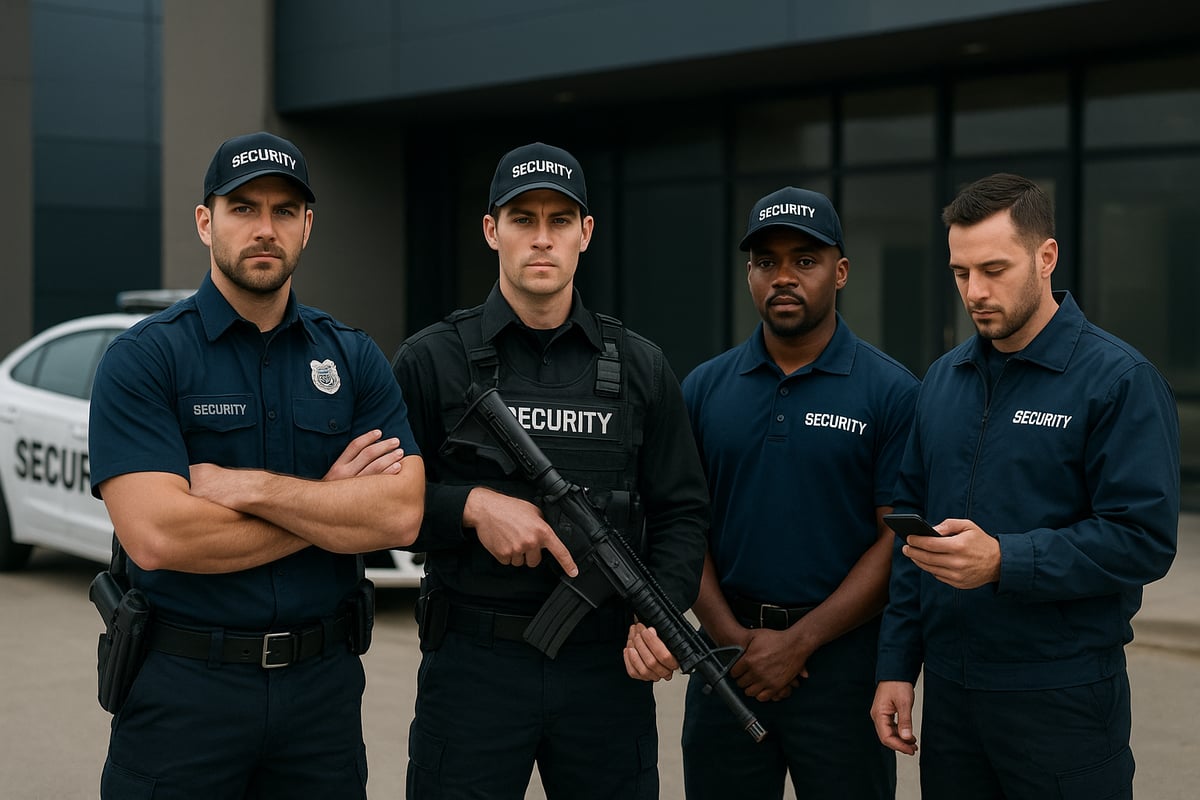
Armed vs. Unarmed Security Guards
Commercial properties often choose between armed and unarmed security guards depending on risk and environment. Armed guards undergo more rigorous training, licensing, and background checks. They are vital for high-risk areas such as warehouses with valuable inventory or financial institutions facing potential threats.
In contrast, unarmed security guards focus on deterrence, customer service, and observing for suspicious behavior. They are ideal for lower-risk environments like office buildings or retail centers, where their presence alone can prevent issues.
| Feature | Armed Security Guards | Unarmed Security Guards |
|---|---|---|
| Training | Extensive, includes firearms | Standard, non-lethal defense |
| Licensing | Mandatory, strict | Required, less stringent |
| Typical Deployment | High-value, high-risk | Retail, offices, public areas |
| Example | Logistics warehouses | Shopping centers |
Selecting the right type of security guards depends on a careful risk assessment and the specific needs of each commercial site.
Mobile Patrols and Security Vehicle Services
Mobile patrols are increasingly popular in sectors like logistics and construction, where sites can be large and require flexible coverage. Security guards in mobile patrol roles provide visible deterrence, rapid incident response, and the ability to monitor multiple areas efficiently.
Benefits of mobile patrols include:
- Randomized routes that deter potential offenders
- Quick response to alarms or emergencies
- Detailed reporting via mobile apps
Data from industry competitors shows a marked increase in mobile patrol deployments, especially as businesses seek scalable and cost-effective solutions. Security guards equipped with patrol vehicles and digital tools can adapt to changing threats and provide comprehensive coverage across sprawling commercial properties.
Fire Watch and Emergency Response Guards
Some commercial settings require specialized security guards for fire watch and emergency response duties. These professionals ensure fire safety compliance, especially during system outages, renovations, or when alarm systems are offline.
Fire watch guards monitor for potential hazards, maintain logs, and act quickly in emergencies. For example, construction sites frequently employ fire watch security guards to meet regulatory requirements and protect workers and equipment.
Emergency response guards also receive advanced training in first aid, evacuation procedures, and crisis management. Their presence supports business continuity and safety, particularly in high-occupancy environments.
Industry-Specific Security Specializations
Modern commercial sectors demand security guards with tailored expertise. Specialized training ensures guards understand each industry's risks and protocols.
Examples include:
- Healthcare: Trained in patient privacy and emergency medical response
- Education: Focus on student safety and conflict resolution
- Logistics: Skilled in cargo protection and access control
- Retail: Experts in loss prevention and customer interaction
- Manufacturing: Knowledgeable in safety compliance and hazard detection
Choosing the right security guards involves more than just staffing; it requires aligning skill sets with business goals and sector regulations. For a comprehensive overview of the range of security services for businesses, explore how professional security guards can be matched to your unique commercial needs.
Legal Requirements and Compliance for Security Guards in 2025
In 2025, the legal landscape for commercial security guards continues to evolve rapidly. Businesses must stay vigilant to ensure compliance, as regulations now cover everything from training and licensing to privacy and risk management. Understanding these requirements is essential for organizations seeking reliable, professional security guards.
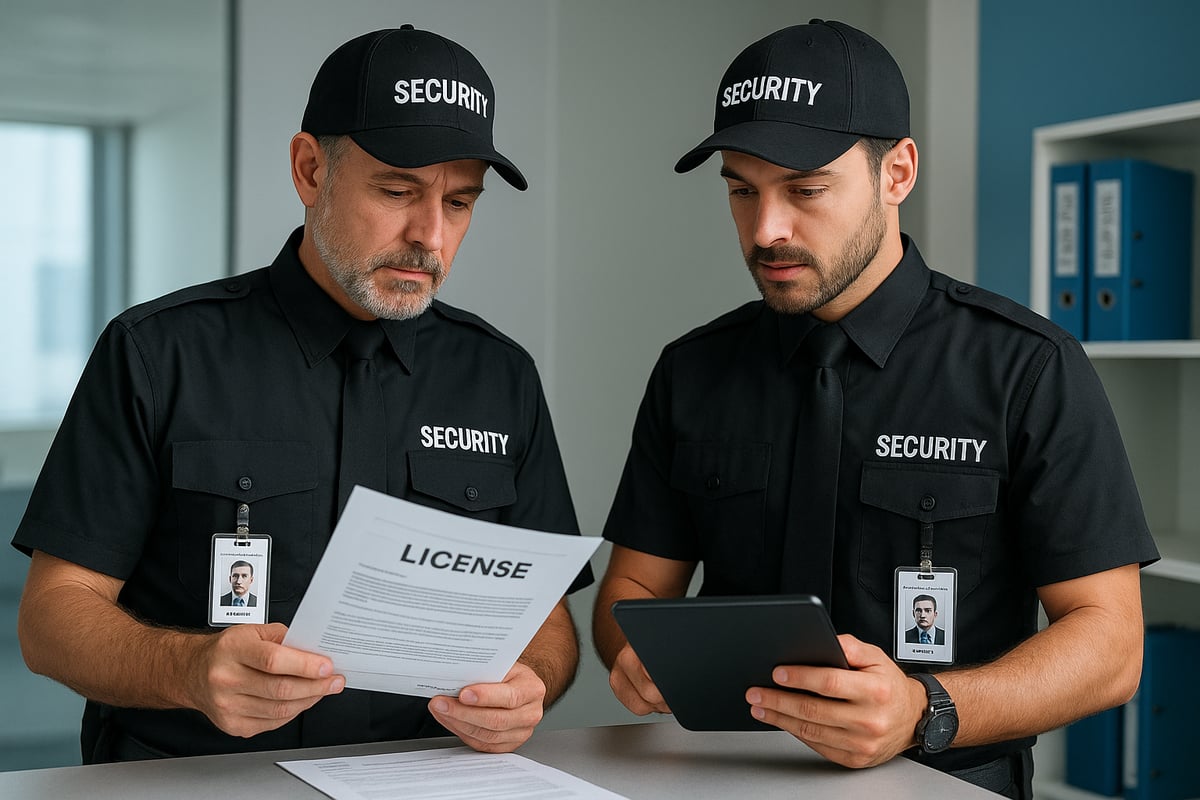
Licensing, Certification, and Training Standards
Security guards working in commercial environments must meet strict licensing and certification standards. These vary by region, but most require background checks, formal training, and regular renewal of credentials. Ongoing education ensures guards stay current with new threats and protocols.
| Requirement | Details |
|---|---|
| Background Check | Mandatory |
| Initial Training | 40–60 hours (varies) |
| Certification | State or national level |
| Renewal | Every 1–3 years |
Security guards often complete specialized courses, such as emergency response or conflict resolution. This structured approach helps companies maintain a workforce that is both compliant and highly skilled.
Regulation of Armed Guards and Use of Force
Armed security guards face additional legal scrutiny. Their training covers safe weapon handling, de-escalation, and the precise circumstances under which force can be used. Regulations clearly distinguish between armed and unarmed roles, with higher insurance and liability requirements for those carrying firearms.
Employers must develop strict protocols for weapon storage and incident reporting. Security guards are expected to follow established procedures to minimize risks to both personnel and the public. Failure to comply can result in significant legal consequences for the business.
Data Privacy and Surveillance Laws
Data protection laws such as GDPR and CCPA have a direct impact on how security guards manage surveillance and access control. Commercial properties must ensure that video footage, biometric data, and incident logs are handled securely and transparently.
Security guards often operate advanced monitoring systems and are responsible for protecting sensitive information. For a deeper look at compliance and privacy best practices, see the Legal and data protection policies page. Adhering to these regulations reduces legal exposure and builds trust with clients.
Employer Obligations and Risk Management
Hiring commercial security guards comes with specific employer obligations. Companies must provide adequate insurance, maintain health and safety standards, and ensure guards receive continuous support and supervision. Risk assessments are essential before deployment.
Key elements include:
- Valid liability insurance
- Regular safety audits
- Detailed incident reporting
- Compliance with labor laws
By prioritizing compliance and proactive risk management, businesses not only protect their assets but also demonstrate a commitment to professional standards in the security guards industry.
Technology Trends Shaping Security Guard Services in 2025
The landscape for security guards is evolving rapidly as technology redefines commercial protection standards. In 2025, advanced tools and automation are not just enhancing safety—they are transforming roles, workflows, and expectations across every sector.
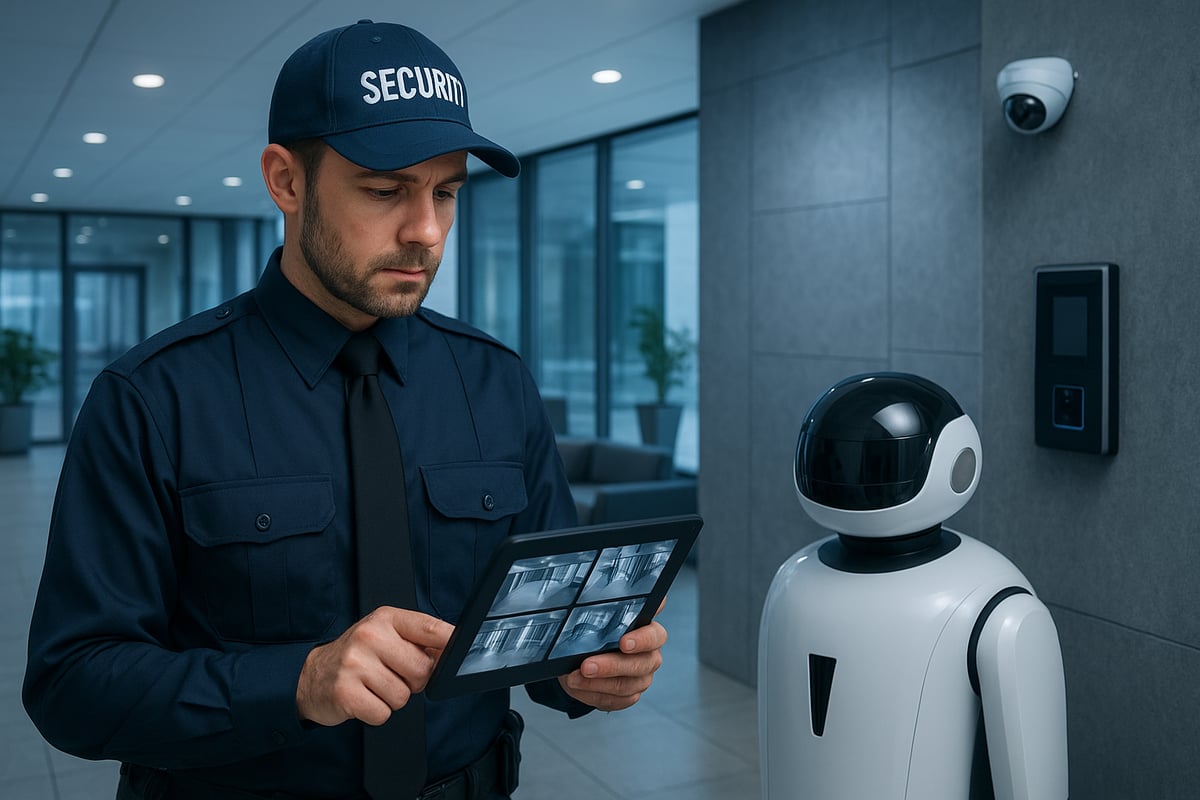
AI and Smart Surveillance Integration
Artificial intelligence is reshaping how commercial spaces are monitored. Security guards now work closely with AI-powered cameras, facial recognition systems, and anomaly detection software. These tools enable rapid incident identification and more precise threat assessment.
For example, AI can flag suspicious behavior in real-time, allowing security guards to intervene quickly. This blend of technology and human expertise increases accuracy and reduces response times. According to the Top Physical Security Trends 2025, integrating AI with physical patrols is a leading strategy for commercial security this year.
Mobile Apps and Digital Reporting
Mobile technology is central to modern security operations. Security guards use dedicated apps for incident logging, patrol tracking, and instant communication with management. These digital platforms provide transparency, accountability, and real-time data access.
Mobile patrol apps are especially valuable for large commercial properties. They streamline reporting, improve oversight, and help security guards coordinate responses efficiently. Digital records also support compliance and performance reviews, making them a vital part of commercial risk management.
Drones, Robotics, and Automation
Drones and robotics are becoming essential tools for security guards in commercial environments. Drones offer aerial surveillance for construction sites, logistics yards, and large office parks, providing coverage that is impossible on foot.
Robotic patrol units can handle routine perimeter checks, freeing security guards to focus on complex or sensitive tasks. Automation supports efficiency but does not replace the need for human judgment. Security guards supervise these systems, ensuring that technology complements their on-site presence.
Access Control and Biometric Systems
Modern access control solutions are revolutionizing entry management in commercial buildings. Security guards now oversee systems using key cards, biometric scanners, and remote access platforms.
These technologies reduce unauthorized entry and streamline visitor management. Security guards are responsible for troubleshooting, monitoring, and ensuring compliance with data privacy standards. Their expertise is crucial for integrating access control with broader security protocols in offices, hospitals, and logistics centers.
Best Practices for Hiring and Managing Security Guards
Hiring and managing security guards in commercial settings requires a strategic approach for maximum safety and value. With rising risks and evolving technologies, organizations need to adapt their security guard management to stay ahead.
Defining Security Needs and Risk Assessment
Begin by conducting a comprehensive risk assessment of your commercial property. Identify potential threats, such as theft, vandalism, or unauthorized access. Evaluate the specific requirements of your business sector, whether it is construction, healthcare, or logistics.
- List critical assets and areas needing protection
- Review incident history and local crime statistics
- Consult with security experts for tailored recommendations
Matching the right security guards to your unique risk profile ensures effective coverage and minimizes vulnerabilities. Regularly update your assessment as business operations evolve.
Vetting, Training, and Continuous Development
Selecting qualified security guards starts with thorough background checks, verification of experience, and assessment of soft skills. Prioritize candidates with strong communication and problem-solving abilities.
Ongoing training is crucial, covering emergency response, customer service, and the latest technology. Choose providers who demonstrate a commitment to professional standards, as highlighted on the About our security solutions page.
Investing in continuous development ensures your security guards remain prepared for any scenario.
Integration with Business Operations
Security guards should align seamlessly with your company culture and customer service goals. Clear communication protocols between security staff and management are essential.
- Provide site-specific orientation and expectations
- Encourage collaboration with other departments
- Include guards in regular staff meetings and updates
When security guards feel like part of the team, they perform better and contribute positively to the overall commercial environment.
Performance Monitoring and Quality Assurance
Monitor the effectiveness of your security guards using well-defined KPIs, such as incident response times, reporting accuracy, and deterrence success. Implement regular audits and feedback cycles.
- Use digital reporting tools for transparency
- Conduct periodic performance reviews
- Reward excellence and address gaps promptly
For real-world examples of high-performing teams, explore Success stories in security to see how businesses achieve measurable results from their security guards.
Cost Considerations and ROI
Balancing your security budget with business value is key. Factors influencing cost include armed versus unarmed guards, mobile patrols, and technology integration.
| Service Type | Cost Impact | ROI Factors |
|---|---|---|
| Armed Guards | High | High-risk asset protection |
| Unarmed Guards | Moderate | Customer service, deterrence |
| Mobile Patrols | Variable | Large area coverage |
| Tech Integration | Upfront | Long-term efficiency |
Assess the return on investment by comparing incident reduction and customer satisfaction against your security spend. Smart allocation ensures your security guards deliver optimal commercial protection.
Industry Case Studies and Future Outlook
Commercial sectors face rising threats and evolving risks, making security guards indispensable for asset protection and operational continuity. As we look at industry case studies, it becomes clear how security guards adapt to unique challenges across construction, logistics, retail, and healthcare. The future outlook highlights the increasing demand for skilled professionals, advanced technology, and sector-specific expertise.
Security in Construction and Industrial Sectors
Construction and industrial environments present unique challenges for security guards. These sites are vulnerable to equipment theft, vandalism, and unauthorized access, especially after hours. Security guards play a crucial role in 24/7 monitoring, rapid incident response, and enforcing safety compliance.
For example, at large construction projects, security guards often use mobile patrols and surveillance technology to deter theft and monitor restricted zones. The rise in reported equipment theft cases has led to an increased reliance on professional security guards. According to recent industry data, commercial construction sites that deploy trained security guards experience fewer losses and improved compliance with safety standards.
Key responsibilities in these sectors include:
- Conducting perimeter checks and access control
- Coordinating with site managers during emergencies
- Documenting incidents and reporting suspicious activity
With these proactive measures, security guards ensure both property protection and the safety of on-site personnel.
Logistics, Retail, and Healthcare Security
In logistics, retail, and healthcare, security guards are essential for loss prevention, cargo protection, and safeguarding people. Logistics centers face risks such as cargo theft and unauthorized entry, requiring guards to monitor loading docks and manage access points. In retail, security guards deter shoplifting, handle crowd control, and provide customer service, especially during peak hours.
Healthcare facilities rely on security guards for patient, staff, and visitor safety. Guards are trained in conflict de-escalation, emergency response, and privacy protection. Technology integration, such as AI-powered surveillance and mobile reporting, is reshaping how security guards operate in these environments.
Industry trends indicate a shift toward guards who can handle both physical and digital threats. For a deeper analysis of how technology and intelligence are influencing the sector, see Security Industry Trends and Adaptations 2025.
The Future of Security Guards: Skills and Opportunities
Looking ahead, the demand for commercial security guards is set to rise. Market projections reveal significant growth, driven by increased security threats and the adoption of advanced surveillance technologies. Security guards will need to develop skills in tech fluency, crisis management, and customer engagement to remain competitive.
Emerging opportunities include specialization in industry-specific roles, such as logistics security or healthcare emergency response. Career advancement is possible for those who embrace ongoing training and adapt to new technologies. According to North America Security Guard Market 2025 Insights, the security guard market is expected to expand, with businesses prioritizing integrated security solutions and professional development for their teams.
Security guards will continue to be vital partners in commercial risk management, offering both deterrence and rapid response as threats evolve.
As you look ahead to 2025 and consider the evolving challenges and innovations in commercial security, it’s clear that having the right team in place is more important than ever. Whether you need guidance on the latest technology, insight into legal compliance, or a tailored security plan for your business, our experienced professionals at Ablou Facilities are here to help. We understand the unique needs of businesses across Devon and beyond, and we’re committed to delivering the reliable, professional service you deserve. If you’d like to discuss how we can support your security goals, feel free to contact the team.