Recent high-profile incidents have shown that businesses face more complex threats than ever before. With risks evolving rapidly in 2025, organizations cannot afford to overlook the importance of static security.
This guide delivers practical, up-to-date strategies to help you strengthen static security across your commercial sites. We will define what static security means, explore the latest threat landscape, and outline the essential tactics for robust protection.
Discover how technology, skilled staff, regulatory compliance, and effective implementation can empower your business to safeguard assets, people, and operations. Ready to take action? Let’s get started.
What is Static Security? Defining the Fundamentals
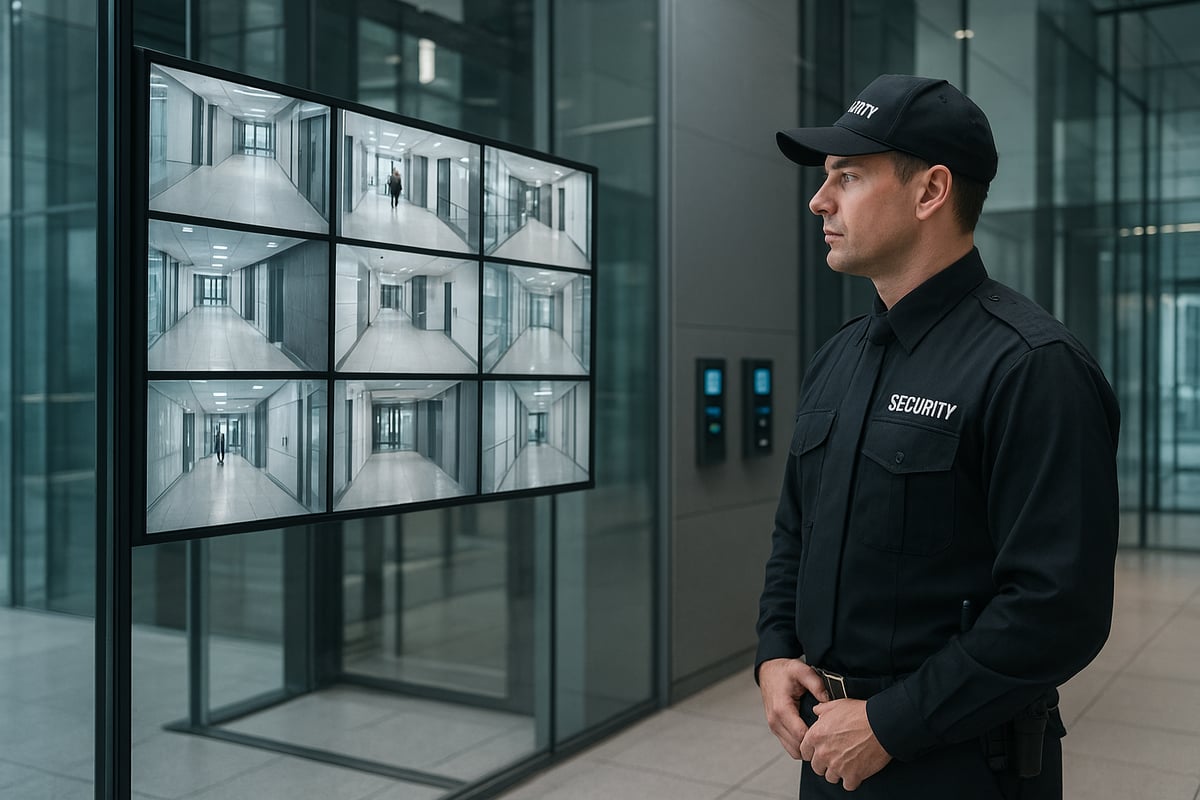
Static security is a cornerstone of commercial protection strategies. Unlike mobile patrols, which involve security professionals moving between locations, static security places guards at fixed positions throughout a site. This approach ensures constant, vigilant oversight of entry points, sensitive areas, and high-value assets.
Key Responsibilities and Environments
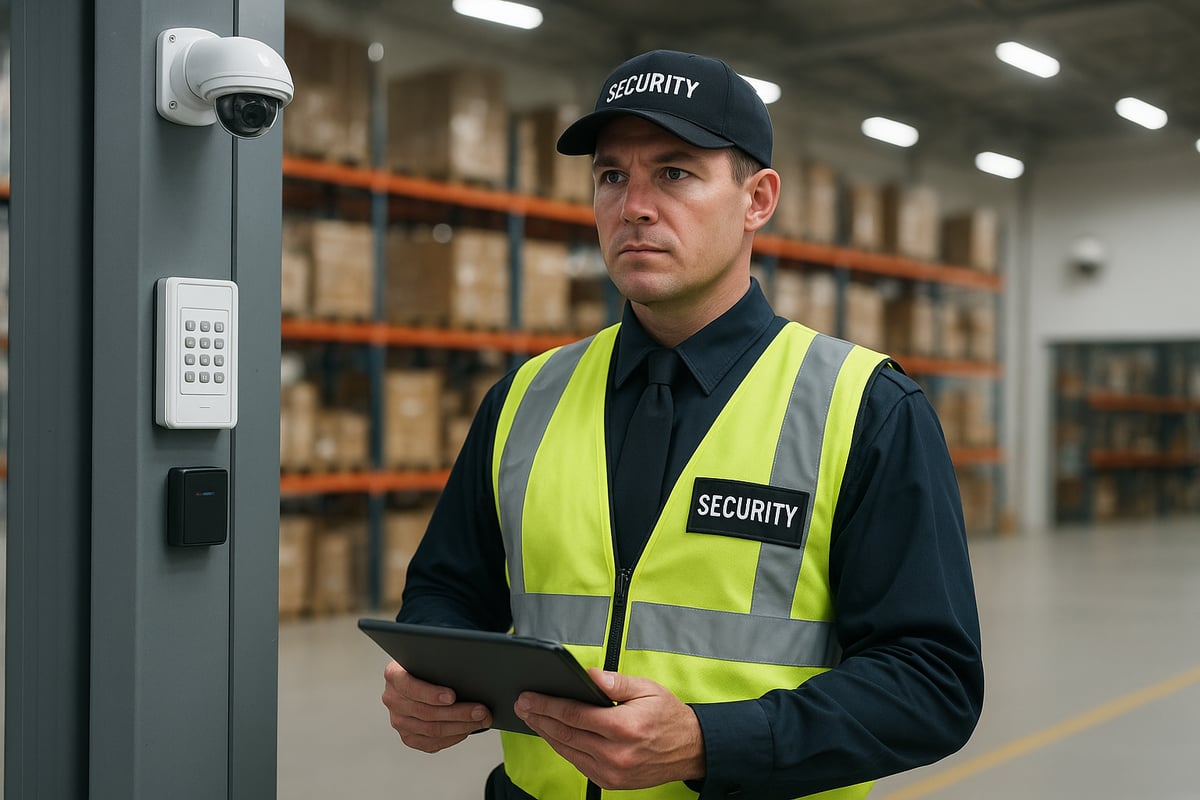
The core responsibilities of static security include access control, continuous monitoring, incident response, and customer service. Guards verify credentials, oversee visitor logs, and keep a watchful eye on surveillance systems. They are quick to respond to emergencies, whether it be a fire alarm or an unauthorized entry attempt.
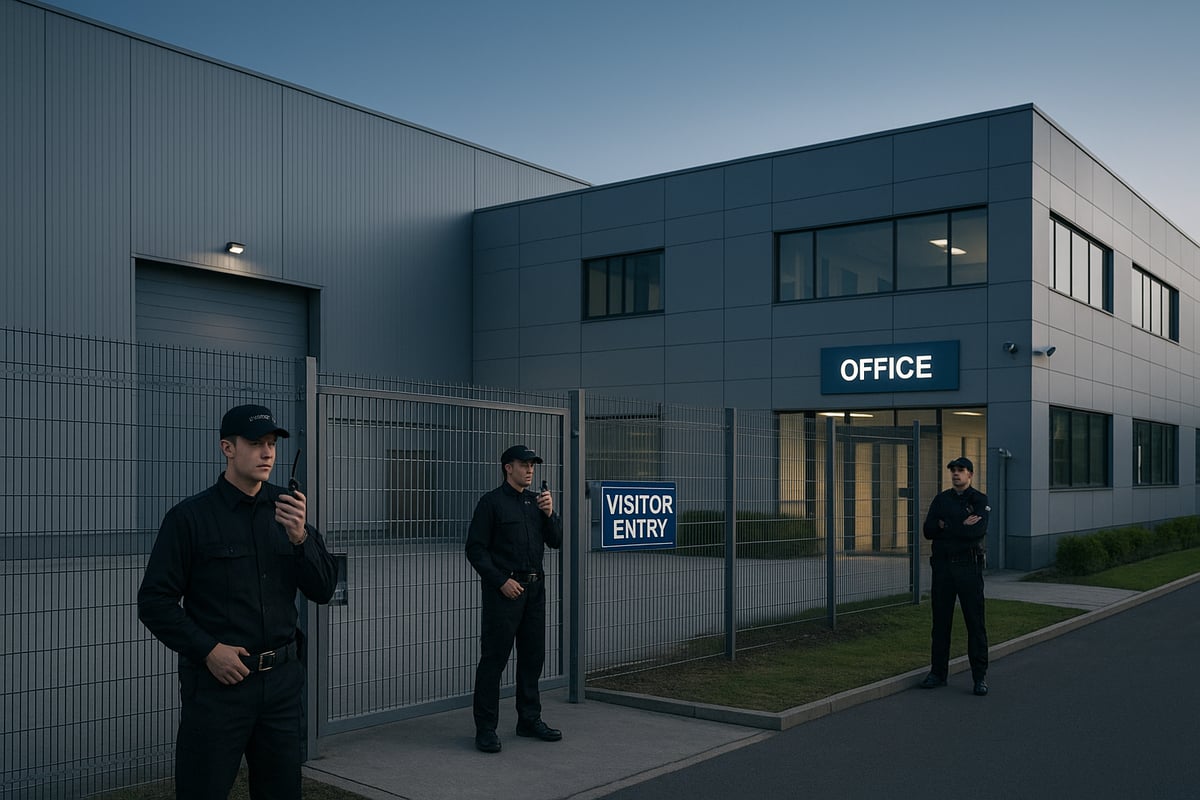
Commercial offices, warehouses, retail outlets, and industrial facilities all benefit from static security. A visible presence deters crime and reassures both staff and visitors. For a detailed breakdown of these duties, see the security guard services overview.
Real-World Impact and Comparison
A recent example highlights the value of static security: after deploying dedicated guards at a UK warehouse, theft incidents dropped significantly. This success story demonstrates how static security acts as the first line of defense. The average UK salary for a static security guard is £27,000 per year, reflecting the growing demand for skilled professionals in commercial sectors.
To understand how static security compares to other methods, consider the following:
Feature
Static Security
Mobile Security
Coverage
Fixed, continuous
Intermittent, mobile
Deterrence
High (visible presence)
Moderate
Response Time
Immediate (on-site)
Delayed (off-site)
Best For
Entry points, sensitive areas
Perimeter, large sites
While mobile patrols offer broad coverage, static security provides unparalleled vigilance and peace of mind. It forms the foundation for integrated commercial security solutions, supporting advanced surveillance and facility management systems.
The 2025 Threat Landscape: Why Static Security is Essential
The security landscape for commercial properties is rapidly changing as we approach 2025. Businesses face new risks, stricter regulations, and rising expectations for safe workplaces. Static security solutions have become indispensable, offering a proactive approach to safeguarding assets and people. Let us explore why static security is more critical than ever for commercial environments.
Evolving Security Risks for Businesses
In 2025, businesses contend with increasingly sophisticated threats. Organised theft, vandalism, and unauthorized access attempts are on the rise, especially in commercial sites like warehouses and offices. Economic uncertainty and social unrest contribute to higher crime rates, compelling companies to prioritize static security.
Insider threats are also escalating, making on-site monitoring essential. For example, during the recent economic downturn, UK warehouses reported a marked increase in theft. According to the CrowdStrike 2025 Threat Report, organisations with a visible static security presence experienced significantly fewer incidents compared to those relying solely on remote monitoring.
Static security teams provide continuous oversight, deterring opportunistic crime and responding to suspicious activity in real time. Their presence reassures stakeholders and forms a vital part of any comprehensive risk management strategy.
Regulatory and Compliance Pressures
Commercial security is subject to evolving regulations in 2025. New standards for surveillance, data protection, and workforce licensing are shaping static security requirements. For UK businesses, SIA licensing ensures only qualified guards are deployed, while GDPR governs the handling of surveillance footage.
Non-compliance can result in heavy fines and reputational damage. One case saw a business shutdown after failing to meet regulatory standards for access monitoring and data storage. Robust static security protocols help businesses maintain compliance, support audit trails, and demonstrate due diligence to authorities.
Partnering with accredited providers ensures commercial sites meet all legal and ethical obligations. This reduces risk and builds trust with clients and employees.
The Human Factor: Staff and Visitor Safety
Employee and visitor safety is a growing priority for commercial organizations. Static security guards play a crucial role in maintaining a secure environment. Their responsibilities extend beyond vigilance—they are often first responders during emergencies such as fire alarms or medical incidents.
For instance, when a fire alarm sounded at a busy business park, static guards managed an orderly evacuation, assisting visitors and ensuring everyone’s safety. Their training in emergency response and communication is vital for protecting people and minimizing disruption.
Strong static security also enhances customer service. Guards assist with visitor queries, manage building access, and uphold a welcoming yet controlled atmosphere. This dual focus on safety and service strengthens an organization’s reputation and operational resilience.
Essential Static Security Strategies for 2025
To protect commercial assets in 2025, businesses must deploy essential static security strategies that address evolving threats and operational challenges. These strategies form the backbone of any effective security plan, combining technology, human vigilance, and tailored protocols. By understanding and implementing the following approaches, organizations can ensure their static security framework is resilient, compliant, and responsive.
Access Control and Perimeter Security
Robust access control is fundamental to static security in commercial settings. Organizations should implement systems like ID badges, biometric scanners, and digital visitor logs to manage entry and exit. Static security guards play a crucial role by verifying credentials, enforcing sign-in protocols, and monitoring entry points.
Layered perimeter security is equally vital. Combining physical barriers such as gates and bollards with surveillance technology creates multiple lines of defense. For example, a logistics hub reduced unauthorized entries by introducing a multi-tiered access system, integrating static security at key choke points.
Access Control Methods
Pros
Cons
ID Badges
Easy to implement, scalable
Can be lost or shared
Biometrics
High security, non-transferable
Costly, privacy concerns
Visitor Logs
Good for tracking
Manual entry errors
Static security is most effective when these methods are tailored to site-specific risks. For further insights on protecting business premises, see the detailed site security strategies page.
Surveillance and Monitoring Best Practices
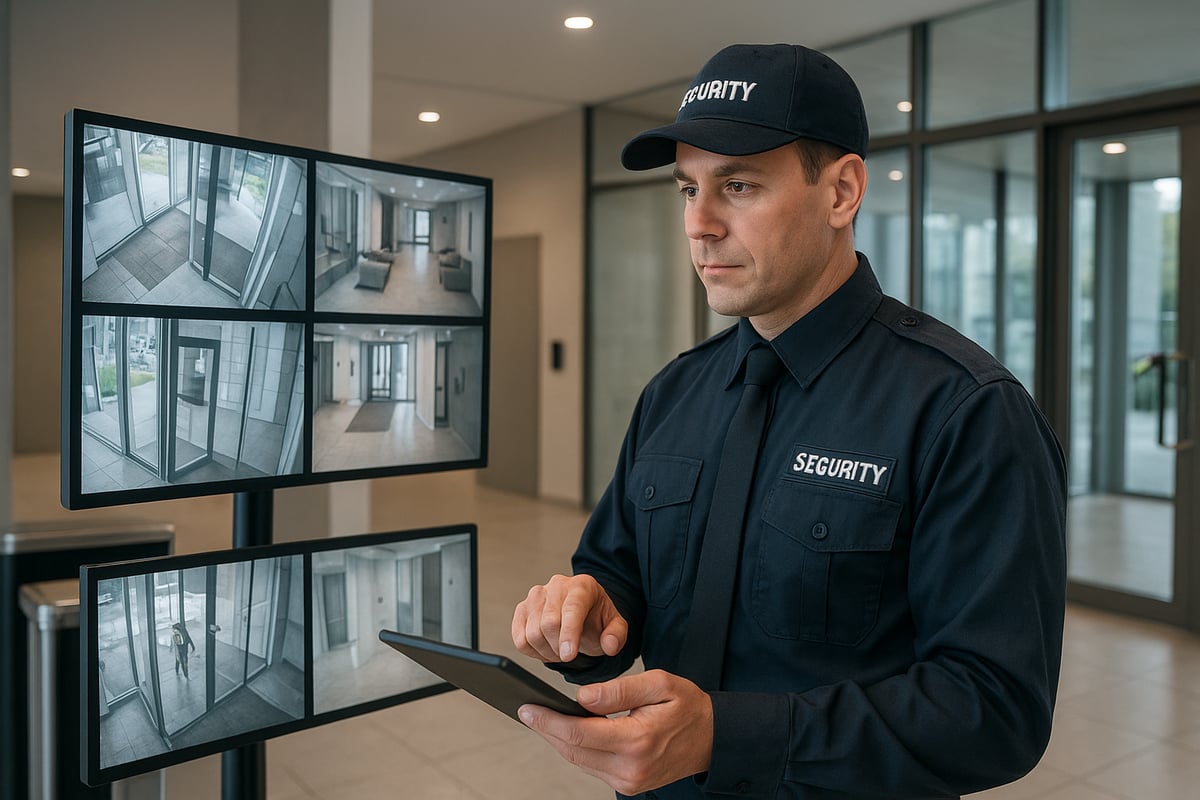
Surveillance is a cornerstone of static security. Modern sites rely on CCTV, motion sensors, and alarm systems to supplement on-site guards. Integration enables real-time monitoring, allowing static security personnel to quickly identify and respond to incidents.
Best practices include regular system checks, clear camera placement, and defined protocols for incident escalation. Static security guards should be trained to leverage analytics and AI tools, which can highlight unusual activity or potential threats faster than manual observation.
CCTV monitoring remains a core responsibility for static security teams. Using digital checklists and automated alerts improves vigilance and ensures incidents are documented accurately. This approach not only deters criminal behavior but also provides valuable evidence during investigations.
Incident Response and Emergency Preparedness
Effective incident response is a hallmark of professional static security. Organizations must develop comprehensive emergency plans covering scenarios such as fires, medical incidents, and lockdowns. Static security guards are often the first responders, tasked with taking decisive action to protect people and property.
Routine drills and scenario-based training ensure that static security staff can react confidently in emergencies. Communication protocols should be established, enabling guards to coordinate with emergency services and internal stakeholders without delay.
A recent evacuation drill at a commercial office demonstrated the value of well-prepared static security. The team managed a swift, orderly response, minimizing disruption and ensuring occupant safety. Continual review and improvement of these procedures keep static security effective in the face of new risks.
Leveraging Technology: The Future of Static Security
Technology is reshaping static security in commercial environments, bringing new tools and capabilities that help businesses stay ahead of risks. In 2025, integrating advanced systems is no longer optional—it is essential for effective protection and operational efficiency.
Smart Surveillance and AI Integration
Modern static security now leverages AI-powered cameras and analytics to detect threats more quickly and accurately than ever before. These systems monitor live video feeds, flagging unusual behavior or unauthorized access attempts in real time. For example, AI analytics can identify loitering, tailgating, or suspicious movements at entry points, giving static guards the information they need to respond immediately.
The rise of AI in security is also fueled by the broader surge in automated cyberthreats and physical breaches. As highlighted in this AI-driven surge in cyberthreats report, automation is making threats more sophisticated, which means static security must adapt with equally advanced solutions.
Importantly, AI does not replace the human element. Instead, it empowers static security professionals to make faster, better decisions and focus on areas where human judgment is critical.
Mobile Apps and Real-Time Reporting
Mobile technology is another game-changer for static security teams in commercial settings. Guards now use secure mobile apps to log incidents, conduct digital check-ins, and communicate instantly with supervisors or emergency services.
Digital shift reports and incident logs streamline compliance and accountability, reducing paperwork and errors. Real-time reporting ensures that issues are addressed promptly and that all activity is documented for future review.
With these tools, static security staff can respond faster, share updates instantly, and maintain a clear record of every event. This agility directly improves both security outcomes and client satisfaction.
Integrating Security with Facility Management Systems
Today’s commercial properties benefit from integrating static security into broader facility management platforms. Centralized dashboards bring together security monitoring, cleaning schedules, and maintenance alerts, making it easier to coordinate responses and allocate resources efficiently.
For example, when a static security guard identifies a maintenance issue during patrol, they can log it directly into the system, triggering an immediate response from the facilities team. This integrated approach reduces downtime and ensures that safety and operational needs are addressed together.
By embracing these technologies, businesses strengthen their static security, improve efficiency, and deliver a safer environment for staff and visitors.
Training, Staffing, and Professional Standards
In commercial environments, the quality of your static security depends on robust recruitment, ongoing training, and unwavering professional standards. Ensuring each static security officer meets high expectations is essential for protecting assets, people, and reputation.
Recruitment and Vetting Best Practices
Effective static security starts with careful recruitment. Every candidate should undergo comprehensive background checks and must hold valid SIA licenses. This ensures only trustworthy and qualified individuals join your team.
Regular vetting is not a one-time event. Ongoing performance reviews and compliance checks help maintain high standards. For example, a distribution center avoided insider threats by consistently reviewing staff credentials and monitoring behavior.
Partnering with a provider that maintains top-tier accreditations, such as those outlined in the best security company credentials, reinforces your static security program. These credentials demonstrate commitment to compliance and industry standards, providing added assurance for your business.
Continuous Training and Skills Development
Ongoing training is vital for static security officers to keep pace with evolving risks. Mandatory modules should cover conflict management, first aid, and the latest technology used on site.
Scenario-based drills, such as simulated evacuations or emergency response exercises, prepare guards for real-life incidents. Refresher courses are key to maintaining sharp skills and adapting to new threats.
Data consistently shows that static security professionals with advanced training deliver better outcomes and command higher salaries. Investing in skills development translates directly into improved safety and service quality.
Customer Service and Communication Skills
Today's static security officers must excel in both protection and customer service. They serve as the first point of contact for visitors, clients, and staff, making communication skills essential.
Key customer service skills for static security include:
Professional, approachable demeanor
Clear verbal and written communication
Effective de-escalation techniques
Ability to manage queries and provide assistance
A recent example from a commercial office saw positive visitor feedback after guards handled a stressful situation with calm professionalism. When static security teams balance vigilance and hospitality, they help create a welcoming, safe environment for everyone.
Implementing a Static Security Plan: Step-by-Step Guide
Establishing a robust static security plan is crucial for safeguarding commercial properties in 2025. A systematic approach ensures your business is protected from evolving threats and remains compliant with regulations. The following step-by-step guide outlines how to effectively design, deploy, and refine a static security strategy suited for your unique environment.
Risk Assessment and Site Survey
The first step in any static security plan is a thorough risk assessment. Begin by surveying your site, focusing on entry points, blind spots, and areas with high-value assets. Walk the property with a checklist to document vulnerabilities such as poor lighting, unsecured doors, or outdated surveillance.
Key actions include:
Mapping all access points and asset locations
Reviewing incident history and recent threats
Consulting with staff and facility managers for insights
For example, a recent security audit at a business park uncovered gaps in access control, which led to immediate upgrades. Taking this proactive approach allows you to prioritize measures that address your most pressing risks and lay a strong foundation for static security.
Customizing Security Protocols
Once risks are identified, tailor your static security protocols to match the specific needs of your commercial site. Develop clear procedures for access control, visitor management, and emergency response. Assign roles and escalation paths so every team member knows their responsibility in the event of an incident.
Consider collaborating with facilities management to ensure security measures align with cleaning and maintenance schedules. This holistic coverage prevents operational blind spots. Reviewing comprehensive security services can also help integrate static security with broader solutions, maximizing efficiency.
Checklist for customization:
Define site-specific procedures for each risk
Set up credential verification and visitor logging
Establish communication channels for emergencies
Monitoring, Review, and Continuous Improvement
Static security is not a set-and-forget solution. Ongoing monitoring and regular reviews are essential for maintaining effectiveness. Set key performance indicators (KPIs) such as incident response times, access control success rates, and customer service feedback.
Monthly reviews of protocol performance can reveal trends or areas for improvement. For instance, a business that conducted monthly performance reviews found that adjusting guard deployment reduced response times and improved coverage. Adopting principles from Continuous Threat Exposure Management supports proactive identification of new vulnerabilities and ensures your static security plan evolves with changing risks.
Key steps for improvement:
Analyze incident data and adjust protocols
Update training based on review findings
Communicate changes to all stakeholders
With a structured approach to risk assessment, protocol customization, and continuous monitoring, your organization can achieve a resilient static security posture that adapts to the demands of 2025.
[Why Choose Professional Static Security Services?] (If Relevant)
Choosing a professional static security provider is a strategic investment for any commercial business. In 2025, the risks facing offices, warehouses, and retail environments demand skilled, reliable protection that only qualified experts can deliver.
Ablou Facilities brings proven expertise in static security across Devon and the South West, including Exeter, Torquay, and Plymouth. Our team consists of fully qualified, SIA-licensed static guards who understand the unique demands of commercial sites.
Our static security services include:
24/7 on-site presence for maximum deterrence
Seamless integration with cleaning and facilities management
Rapid incident response and real-time reporting
Compliance is our top priority. We ensure all security staff meet the latest regulatory standards, so your business avoids costly fines and reputational risks. Our guards are trained not just in protection, but also in customer service, providing a safe and welcoming environment for staff and visitors.
For tailored static security solutions that protect your people, property, and operations, contact Ablou Facilities Ltd for a free consultation. We are committed to your safety every step of the way.
As we’ve explored, effective static security in 2025 is about more than just having a visible presence—it’s about combining skilled people, smart technology, and a tailored plan that addresses your site’s unique risks. If you’re ready to strengthen your business’s protection and want guidance from a trusted team with decades of experience across Devon, we’re here to help. You deserve solutions that are proactive, compliant, and seamlessly integrated with your operations. Let’s work together to make your environment safer and more secure—Contact the team today to get started.
Commercial construction sites face unprecedented security threats, with theft and vandalism costing the industry over one billion dollars each year. As criminals adopt more advanced tactics, traditional site protection methods often fall short.
For construction firms, the consequences go beyond financial loss. Delays, equipment shortages, and safety risks can jeopardize entire projects and put workers at risk.
To meet these challenges, adopting modern construction security solutions is no longer optional. Effective protection now demands a proactive, technology-driven approach.
In this article, discover 8 essential construction security strategies designed to shield your assets, minimize losses, and keep your projects on track in 2025.
The Evolving Landscape of Construction Site Security in 2025
Construction security is facing unprecedented challenges as theft and vandalism surge across commercial job sites. Recent reports reveal a dramatic increase in incidents, with criminals specifically targeting high-value equipment, copper wiring, and essential materials. The economic climate and ongoing labor shortages have made sites more vulnerable, as fewer workers are available to monitor and protect assets. Longer lead times for replacing stolen equipment now mean that a single incident can set a project back by weeks or even months. For example, a widely publicized case in Howard County saw authorities recover over $5 million in stolen tools, highlighting the enormous risk facing construction security. According to the BauWatch Crime Report 2025, these threats are only expected to rise in the coming year.
The Rising Threats to Construction Sites
The scale of threats facing construction security is growing rapidly. Large commercial sites are often left unattended overnight, making them attractive targets for organized criminal groups. Thieves are not only after tools but also expensive machinery and valuable metals that can be quickly resold. Economic pressures have pushed more individuals toward opportunistic theft, while vandalism and trespassing remain persistent problems. Each incident can disrupt project timelines, increase costs, and introduce safety hazards for workers. The industry’s response must be proactive and robust to address these escalating risks.
Key Security Challenges Facing Construction Firms
Construction security is complicated by the very nature of commercial projects. Sites are typically expansive, with multiple access points that are hard to monitor consistently. The temporary setup of most projects means security infrastructure must be flexible and rapidly deployable. Coordination adds another layer of complexity, as subcontractors and third-party vendors frequently enter and exit the site. Balancing the need for strong security with the imperative to maintain productivity is a persistent challenge. Firms must also navigate evolving regulations and insurance requirements to ensure compliance and adequate protection.
The Shift Toward Integrated, Technology-Driven Solutions
To keep pace with evolving threats, construction security is rapidly adopting advanced technology. AI-powered surveillance systems now provide real-time monitoring, using smart sensors to detect unusual activity instantly. Many firms are integrating physical and digital security, creating comprehensive layers of protection that address both on-site and remote risks. Data analytics tools help identify patterns in incidents, enabling teams to predict and prevent future threats. Cloud-based access control and mobile management platforms streamline security operations, making it easier to monitor multiple sites from a single dashboard. Real-time GPS tracking is becoming standard for equipment and personnel, reducing the risk of loss and ensuring accountability. These integrated, technology-driven solutions are setting a new standard for construction security in 2025, enabling firms to stay ahead of increasingly sophisticated criminals and protect every aspect of their operations.
8 Essential Construction Security Strategies for 2025
Protecting commercial projects in 2025 requires a proactive, multi-layered construction security approach. Each strategy below is designed to address specific vulnerabilities, harnessing both technology and human expertise to keep your assets, materials, and personnel safe. By integrating these strategies, construction security becomes a central pillar of project management and risk mitigation.
1. Conduct Comprehensive Risk Assessments
The foundation of effective construction security is a thorough risk assessment tailored to each project and site location. Begin by identifying unique vulnerabilities, such as isolated areas, high-value materials, and local crime trends. Evaluate risks from theft, vandalism, unauthorized access, and safety hazards that may impact operations.
Use historical data and incident reports to inform your risk profile. Engage key stakeholders, including project managers, security professionals, and insurance providers, to ensure diverse perspectives. Schedule regular reassessments as the project evolves, especially when site layouts change or new subcontractors join.
Develop actionable mitigation plans based on assessment findings. For example, sites that conduct regular risk assessments often reduce theft incidents by up to 50 percent. Document your findings and communicate them clearly to all team members. This systematic process ensures your construction security measures remain relevant and robust throughout the project lifecycle.
2. Implement Advanced Access Control Systems
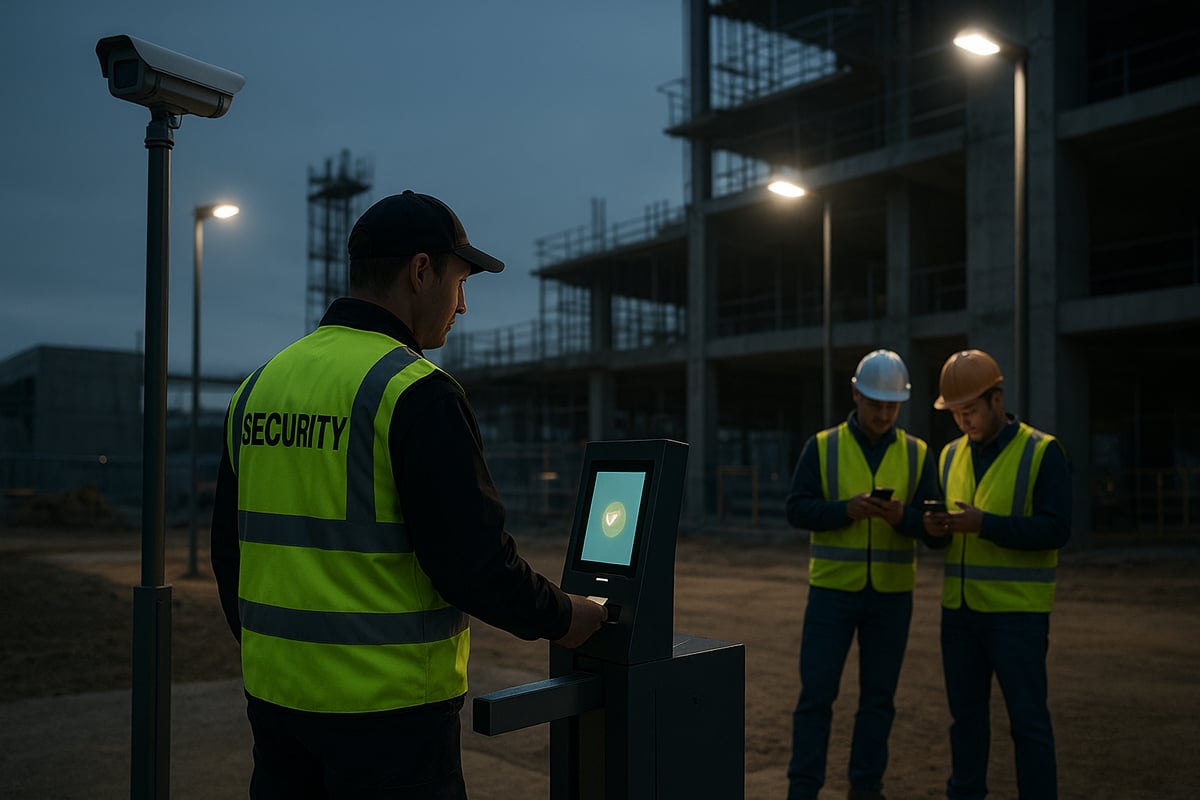
Controlling who enters and exits commercial construction sites is vital for construction security. Deploy electronic gates, turnstiles, and smart card readers at all entry points to monitor movement. For areas requiring heightened security, use biometric authentication such as fingerprint or facial recognition, ensuring only authorized personnel gain access.
Integrate access control systems with time-tracking and attendance software to streamline operations. Restrict entry to sensitive zones and set up alerts for after-hours access attempts. Maintain real-time logs to monitor who is on-site at any given time.
Regularly review and update access permissions, especially as teams change. Sites using advanced access control have reported a significant drop in unauthorized entries. Ensure your systems comply with GDPR and other data privacy regulations to protect personal information. By prioritizing access control, you minimize risk and maintain operational efficiency.
3. Enhance Perimeter Security and Physical Barriers
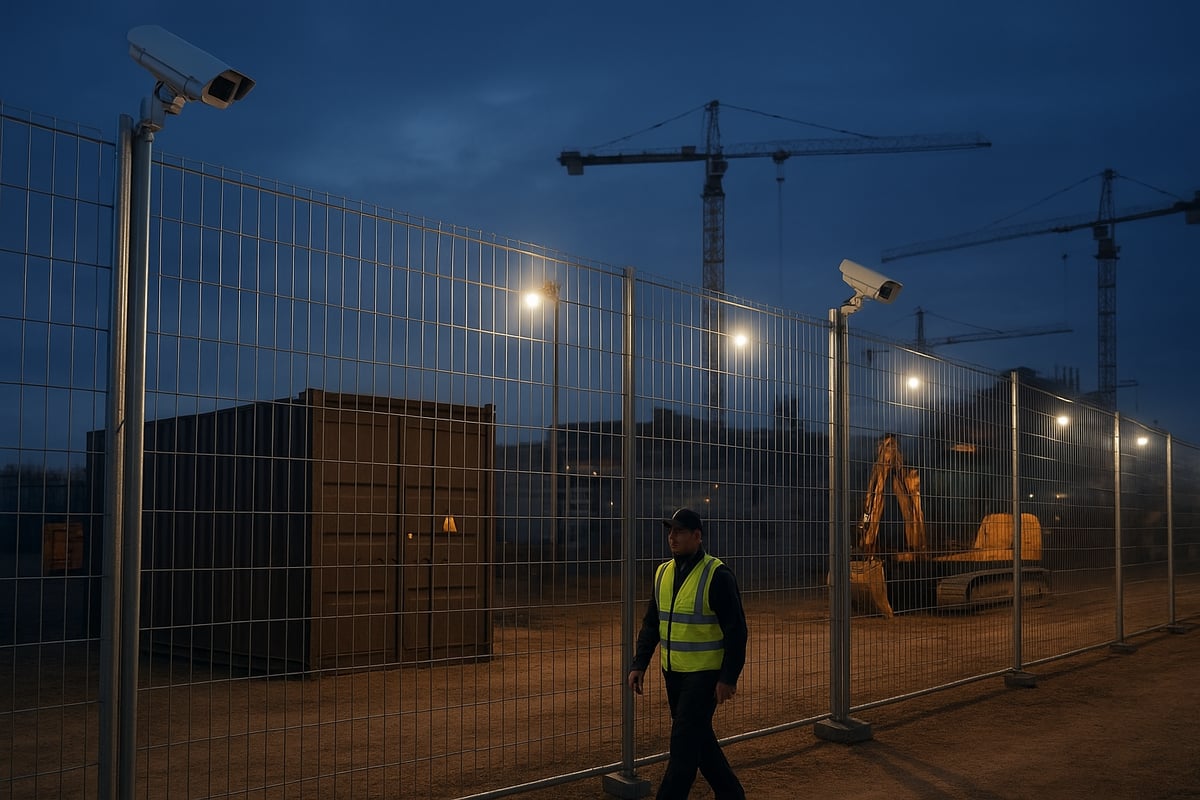
A strong perimeter is a frontline defense for construction security. Install robust fencing, anti-climb barriers, and reinforced gates to deter intruders. Secure all entry points with tamper-proof locks and regularly inspect for weaknesses or signs of tampering.
Display clear warning signage around the perimeter to discourage unauthorized access. Combine physical barriers with monitored alarm systems for immediate response to breaches. Landscaping with thorny bushes or dense shrubbery can serve as a natural deterrent.
Schedule routine inspections and maintenance of all barriers, especially after severe weather or major site changes. Sites employing layered perimeter security experience far fewer break-ins compared to those relying on a single solution. Integrating physical and electronic measures creates a comprehensive shield for your assets.
4. Deploy AI-Powered Surveillance and Monitoring
Modern construction security leverages advanced surveillance to provide real-time situational awareness. High-definition CCTV cameras equipped with night vision and motion detection capture every angle, reducing blind spots. AI analytics can identify unusual activity, sending instant alerts to site managers or security teams.
Integrate video feeds with mobile devices for remote monitoring. Store footage securely in the cloud for later review or evidence. Drones offer aerial surveillance, especially useful for large or complex sites. According to recent advancements showcased at AI-Powered Construction Site Safety at ISC West 2025, AI-based systems can reduce false alarms by up to 70 percent, improving efficiency and response times.
Ensure all cameras are positioned to cover high-risk areas and regularly test your monitoring systems. This proactive approach transforms surveillance from passive recording to active threat prevention.
5. Secure Valuable Equipment and Materials
Construction security must focus on protecting high-value assets. Equip machinery, tools, and materials with GPS tracking devices or RFID tags to monitor their location at all times. Store expensive items in lockable containers or designated secure zones when not in use.
Schedule just-in-time deliveries to reduce excess on-site inventory, lowering the temptation for theft. Maintain detailed digital inventories and conduct regular audits to reconcile records with physical assets. Implement check-in and check-out procedures for all tools and equipment.
Sites using GPS tracking have a 90 percent higher recovery rate for stolen items. These measures not only deter theft but also help with insurance claims and project planning. Proactive asset management is a cornerstone of effective construction security.
6. Invest in Professional Security Personnel and Mobile Patrols
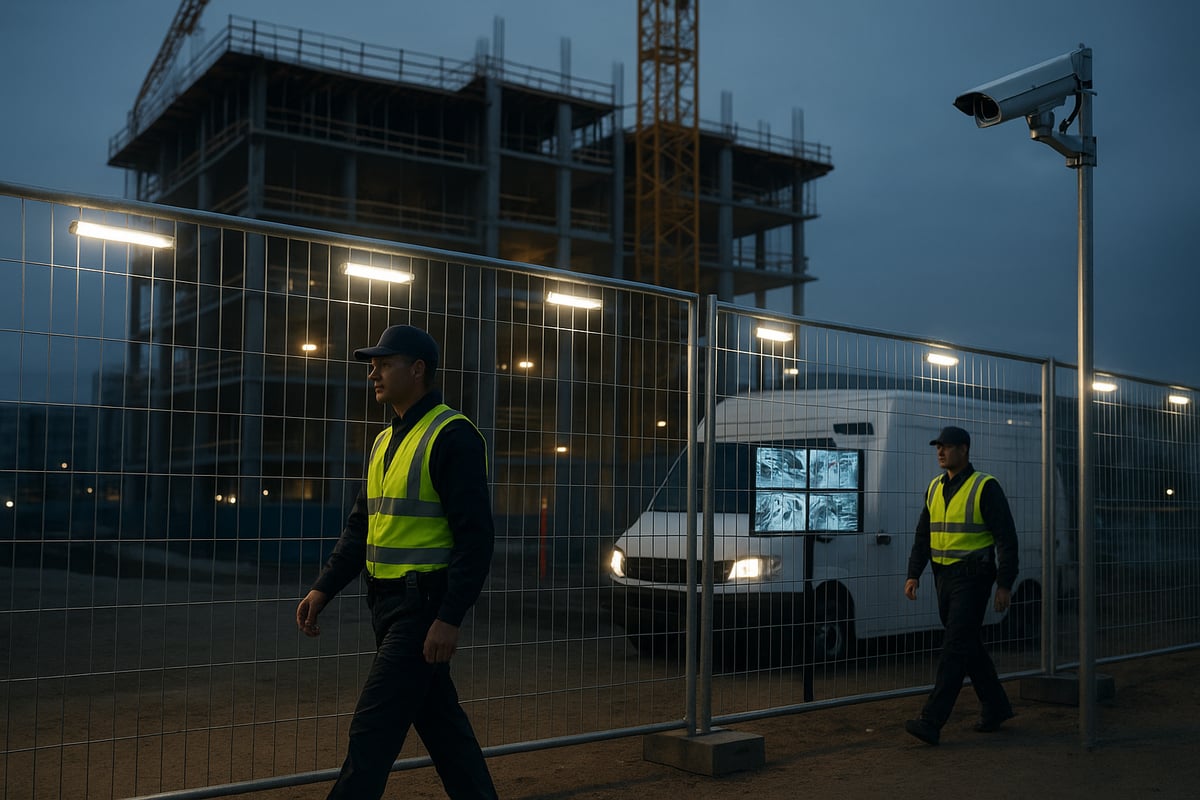
Human presence remains critical in construction security, complementing technology with real-time judgment and deterrence. Hire licensed, trained security guards to maintain a visible presence on-site. Schedule both random and routine mobile patrols, especially after hours or on weekends.
Equip security personnel with reliable communication devices and digital incident reporting tools. Integrate their efforts with your surveillance and access control systems for seamless coordination. Foster a culture of vigilance across all levels, encouraging workers and contractors to stay alert.
Sites with visible, active security staff see a marked decrease in opportunistic theft and vandalism. Provide ongoing training on emerging threats and protocols, ensuring your team can adapt to new risks as they arise.
7. Leverage Smart Lighting and Alarm Systems
Effective lighting is a simple yet powerful construction security tool. Install motion-activated LED lighting to eliminate dark zones that attract trespassers. Smart alarm systems with real-time notifications alert site managers and local authorities instantly when triggered.
Integrate lighting and alarms with surveillance for coordinated response. Test and maintain these systems regularly, ensuring reliability in all conditions. For remote or off-grid sites, solar-powered lighting offers an eco-friendly solution.
Customize alarm triggers for different zones based on risk level. Well-lit sites report up to 60 percent fewer trespassing incidents. Smart lighting and alarms not only deter crime but also enhance safety for workers during early or late hours.
8. Foster a Security-First Culture and Staff Engagement
Sustainable construction security relies on engaged teams who prioritize safety and vigilance. Provide regular security training for all site personnel, including subcontractors. Encourage the reporting of suspicious activity through anonymous channels to foster open communication.
Display clear security policies and emergency procedures throughout the site. Recognize and reward proactive behavior to motivate staff participation. Hold security briefings at key project milestones and after any incident to reinforce best practices.
When everyone understands their role in construction security, response times improve and risks are minimized. Make security a shared responsibility, embedding it into the fabric of your organizational culture.
Integrating Security with Construction Site Operations
Integrating construction security with daily site operations is essential for keeping projects on track and assets protected. As threats grow more complex, firms must ensure security measures work seamlessly with construction workflows, not against them.
Balancing Security and Productivity
Striking the right balance between construction security and productivity is crucial. Overly restrictive measures can slow down work, while lax protocols put assets at risk. To address this, many sites use digital check-ins and mobile access, allowing workers to enter quickly without causing bottlenecks.
Collaboration between security teams and site supervisors ensures protocols are tailored to the project's unique needs. For example, integrating mobile access apps reduces wait times at gates, letting crews start work on schedule. By aligning construction security processes with operational flow, firms avoid disruptions and maintain efficiency.
The Role of Technology in Site Management
Technology is transforming how construction security supports site management. Centralized platforms now combine security data with operational metrics, empowering managers to make informed decisions in real time. Automated security checks and incident reporting streamline compliance and response.
Integrating security tools with project management software allows for seamless coordination across teams. Cloud-based dashboards, for instance, offer instant visibility into site status and alerts. To see how comprehensive solutions can enhance site protection and efficiency, explore site security solutions. This approach ensures construction security is a core part of daily operations, not an afterthought.
Measuring Security ROI and Continuous Improvement
Measuring the return on investment for construction security involves tracking incident rates, response times, and reductions in losses. Regular feedback from site staff helps refine protocols and address evolving risks.
Continuous improvement keeps security aligned with operational goals, ensuring sites remain both productive and protected.
Future Trends in Construction Security for 2025 and Beyond
Emerging technologies are rapidly transforming how commercial construction sites approach security. As we move into 2025, construction security is evolving beyond traditional measures, embracing digital innovation to outpace increasingly sophisticated threats.
Several trends are shaping the future of construction security:
Drones and Robotics: Automated drone patrols are becoming standard for large commercial sites. These systems, such as EdgeAI Drone for Autonomous Construction Site Surveillance, deliver aerial views and instant alerts, filling gaps that static cameras cannot cover.
IoT Integration: Connected sensors monitor not only security breaches but also environmental hazards, like fire or flooding. This holistic approach ensures that safety and security are managed together.
Cybersecurity: As construction security systems become more connected, protecting digital infrastructure from cyberattacks is critical. Firms are investing in encrypted communications and rigorous access controls.
Sustainability: Solar-powered lighting, eco-friendly materials, and energy-efficient surveillance tools are rising priorities for security infrastructure.
Predictive Analytics: Using historical data, construction security strategies are shifting from reactive to proactive, anticipating incidents before they occur.
Industry Collaboration: Sharing intelligence with authorities and industry groups helps firms stay ahead of evolving threats and regulatory changes.
Staying informed and adaptable is essential. By embracing these trends, companies can ensure their construction security strategies remain robust, future-proof, and aligned with the demands of a dynamic commercial environment.
Now that you’ve explored the essential construction security strategies for 2025, you understand how vital it is to protect your sites from evolving risks while keeping your projects on track. At Ablou Facilities, we bring over 30 years of expertise in security, cleaning, and maintenance across Devon and surrounding areas. Our qualified team operates around the clock, delivering tailored solutions that fit your site’s unique needs. If you’re ready to take the next step in safeguarding your investments and ensuring peace of mind for your team and stakeholders, contact the team to discuss how we can help.
Commercial security is more crucial than ever in 2025, as businesses face new risks and challenges every day. Companies are actively searching for security guard services near me to protect their assets, staff, and reputation.
Staying current with advanced security solutions is vital for commercial properties, offices, and public venues. Outdated measures can leave businesses vulnerable and non-compliant.
This guide will introduce seven essential services every business should consider. Each is designed to boost safety, ensure compliance, and keep operations running smoothly. Discover which solutions best fit your needs and take action to safeguard your business today.
Why Security Guard Services Are Critical for Businesses in 2025
Commercial spaces in 2025 are facing a rapidly changing threat landscape. Businesses must adapt to new challenges, from cyber-physical attacks to sophisticated vandalism and organized theft. As these risks grow, the need for reliable security guard services near me becomes more urgent than ever.
Recent data highlights a concerning trend: commercial property crime rates have surged in the past year. According to industry reports, incidents of break-ins and asset loss have increased by over 15% across commercial premises. This uptick is driving companies to invest in more robust protection strategies. Security guards play a crucial role by providing on-the-ground deterrence, quick emergency response, and safeguarding valuable assets.
Visible security presence offers more than just protection—it boosts the confidence of both employees and customers. When people see professional security guard services near me at work, they feel safer and more assured that their environment is being monitored. This visible layer of defense can also dissuade potential offenders from targeting a business in the first place.
Regulatory demands are evolving, too. New standards and insurance policies increasingly require commercial properties to demonstrate adequate security measures. Failing to meet these expectations can lead to compliance issues or even affect coverage eligibility. Security guard services near me help businesses stay aligned with these requirements, reducing risk and ensuring operational continuity.
There are many cases where professional intervention has prevented significant loss. For example, in a logistics warehouse, trained guards identified and stopped an attempted theft before police arrived. In retail parks, rapid incident response has minimized damage during after-hours break-ins. As threats become more complex, the demand for tailored, 24/7 solutions continues to grow. For further insights on these evolving challenges and industry shifts, explore the latest commercial security trends for 2025.
In summary, investing in security guard services near me is not just about compliance—it is essential for protecting assets, maintaining trust, and ensuring business resilience in a changing world.
7 Essential Security Guard Services Near Me for 2025
Choosing the right security guard services near me can make all the difference in protecting your business as threats evolve in 2025. Commercial properties need more than just a uniformed presence. They require adaptable, technology-driven, and highly trained professionals who understand the unique risks of modern business environments.
This list highlights seven trusted providers offering security guard services near me, each with tailored solutions for different sectors. Our selection criteria focus on effectiveness, adaptability, technology integration, and proven results. For a comprehensive directory of vetted local options, visit the Security Guard Companies Near Me page.
Below, discover which partner best aligns with your security needs.
Ablou Facilities Ltd stands out as a leading provider of security guard services near me for businesses in the South West. Their integrated solutions cover static guards, mobile patrols, key holding, alarm response, and event security. With over 30 years of industry experience, Ablou Facilities ensures every client receives a tailored approach, meeting the specific needs of commercial offices, business parks, construction sites, airports, and event venues.
What sets Ablou apart is its commitment to quality and compliance. All staff are SIA-licensed, thoroughly vetted, and available 24/7, 365 days a year. Clients benefit from rapid response times and local expertise, crucial for businesses seeking reliable security guard services near me. The company offers free consultations to design bespoke packages.
Pros include robust vetting, in-depth local knowledge, and flexibility. However, pricing is only available upon consultation, and coverage is limited to South West England. For businesses in this region, Ablou Facilities provides a trusted, comprehensive security solution.
Securitas UK offers a forward-thinking approach to security guard services near me, especially for large-scale commercial operations. Their portfolio features commercial guarding, remote monitoring, and mobile patrols, all supported by advanced technology. Securitas integrates real-time reporting, CCTV, and incident management platforms, delivering a robust and scalable security infrastructure.
The company’s global reach and rigorous training programs ensure consistency across multiple sites. Securitas is ideal for logistics hubs, retail chains, corporate campuses, and public sector sites seeking advanced security guard services near me. Their solutions adapt to evolving threats, and custom quotes are provided based on each client’s scope and location.
Strengths include seamless tech integration and a strong regulatory compliance record. Some smaller businesses may find the service less personalized due to the company’s scale. Overall, Securitas UK is a top choice for organizations prioritizing innovation and comprehensive coverage.
Mitie Security adopts a risk-based methodology, making it a preferred provider of security guard services near me for clients with complex or high-value assets. Their offerings range from manned guarding and front-of-house services to mobile response and specialist event security. Each deployment is informed by detailed, data-driven risk assessments.
Mitie’s tailored approach ensures each client receives precisely the level of protection required. The firm is known for its strong customer service ethos, with personnel trained to balance safety and hospitality. Pricing is bespoke, reflecting the site’s risk profile and operational needs.
Target sectors include corporate offices, industrial estates, and educational institutions. Pros are strong analytics, experienced staff, and flexible deployment. The main drawback is that onboarding can be time-consuming for intricate contracts. For businesses seeking customized security guard services near me, Mitie delivers measurable results.
G4S Secure Solutions is synonymous with large-scale, integrated security guard services near me. Their service suite covers manned guarding, mobile patrols, and rapid alarm response. Leveraging global resources, G4S employs advanced incident reporting technologies to ensure transparency and swift action.
What distinguishes G4S is its ability to scale for multi-site commercial clients, critical infrastructure, and logistics operations. The company operates around the clock, providing peace of mind for businesses that require constant vigilance from their security guard services near me.
Strengths include international expertise, robust security protocols, and rapid deployment capabilities. The primary limitation is less flexibility for smaller or highly specialized requirements, as offerings are designed for larger enterprises. G4S remains a trusted partner for organizations with extensive or high-risk assets.
Kingdom Services Group delivers sector-specialized security guard services near me, with a focus on retail, healthcare, and logistics environments. Their core features include uniformed guards, loss prevention strategies, and seamless integration of customer service within security roles.
Kingdom excels in industry compliance and rapid staff deployment, offering flexible contracts suited to dynamic commercial needs. Pricing is available upon request and varies by sector and location. Their expertise makes them a strong choice for retail parks, warehouses, hospitals, and office parks seeking tailored security guard services near me.
Pros include sector knowledge and the ability to scale quickly. However, the quality of experience can vary depending on the regional branch. For businesses operating in regulated or fast-paced sectors, Kingdom provides adaptable and compliant solutions.
Churchill Group brings a modern, tech-driven approach to security guard services near me by blending manned guarding with electronic security systems. Their offerings feature body-worn cameras, incident management apps, and staff trained in customer service protocols, supporting both safety and positive site experiences.
Real-time reporting and tailored site procedures enhance accountability and transparency. Churchill’s packages are custom-built, ensuring that each commercial office, educational campus, or leisure venue receives the right mix of human and technological protection. This positions Churchill as a leading provider of security guard services near me for businesses aiming to elevate their security standards.
Pros are their technology-forward mindset and focus on customer experience. Some organizations may require additional training to maximize technology integration. Churchill Group is ideal for clients seeking innovative, site-specific solutions.
O.C.S. Group is recognized for delivering accredited and sustainable security guard services near me, catering to commercial clients who value compliance and environmental responsibility. Services include SIA-approved mobile and static guarding, with a clear emphasis on green credentials and long-term partnership models.
O.C.S. stands out for strong regulatory compliance and a sustainability focus, offering tailored packages that align with clients’ operational and environmental goals. Pricing is customized, with options for organizations prioritizing sustainability in their security guard services near me.
Pros include leadership in sustainability and high accreditation standards. However, costs may be higher for smaller businesses. O.C.S. Group is an excellent fit for environmentally conscious organizations, large estates, and public sector properties.
Comparison Table: Key Features of Top Security Guard Services Near Me
Provider
Core Services
Unique Benefit
Ideal For
Ablou Facilities Ltd
Static, Patrol, Alarm, Events
Local expertise, Free consult
South West businesses
Securitas UK
Guarding, Monitoring, Patrol
Tech integration
Large/multi-site organizations
Mitie Security
Risk-led Guarding, Events
Analytics-driven approach
Corporate, industrial, education
G4S Secure Solutions
Guarding, Patrol, Response
Global resources
Large commercial, logistics
Kingdom Services Group
Sector-specific Guarding
Industry compliance
Retail, healthcare, logistics
Churchill Group
Guarding, Tech Integration
Body-worn cameras
Offices, campuses, leisure
O.C.S. Group
Accredited, Sustainable Guard
Sustainability leadership
Public sector, estates
Finding the right security guard services near me is essential for protecting assets, ensuring compliance, and maintaining operational continuity. By comparing these leading providers, businesses can make informed decisions tailored to their unique security requirements.
How to Choose the Right Security Guard Service Near You
Selecting the right security guard services near me is a critical decision for every commercial property, office, or public venue. The right provider can make the difference between effective risk management and avoidable vulnerabilities. Here is a clear, step-by-step approach to help you make an informed choice.
1. Verify Credentials and Accreditation
Start by confirming that any provider of security guard services near me holds valid SIA licenses, comprehensive insurance, and relevant accreditations. These certifications ensure legal compliance and professional standards. Look for companies with additional sector-specific credentials, especially if your business operates in regulated industries.
2. Evaluate Industry Experience and Local Knowledge
Experience in commercial security is vital. A provider with a strong track record in your sector understands unique risks and operational needs. Local expertise means faster response times and familiarity with potential threats in your region. When reviewing companies, prioritize those with proven experience in your area.
3. Compare Service Offerings and Technology Integration
Not all security guard services near me are created equal. Review the range of services: static guards, mobile patrols, event security, and integrated technology solutions. For a comprehensive overview, the Security Guard Services Overview details various commercial options. Assess whether providers offer real-time reporting, CCTV integration, or incident management systems to enhance protection.
Service Type
Key Benefits
Best For
Static Guarding
Visible deterrence, on-site presence
Offices, retail, warehouses
Mobile Patrols
Flexible coverage, rapid response
Business parks, logistics
Event Security
Crowd control, emergency readiness
Venues, exhibitions
Tech Integration
Real-time alerts, data analytics
Multi-site businesses
4. Seek Tailored Solutions and Free Consultations
The best security guard services near me offer tailored packages based on your specific property type, risk profile, and business hours. Free consultations allow you to discuss unique needs before committing. Ask about flexible contracts and the ability to scale services as your business evolves.
5. Check References, Reviews, and Case Studies
Before deciding, request client references, read testimonials, and review case studies. Insights from similar businesses in your area offer valuable perspective. The Best Security Company Insights page outlines key qualities to look for and common red flags.
6. Learn from Local Success Stories
For example, a Devon-based business recently improved its safety and compliance by switching to a local provider with expertise in tailored commercial security. Their proactive approach and rapid response resulted in fewer incidents and higher staff confidence.
7. Negotiate Contracts and Understand Service Level Agreements
Finally, when finalizing your choice of security guard services near me, carefully review contract terms and service level agreements (SLAs). Ensure response times, coverage hours, and incident protocols are clearly defined. Transparent agreements set expectations and protect your business interests.
Trends Shaping Commercial Security Guard Services in 2025
Commercial security guard services near me are rapidly evolving to meet new challenges. In 2025, artificial intelligence is set to transform surveillance, enabling real-time threat detection and proactive response. For example, AI-powered behavioral analysis in security allows teams to identify risks faster and more accurately than ever before.
Sustainability is also becoming a key consideration. More providers are adopting green practices and seeking accreditation to meet client expectations. Another trend is the shift towards integrated facilities management, where security is bundled with cleaning and maintenance for streamlined operations.
Remote monitoring and mobile response units are enhancing traditional guarding, offering businesses flexible and cost-effective protection. By embracing these trends, companies can ensure their security guard services near me remain relevant, effective, and compliant as threats and regulations continue to change.
As we look ahead to 2025, it’s clear that staying proactive about your business’s security is more important than ever. Whether you’re managing an office, a retail space, or a public venue in Devon or the surrounding areas, having the right security guard service can make all the difference for your people and your property. At Ablou Facilities, we combine three decades of expertise with 24 7 tailored solutions—so you can operate with peace of mind, knowing your business is in safe hands. If you’re ready to explore the best security options for your needs, contact the team.
Commercial sites are facing unprecedented risks in 2025, as criminals adopt smarter tactics and regulations become stricter. Businesses, property managers, and site operators need a proactive approach to site security to safeguard assets, comply with new rules, and avoid costly incidents.
This essential guide explores the latest threats, key components of a strong site security strategy, advanced technologies shaping the industry, and compliance requirements every commercial site must meet. Discover what’s at stake, understand the consequences of inadequate protection, and learn how to build a future-proof plan with practical, expert-backed steps.
Stay ahead of challenges and secure your site with confidence.
The Evolving Threat Landscape for Site Security in 2025
The landscape for site security is shifting rapidly as commercial sites face a surge in both physical and digital threats. Operators must stay alert as criminals adopt new tactics, regulations become stricter, and the stakes for compliance and protection rise. Understanding these evolving risks is the first step to building a proactive site security strategy that truly safeguards assets and operations.
Rising Crime and Intrusion Trends
Commercial sites are experiencing a notable increase in theft, vandalism, and unauthorised access incidents. In the UK alone, construction sites lost over £800 million to theft in 2023, according to UK construction site theft statistics 2023. Criminals are leveraging sophisticated methods, including drones for surveillance, AI-powered tools to bypass systems, and coordinated group attacks.
Cyber-physical threats are also on the rise, with attackers targeting site technology, access controls, and surveillance infrastructure. Recent high-profile breaches in the construction and infrastructure sectors highlight the urgent need for robust site security measures.
Emerging Risks: Technology and Human Factors
Modern site security must now address vulnerabilities introduced by connected devices and human behaviour. IoT equipment, if not properly secured, can serve as entry points for cyberattacks. Social engineering tactics, such as phishing or impersonation, put site staff and contractors at risk.
Insider threats are a growing concern, with employees or contractors misusing access for theft or sabotage. Risks escalate during off-hours, weekends, and holidays. For example, a recent breach involved a compromised access card, allowing unauthorised entry and significant data loss. Addressing these factors is essential for comprehensive site security.
Regulatory and Insurance Pressures
The regulatory environment for site security is tightening, particularly in the UK and EU. New compliance standards, such as BSI EN50518:2019 for alarm receiving centres, set higher expectations for monitoring and response. Insurers now require robust physical and cyber protections as a condition of coverage.
Failure to comply with evolving regulations or meet insurer benchmarks can result in fines, penalties, or denied claims. For commercial operators, aligning site security practices with legal and insurance requirements is critical for operational continuity and risk mitigation.
Core Components of a Robust Site Security Strategy
A robust site security strategy is essential for protecting commercial assets and ensuring business continuity. As threats evolve, a layered approach is key. This includes comprehensive risk assessment, physical barriers, advanced surveillance, and effective incident response. For a detailed overview of integrated solutions, visit the Professional Security Services Overview. By focusing on these core components, businesses can proactively address vulnerabilities and maximize their investment in site security.
Comprehensive Site Risk Assessment
The foundation of effective site security is a tailored risk assessment. Every commercial site has unique assets and vulnerabilities. Start by identifying valuable equipment, mapping all access points, and reviewing past incident reports. Evaluate local crime data and consult professional risk consultants for expert insight.
Key steps include:
Asset identification and valuation
Vulnerability mapping
Review of historical incidents
Assessment of local crime trends
By using crime intelligence tools and in-depth evaluations, businesses ensure that site security investments are targeted and deliver maximum ROI.
Physical Security Measures and Access Control
Physical security forms the first line of defense for any commercial site. Secure fencing, barriers, and controlled access points prevent unauthorized entry. Install turnstiles, gates, and monitored entry systems for added protection. SIA-licensed security guards and mobile patrols provide a visible deterrent and rapid response capability.
Enhance site security by:
Implementing CCTV-monitored gates
Integrating barriers with alarm systems
Employing trained security staff
Combining physical measures with technology ensures robust site security at every perimeter.
Surveillance and Monitoring Solutions
Advanced surveillance is central to modern site security. Deploy 24/7 CCTV systems with remote monitoring and integrate alarms for immediate response. Wireless, rapid-deployment cameras offer flexibility for changing site layouts.
Partner with BSI EN50518:2019 approved monitoring centers for compliance and reliability. AI-powered analytics help detect threats and minimize false alarms. For example, construction site CCTV has enabled rapid police response and prevented major losses.
A multi-layered surveillance approach strengthens site security and ensures incidents are addressed swiftly.
Incident Response, Reporting, and Key Holding
A proactive incident response plan is critical for site security. Establish clear protocols for alarms, secure key holding, and rapid on-site response. Digital incident logs and audit trails improve compliance and transparency.
Key elements include:
Staff training on emergency procedures
Regular drills and escalation path reviews
Secure storage and management of site keys
Mobile patrols and professional alarm response ensure that any breach is handled quickly, minimizing risk and maintaining site security at all times.
Advanced Technologies and Innovations in Site Security
The rapid evolution of technology is reshaping site security for commercial properties. Staying ahead of criminal tactics now requires advanced tools and intelligent systems that respond in real time. As 2025 approaches, businesses are leveraging new innovations to safeguard sites, assets, and personnel more effectively than ever before. According to the 2025 UK construction trends report, integrating these technologies is no longer optional—it is essential for robust site security.
AI and Automation in Surveillance
Artificial intelligence is transforming surveillance across commercial sites. AI-powered cameras now detect unusual movement, unauthorized access, and potential threats in real time. Facial recognition and behavioral analytics help identify risks before incidents occur.
Automated alerts are sent directly to security teams, reducing response times and ensuring swift intervention. These systems also minimize false alarms by distinguishing between genuine threats and harmless activity. For example, many commercial sites have implemented AI analytics to monitor after-hours activity, resulting in faster police responses and improved outcomes.
By integrating AI with cloud-based monitoring, site security becomes both proactive and adaptive to emerging risks.
Smart Sensors and IoT Integration
Modern site security strategies rely on a network of smart sensors and IoT devices. Wireless sensors monitor motion, vibration, temperature, and environmental conditions throughout the site. They provide instant alerts if equipment is tampered with or if a perimeter breach occurs.
IoT-enabled asset tracking allows managers to oversee valuable tools and machinery remotely. Secure network protocols are critical, as poorly protected devices can become entry points for cyber threats. On many construction sites, deploying smart sensors has significantly reduced theft and improved asset management.
Integrating these technologies ensures that site security covers both physical and digital vulnerabilities.
Remote Monitoring and Mobile Management
Remote monitoring platforms have revolutionized site security for multi-site operations. Cloud-based dashboards provide real-time visibility into site status, incident alerts, and security system health.
Security staff can use mobile apps to access live camera feeds, review incident reports, and configure system settings from anywhere. This flexibility allows for rapid response, even across geographically dispersed sites. Some providers offer nationwide deployment with setup times as fast as 72 hours.
Centralized control and mobile management mean that commercial sites remain protected around the clock, regardless of location or scale.
Forensic Marking and Asset Protection
Forensic marking is a powerful deterrent against theft in commercial environments. Solutions like SmartWater chemically tag high-value assets, making stolen items traceable and aiding in recovery.
Asset tagging and integration with police databases improve the chances of retrieving stolen property and securing convictions. Many businesses have seen marked equipment returned and criminals prosecuted due to these advanced measures.
Forensic marking not only strengthens site security but also helps meet insurance requirements and supports claims with clear evidence.
Compliance, Standards, and Insurance for Site Security
Commercial sites face a rapidly changing environment of regulatory, insurance, and industry standards. Adhering to best practices is not just about protection; it is essential for legal compliance and business continuity. Here is what you need to know to keep your site security strategy ahead of the curve.
Legal and Regulatory Frameworks
The legal landscape for site security is evolving quickly in the UK and EU. Regulations now require strict controls for surveillance, alarm systems, and site access. The BSI EN50518:2019 standard for alarm receiving centres sets the benchmark for alarm response, demanding robust monitoring processes.
GDPR impacts how surveillance footage is handled, with strict requirements for data storage and privacy. Construction and infrastructure sites must also meet local authority rules, plus industry-specific standards such as HSE and SIA licensing. Staying compliant ensures your site security measures are both effective and legally sound.
Insurance Requirements and Risk Mitigation
Insurance providers are raising the bar for commercial site security. Many now require physical and electronic protections, including monitored alarms and secure access controls, as part of coverage eligibility. Sites lacking these features may face higher premiums or reduced coverage.
To align with insurer expectations:
Conduct professional risk assessments
Implement documented protocols for incidents
Ensure 24/7 monitoring for high-value sites
Maintain up-to-date records of all site security measures
Meeting these requirements can reduce risk, streamline claims, and potentially lower insurance costs.
Accreditation and Certification
Working with accredited security partners is crucial for maintaining trust and compliance. Look for providers certified by SIA, BSI, Safe Contractor, and ISO, as these accreditations validate expertise and reliability. Regular third-party audits and ongoing compliance checks help keep site security strategies up to date.
Accreditation
Benefit
SIA
Licensed and vetted staff
BSI
Adherence to industry standards
Safe Contractor
Proven health and safety record
ISO
Quality management assurance
Choosing certified partners provides peace of mind and demonstrates your commitment to robust site security.
Step-by-Step Guide to Building a Future-Proof Site Security Plan
Every commercial site needs a clear, actionable plan to ensure site security remains strong against evolving threats. This step-by-step guide breaks down the process into manageable actions, making it easier to protect assets, people, and business continuity. Whether managing a single location or multiple sites, following these steps will help future-proof your site security approach.
Step 1: Conduct a Site Security Audit
A comprehensive site security audit is the crucial first step. Begin by walking the entire site and mapping out all entry points, high-value assets, and current security measures. Engage professional consultants for an unbiased evaluation, ensuring nothing is overlooked.
Gather local crime data, review recent incidents, and document any vulnerabilities. Prioritize risks based on threat levels and business impact. For inspiration, explore Success Stories in Site Security to see how targeted audits have transformed real commercial operations. This foundation ensures your site security plan is built on accurate, actionable intelligence.
Step 2: Design a Layered Security Solution
With audit results in hand, develop a tailored, multi-layered site security system. Combine physical barriers, surveillance, and robust access controls. Integrate alarms, smart sensors, and 24/7 monitoring to cover all angles.
Select technologies that match your site's unique risk profile. Plan for redundancy, so if one layer is breached, others remain effective. For example, many commercial sites achieve optimal protection by deploying CCTV, mobile patrols, and advanced intrusion detection as part of their site security strategy.
Step 3: Implement, Test, and Train
Rapid deployment is essential, particularly for sites with urgent security needs. Aim to implement your site security measures within 72 hours where possible. Test every component, from alarms to cameras, to uncover any gaps in coverage.
Train all staff and contractors on protocols, emergency responses, and reporting procedures. Regular drills keep everyone prepared. Leveraging professional key holding and alarm response services further strengthens your incident response, ensuring your site security plan is fully operational.
Step 4: Monitor, Review, and Update Regularly
Site security is not a one-time project but an ongoing process. Use advanced monitoring platforms for real-time oversight and maintain digital incident logs for compliance and analysis.
Schedule regular audits and quarterly reviews to adapt to emerging threats and regulatory changes. Gather feedback from site staff to identify practical improvements. Reviewing success stories and past security incidents helps refine your site security plan, keeping your business protected as risks evolve.
Choosing the Right Site Security Partner
Selecting the right site security partner is a pivotal decision for every commercial operation. A reliable provider safeguards your assets, ensures business continuity, and keeps you compliant with evolving regulations. The right choice brings peace of mind and measurable value.
Criteria for Selecting a Security Provider
When evaluating site security partners, prioritize experience, expertise, and accreditations. Look for providers with a strong track record in commercial environments and a deep understanding of local risks.
Key criteria include:
Proven industry experience and knowledge of commercial site security challenges
Ability to deliver rapid deployment and tailored solutions
24/7/365 support and real-time incident response
Integrated cleaning and security options for complex sites
A provider who meets these standards will help you build a resilient site security solution aligned with your risk profile.
Questions to Ask Potential Partners
Before committing to a site security provider, ask targeted questions to assess their suitability. Understanding their capabilities and approach ensures your needs are met.
Essential questions include:
What accreditations and certifications do your teams hold?
Can you provide references from similar commercial projects?
How do you adapt site security solutions for unique site requirements?
What is your incident response and escalation process?
Do you offer case studies from construction or business park clients?
These questions help clarify if a provider can deliver site security solutions that match your operational demands.
Ablou Facilities brings over 30 years of experience delivering commercial site security across Devon, Exeter, Torquay, Plymouth, and the wider South West. Their team provides SIA-licensed guards, mobile patrols, alarm response, and secure key holding for business and public sector clients.
Service highlights:
Accredited by Safe Contractor and BSI for industry-leading compliance
24/7/365 rapid response for maximum site security
Free consultations to assess and design custom site security plans
Focus on commercial properties, not residential work
Ablou Facilities is committed to robust site security, helping clients meet the highest standards and regulatory requirements.
After exploring the latest security threats and proven strategies for protecting your site in 2025, it’s clear that staying ahead means more than just installing cameras or alarms—you need a partner who truly understands your unique risks. That’s where Ablou Facilities comes in, bringing decades of experience, local expertise, and a commitment to keeping your business secure day and night. If you’re ready to take the next step and create a custom security plan that actually works for you, let’s start the conversation. Contact the team today and see how we can help safeguard your site’s future.
In 2025, the commercial world faces an unprecedented wave of security challenges, making protection more vital than ever. As threats rapidly evolve and regulations tighten, businesses are seeking innovative ways to safeguard their assets and people.
This article spotlights the 12 top security companies that are setting the industry standard this year. With demand for advanced commercial security solutions on the rise, choosing the right provider is crucial.
Our goal is to help your business navigate the options and identify leaders in commercial security. Ahead, you’ll find a detailed breakdown of each company’s strengths, services, and what makes them stand out.
The Evolving Landscape of Commercial Security in 2025
The commercial security sector is undergoing rapid transformation as organizations adapt to new risks and regulatory demands. With the increasing complexity of threats, businesses are seeking guidance from top security companies to ensure comprehensive protection. This evolving landscape requires a blend of advanced technology, specialized expertise, and proactive strategies to keep commercial environments secure.
New Threats and Technology Advancements
Commercial entities now face a new breed of security challenges. Cyber-physical convergence is blurring boundaries, as physical intrusions and cyberattacks often occur in tandem. AI-driven threats, such as automated hacking tools and deepfake-enabled breaches, are pushing top security companies to develop smarter defenses.
Integrated solutions are now standard, blending physical security infrastructure with robust cybersecurity protocols. Many organizations deploy AI-powered surveillance, real-time analytics, and facial recognition to detect and respond to suspicious activity instantly. Compliance with updated regulations, such as GDPR and sector-specific mandates, is critical.
For instance, businesses operating in major cities must guard against both physical break-ins and digital data theft. Only top security companies with multidisciplinary expertise can address these dual threats effectively.
The Growing Demand for Specialized Commercial Security Services
The demand for tailored commercial security is surging across sectors like corporate offices, industrial sites, retail, and public venues. Top security companies are meeting this need by expanding remote monitoring, rapid response capabilities, and mobile patrols.
Commercial clients increasingly prioritize solutions that offer scalability, flexibility, and round-the-clock support. Consider the case of large-scale events or critical infrastructure, where specialized teams and advanced systems are essential for risk mitigation. According to industry reports, the global security services market is projected to exceed $300 billion by 2025, highlighting the scale of investment and confidence in top security companies.
This sector’s growth is fueled by the need for proactive, adaptable protection that addresses complex commercial environments.
Key Criteria for Choosing a Security Partner
Selecting the right provider among top security companies involves several key criteria. Reputation, proper licensing, insurance, and documented compliance credentials are non-negotiable. Businesses should evaluate the provider’s technology stack, the depth of staff training, and average response times.
Industry experience and sector-specific expertise often set leading firms apart. For example, companies with proven track records in high-risk sectors can offer valuable insights and reliability. It is wise for businesses to conduct thorough due diligence, review customer testimonials, and consult resources like the Best security company guide to make informed decisions.
A quick comparison table can help summarize these points:
Criteria
Why It Matters
Reputation & Licensing
Ensures trust and legal compliance
Technology Stack
Supports advanced threat detection
Staff Training
Enhances incident response capability
Sector Experience
Delivers tailored, effective solutions
Careful evaluation sets the stage for lasting security partnerships.
12 Top Security Companies Leading The Industry In 2025
Choosing the right partner among the top security companies is essential for commercial organizations in 2025. This section spotlights twelve industry leaders, each setting new benchmarks for commercial protection, innovation, and client satisfaction.
Securitas AB stands out among the top security companies for its global reach and tailored commercial solutions. Operating in over 50 countries, it delivers on-site guarding, electronic security, remote monitoring, and fire safety services.
Core Features: On-site guards, advanced monitoring, fire prevention.
Pricing: Custom quotes for every client.
Target Audience: Large enterprises, retail, industrial sites.
Pros: Scalable, tech-driven, compliant.
Cons: Premium pricing for smaller firms.
Securitas AB’s scalable offerings and technology integration make it a first choice for commercial clients seeking robust protection.
As one of the top security companies in North America, Allied Universal is known for its expansive resources and innovative approach. The company provides manned guarding, mobile patrols, risk consulting, and tech-enabled solutions.
G4S, now part of Allied Universal, maintains its status among the top security companies due to its global presence and sector specialization. Its offerings include security personnel, electronic monitoring, and risk management.
Prosegur is a leader among top security companies with a strong international presence, especially in Europe, Latin America, and Asia. The company excels in combining physical and digital security.
SecurAmerica is recognized as one of the top security companies for US-based commercial and industrial clients. It specializes in uniformed officers, mobile patrols, and rapid emergency response.
Paladin Security is a standout among top security companies in Canada, with growing influence in the US market. Its industry-specific expertise supports healthcare, real estate, and education clients.
ICTS Europe is a specialist among the top security companies, leading in aviation and commercial facility protection. Its focus on access control, screening, and advanced technology supports complex environments.
GardaWorld is a global force among top security companies, recognized for rapid deployment and crisis management. It serves commercial properties, events, and critical infrastructure with scalable solutions.
SIS Group ranks high among top security companies in Asia, offering a comprehensive range of commercial services. It combines manned guarding with electronic security and facility management.
Axis Security is a leading UK-based provider, often listed among top security companies for its client-focused commercial offerings. Services include concierge security, mobile patrols, and CCTV monitoring.
Core Features: Concierge, patrols, CCTV.
Pricing: Customizable per client.
Target Audience: Offices, business parks, hospitality.
Pros: High client retention, flexible contracts.
Cons: UK-centric operations.
Axis Security’s tailored approach and excellent customer service appeal to a range of commercial clients.
Mitie Security stands among top security companies in the UK, noted for its tech-driven, data-focused solutions. The company excels in remote monitoring, risk analysis, and security personnel services.
Securiguard is recognized among top security companies in Canada for its commitment to commercial real estate, retail, and transportation sectors. It emphasizes community engagement and flexible security solutions.
Core Features: Security guards, mobile patrols, event security.
Pricing: Competitive for long-term contracts.
Target Audience: Commercial real estate, retail, transport.
Pros: Responsive management, local expertise.
Cons: Limited international operations.
Securiguard’s adaptable services and local knowledge make it a strong option for commercial clients.
If you want more details on the types of commercial services these top security companies provide, visit this Security services overview for an in-depth look at industry offerings.
Trends Shaping the Future of Commercial Security Companies
The commercial security sector is undergoing rapid transformation as businesses seek to keep pace with new risks and regulatory demands. Top security companies are leading this evolution, adopting cutting-edge technologies and innovative strategies to deliver effective protection. From artificial intelligence to sustainability, several trends are shaping how these providers operate in 2025.
Integration of Artificial Intelligence and Automation
Top security companies are increasingly deploying AI-driven solutions for surveillance, threat detection, and incident response. Automation streamlines routine monitoring, allowing human teams to focus on complex scenarios. For example, AI-powered video analytics can identify unusual behavior instantly, reducing response times and minimizing risks. To learn more about how agentic AI is transforming the industry, explore this AI integration in cybersecurity resource.
The Move Toward Proactive Security Strategies
Providers are shifting from reactive to proactive security models. Data analytics and predictive tools enable top security companies to anticipate threats before they escalate. Scenario planning and risk assessment are now central to commercial site protection, helping businesses stay ahead of evolving risks and reduce vulnerabilities.
Sustainability and Green Security Initiatives
Eco-friendly practices are gaining traction among top security companies. Clients increasingly demand green patrol vehicles and energy-efficient surveillance solutions. Many firms now invest in solar-powered systems and sustainable operations to support client ESG goals. These initiatives not only reduce environmental impact but also enhance long-term cost efficiency.
Enhanced Training and Professional Development
Advanced technology requires highly skilled personnel. Top security companies are investing in ongoing staff education, certifications, and specialized training. Teams are now prepared to manage both physical and cyber threats, ensuring a higher standard of service. This focus on professional development leads to better client outcomes and increased staff retention.
Expansion of Remote and Mobile Security Services
Remote monitoring centers and mobile patrol units are becoming standard offerings. These services provide broader coverage, faster response times, and cost savings for commercial clients. Top security companies leverage 24/7 remote video monitoring and mobile teams to protect multi-site facilities and critical infrastructure.
Focus on Compliance and Data Privacy
Navigating complex regulations is a priority for top security companies. Providers help clients comply with data privacy laws and industry standards, offering transparent data handling and robust privacy safeguards. Many firms conduct compliance audits to ensure their commercial clients remain protected and up to date with evolving requirements.
After exploring the leading security companies shaping our industry in 2025, you can see how crucial it is to have a trusted partner who delivers both advanced protection and peace of mind. Whether you need round-the-clock security, tailored commercial cleaning, or reliable key holding, our experienced team at Ablou Facilities is ready to help you safeguard what matters most. If you’d like to discuss your unique needs or get expert advice on your next steps, contact the team today. We’re here to support you with solutions built for your business and your future.
To provide the best experience, we use cookies to store and/or access device information. Consenting to these technologies will allow us to process data such as browsing behaviour or unique IDs on this site. Not consenting or withdrawing consent, may adversely affect certain features and functions.
Functional
Always active
The technical storage or access is strictly necessary for the legitimate purpose of enabling the use of a specific service explicitly requested by the subscriber or user, or for the sole purpose of carrying out the transmission of a communication over an electronic communications network.
Preferences
The technical storage or access is necessary for the legitimate purpose of storing preferences that are not requested by the subscriber or user.
Statistics
The technical storage or access that is used exclusively for statistical purposes.The technical storage or access that is used exclusively for anonymous statistical purposes. Without a subpoena, voluntary compliance on the part of your Internet Service Provider, or additional records from a third party, information stored or retrieved for this purpose alone cannot usually be used to identify you.
Marketing
The technical storage or access is required to create user profiles to send advertising, or to track the user on a website or across several websites for similar marketing purposes.