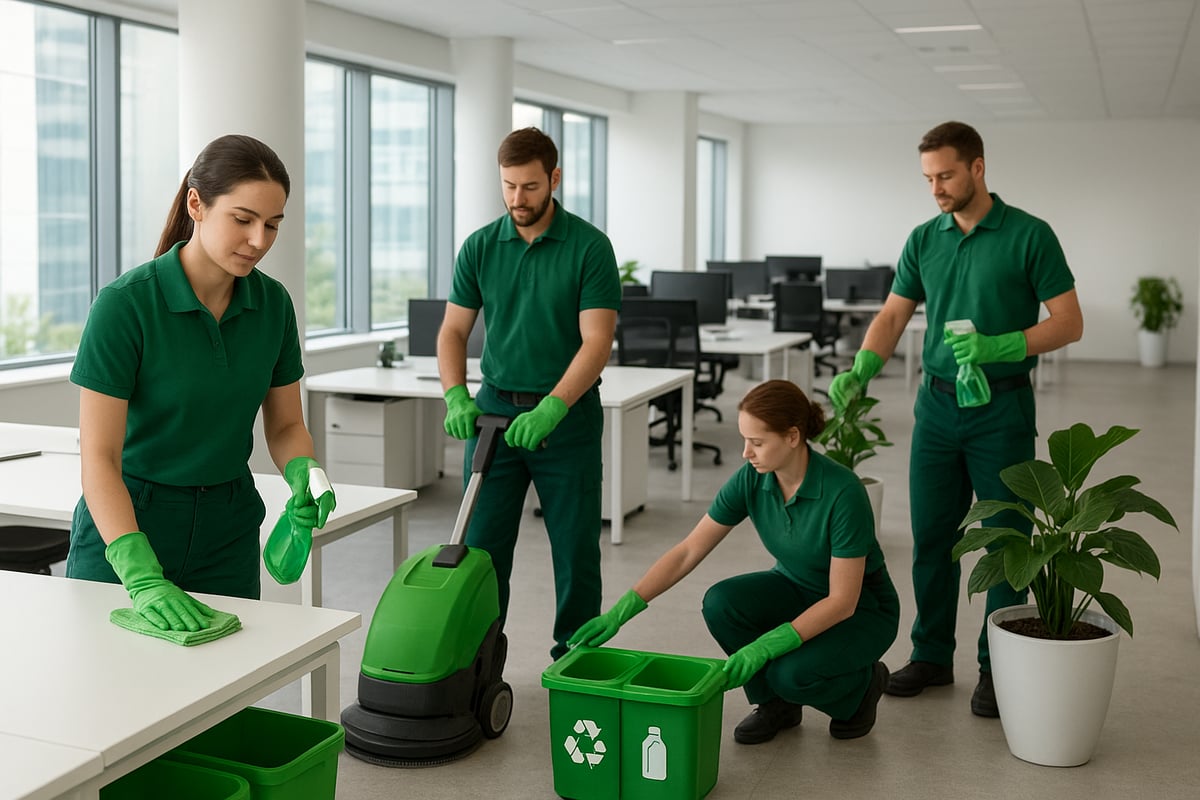
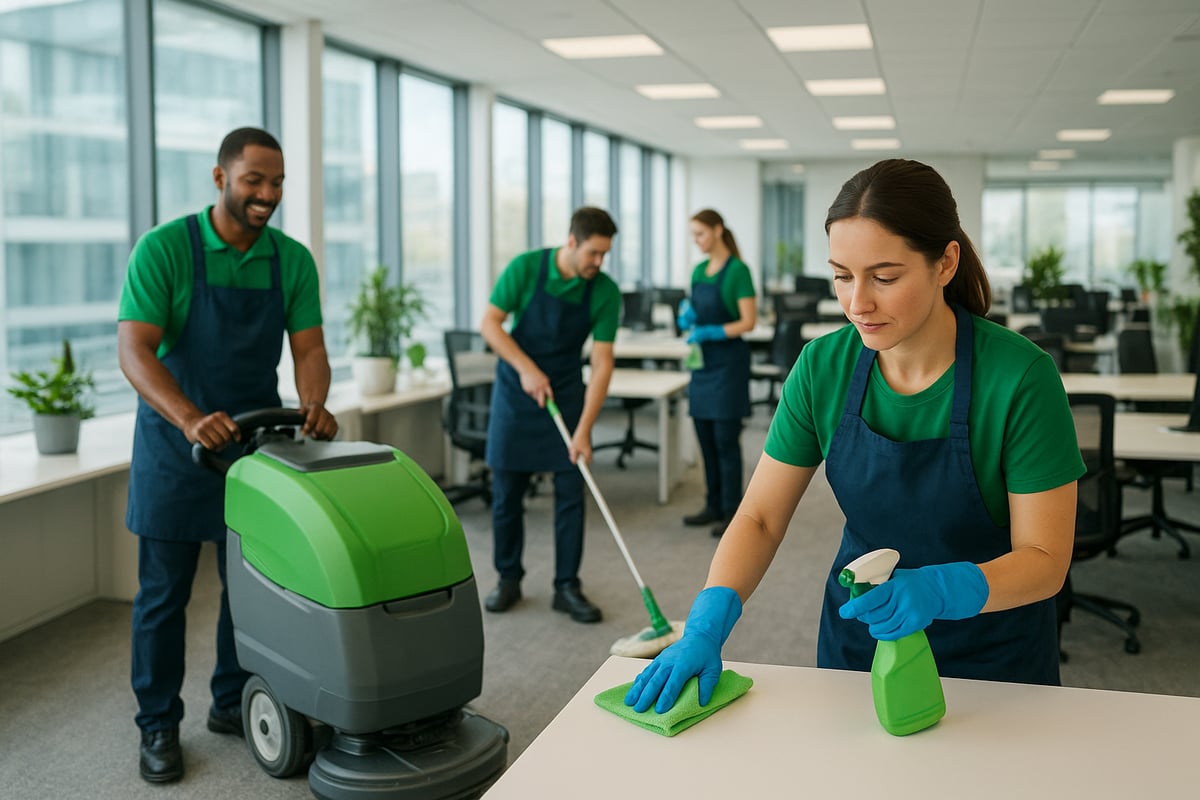
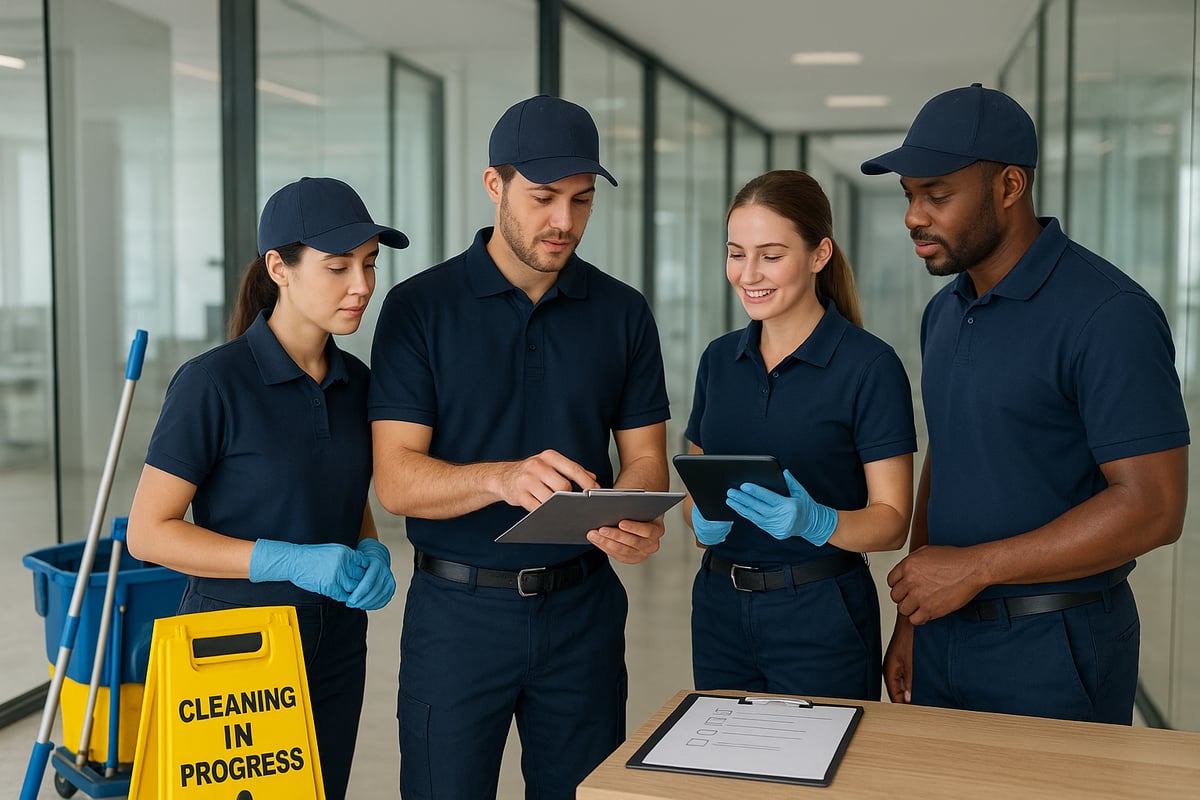
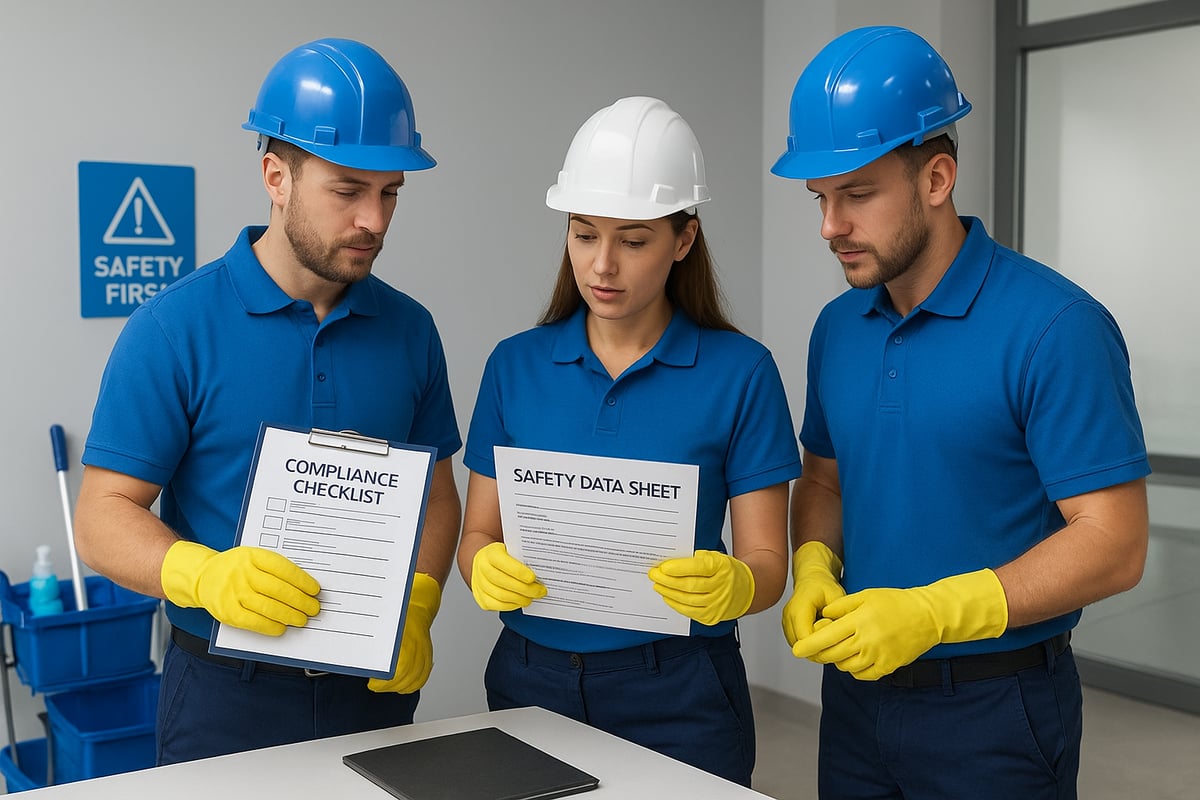
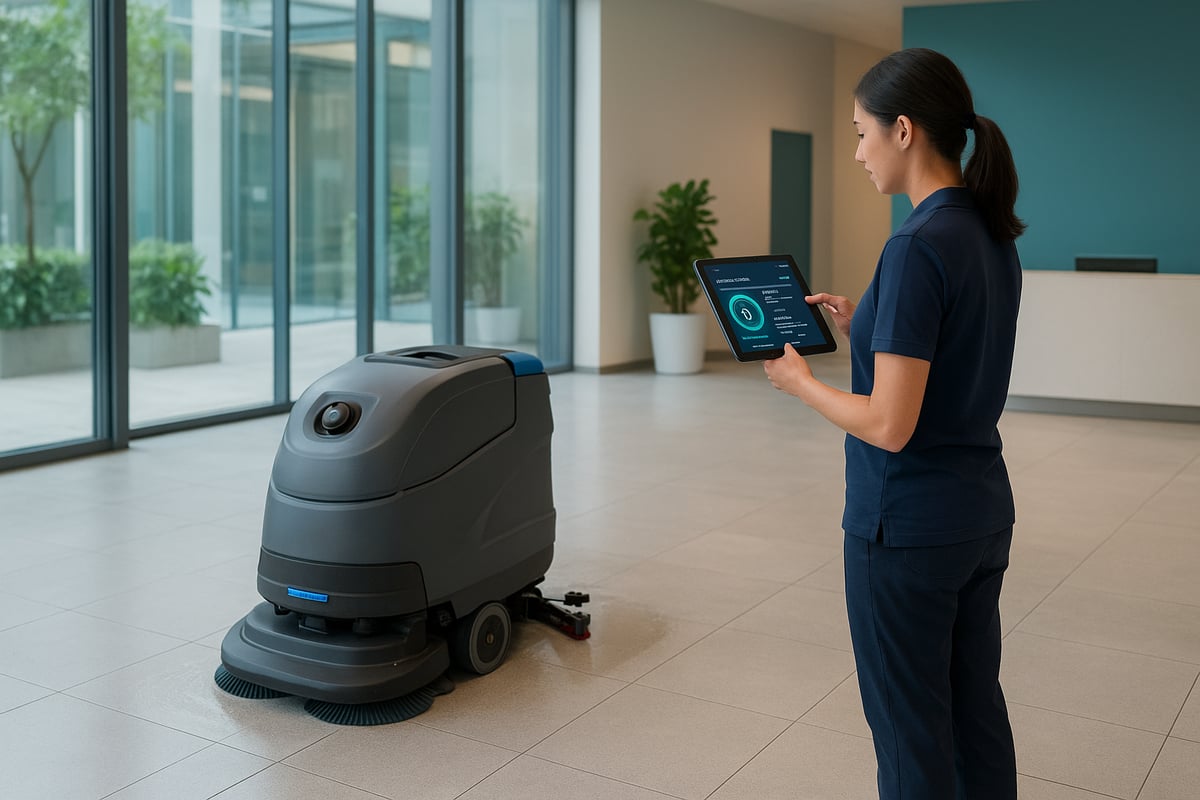
In 2025, expectations for workplace cleanliness are at an all-time high. Businesses face new challenges as cleaning office buildings directly impacts employee health, productivity, and company reputation.
This complete guide equips you with everything you need to succeed in cleaning office buildings, from essential practices and cutting-edge technology to compliance with evolving standards and sustainable solutions.
Discover step-by-step processes, the latest equipment, eco-friendly methods, and expert strategies to keep your office spotless and compliant. Ready to meet the demands of modern workplaces? Dive in and transform your approach with practical guidance for the year ahead.
The Importance of Office Cleaning in 2025
Maintaining high standards for cleaning office buildings is more crucial than ever in 2025. As workspaces evolve, expectations for cleanliness continue to rise, impacting every aspect of commercial operations.
Evolving Workplace Expectations
Hybrid work models and increased occupancy rates mean businesses must adapt their cleaning office buildings strategies. Employees now expect visible cleanliness, with frequent sanitation of desks, shared spaces, and high-touch points. Companies also recognize that a clean office is essential for attracting and retaining talent, as well as maintaining a positive business reputation.
Flexible cleaning schedules for varied occupancy
Employee health and morale linked to visible hygiene
Cleanliness influences talent retention
Health, Safety, and Productivity Impacts
A clean office environment directly influences employee well-being and productivity. According to The Importance of Regular Office Cleaning in 2025, regular cleaning reduces absenteeism and illness by minimizing allergens, bacteria, and viruses. This leads to improved focus, reduced stress, and a more productive workforce.
Fewer sick days due to reduced pathogens
Enhanced focus and job satisfaction
Lower stress in hygienic workplaces
Regulatory and Compliance Requirements
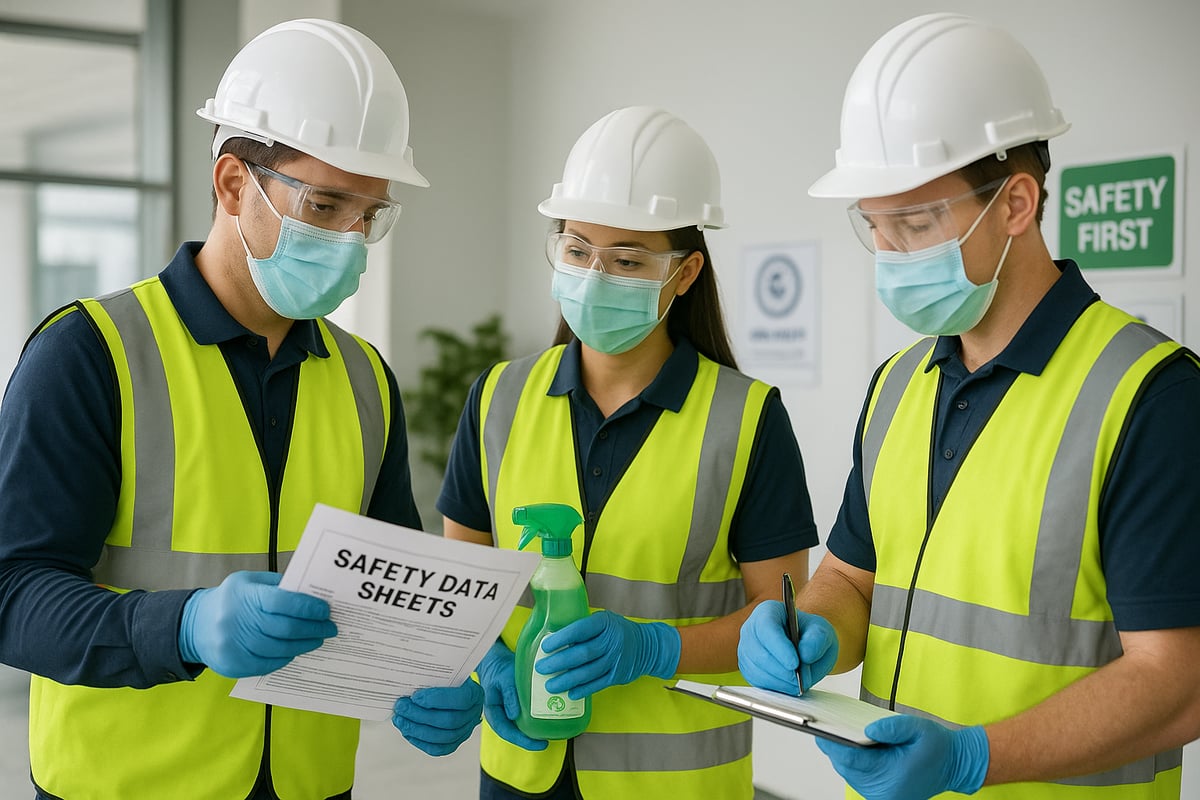
In 2025, cleaning office buildings requires strict adherence to UK workplace hygiene standards and COSHH regulations. Employers must carry out risk assessments, maintain documentation, and ensure all cleaning processes are compliant. Failure to meet these legal obligations can result in penalties, making audit trails and thorough reporting essential.
Compliance with updated hygiene laws
Documented cleaning procedures
Risk assessments for all areas
Brand Image and Client Perception
First impressions matter more than ever in commercial environments. Clean offices project professionalism and reliability to clients and visitors. Studies confirm that business partners and stakeholders often assess a company's credibility based on the cleanliness of its workspace, which fosters trust and strengthens relationships.
Cleanliness reflects organizational values
Positive client and visitor perceptions
Trust building through visible hygiene
Sustainability and Environmental Responsibility
Corporate social responsibility is driving businesses to adopt eco-friendly cleaning practices. Many companies now use green cleaning products, reduce chemical use, and implement resource-saving technologies. Sustainability has become a competitive differentiator, with clients and employees valuing environmentally responsible workplaces.
Biodegradable and non-toxic cleaning agents
Energy and water conservation
Green certifications as business assets
Data and Trends
Recent data shows 83% of UK businesses have increased their cleaning budgets since the pandemic. Additionally, 65% of employees now rank cleanliness as a top priority at work. The industry is moving toward integrated cleaning and facility management, reflecting a broader commitment to health and safety in commercial spaces.
Statistic
Value
Businesses increasing cleaning budgets
83%
Employees prioritizing office cleanliness
65%
Shift to integrated facility management
Significant
These trends highlight the ongoing evolution and growing importance of cleaning office buildings in 2025.
Essential Office Cleaning Processes and Checklists
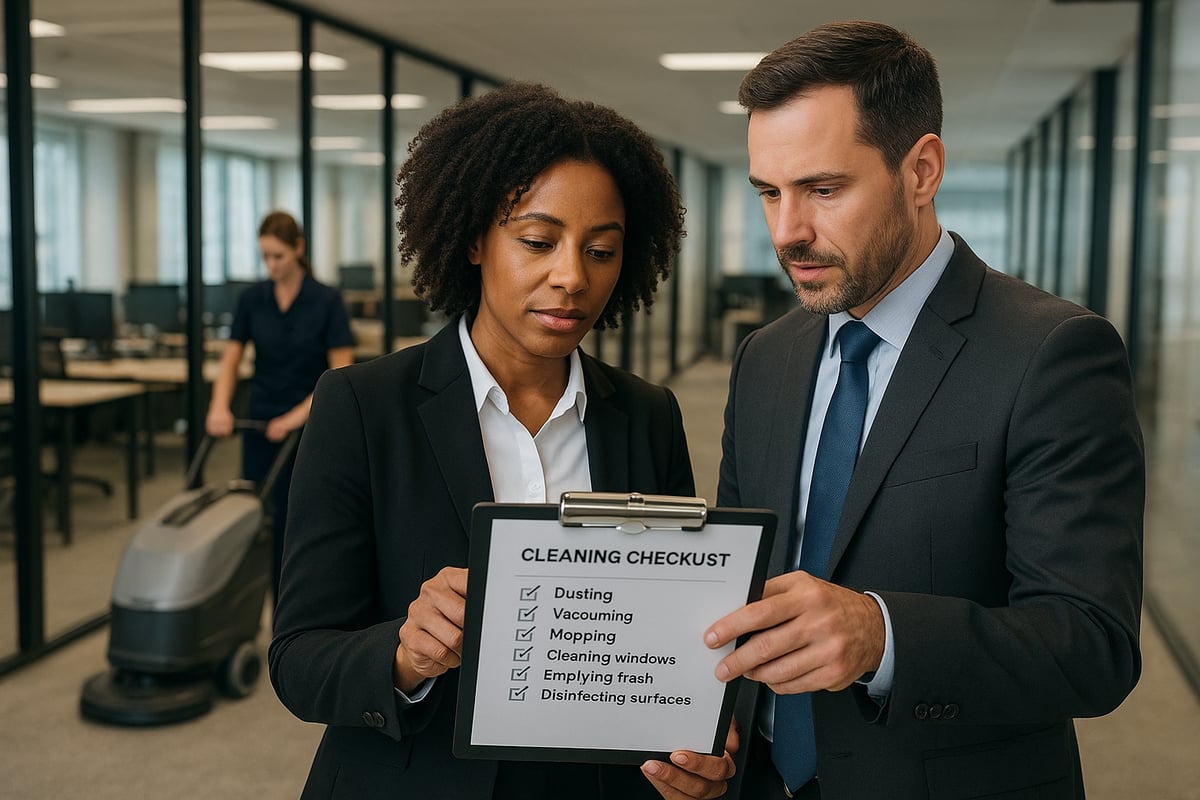
Maintaining high standards for cleaning office buildings in 2025 requires a systematic approach. Structured processes and detailed checklists ensure no area is overlooked, while also supporting compliance, health, and productivity goals.
Daily Cleaning Tasks
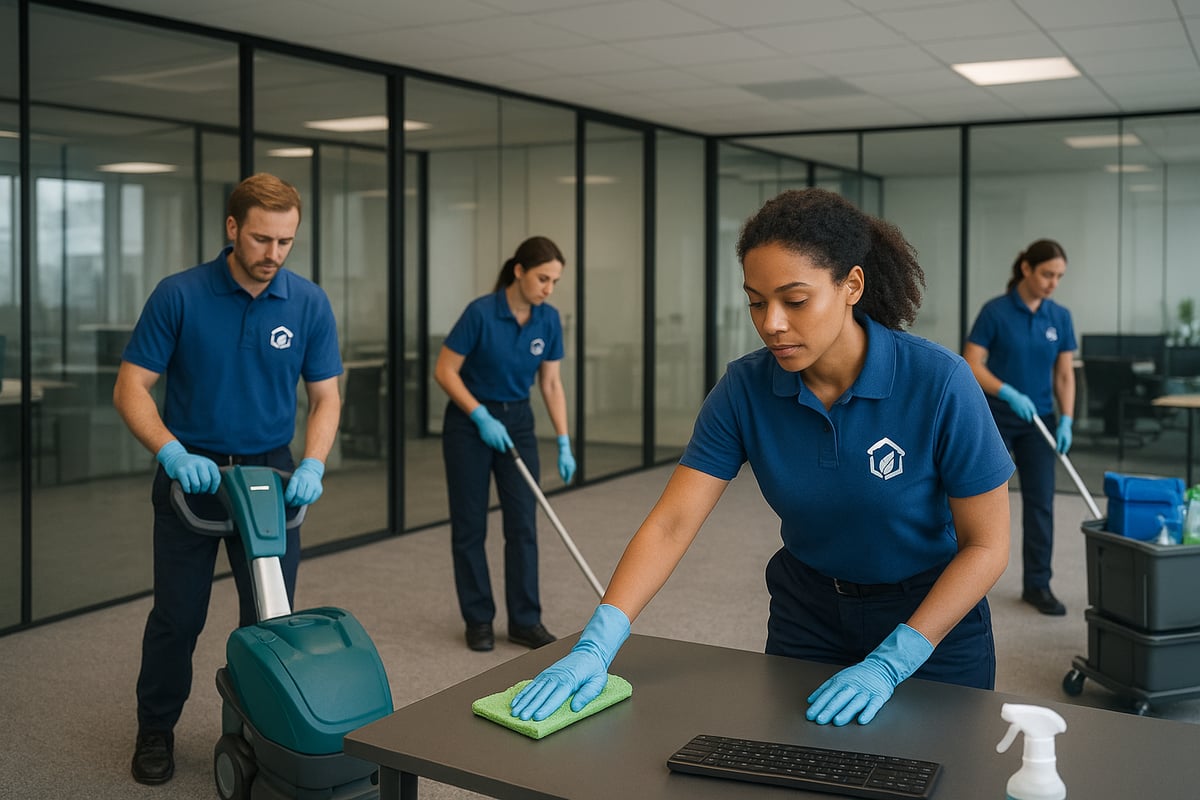
Daily cleaning tasks are the foundation of a spotless office. For effective cleaning office buildings, staff should focus on:
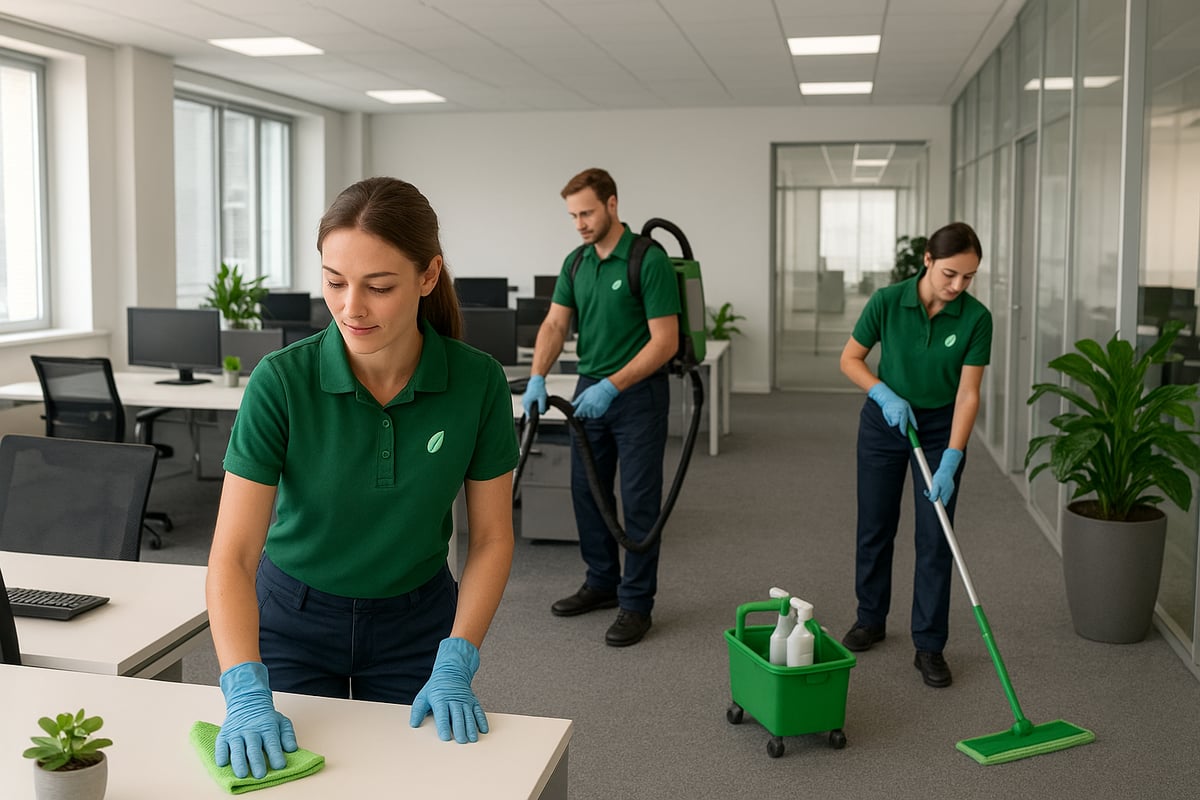
Disinfecting desks, tables, and shared surfaces
Removing waste from bins and recycling points
Checking and restocking restrooms
Wiping high-touch points like door handles, switches, and communal equipment
Maintaining reception, lobby, and other high-traffic zones
Routine attention to these details not only prevents dirt buildup but also reassures employees and visitors of ongoing hygiene. For an overview of daily best practices and professional support, see the Office Cleaning Services Overview.
Weekly and Monthly Deep Cleaning
Beyond daily routines, cleaning office buildings involves scheduled deep cleans. Each week, teams should:
Vacuum carpets and spot clean stains
Clean interior glass, windows, and mirrors
Dust blinds, vents, and ledges
Monthly tasks include sanitizing kitchen and breakroom appliances, addressing hard-to-reach areas, and polishing floors. These steps protect indoor air quality and extend the lifespan of office assets.
Specialty and Periodic Services
Some areas require specialized attention to maintain optimal conditions. Specialty services for cleaning office buildings may include:
Upholstery and curtain steam cleaning
Stripping, waxing, or buffing hard floors
Cleaning air ducts, HVAC systems, and high-level surfaces
Periodic services can be scheduled quarterly or as needed based on usage and environmental factors. These interventions ensure a consistently healthy workspace.
Cleaning Checklists and Scheduling
Comprehensive checklists are critical for cleaning office buildings efficiently. Digital tools and apps allow teams to:
Customize checklists for each area or department
Schedule rotational deep cleans for thorough coverage
Track completion and accountability in real time
Well-organized schedules minimize disruption and ensure no area is missed. Customizable templates help teams adapt to changing needs and occupancy patterns.
Quality Control and Inspection
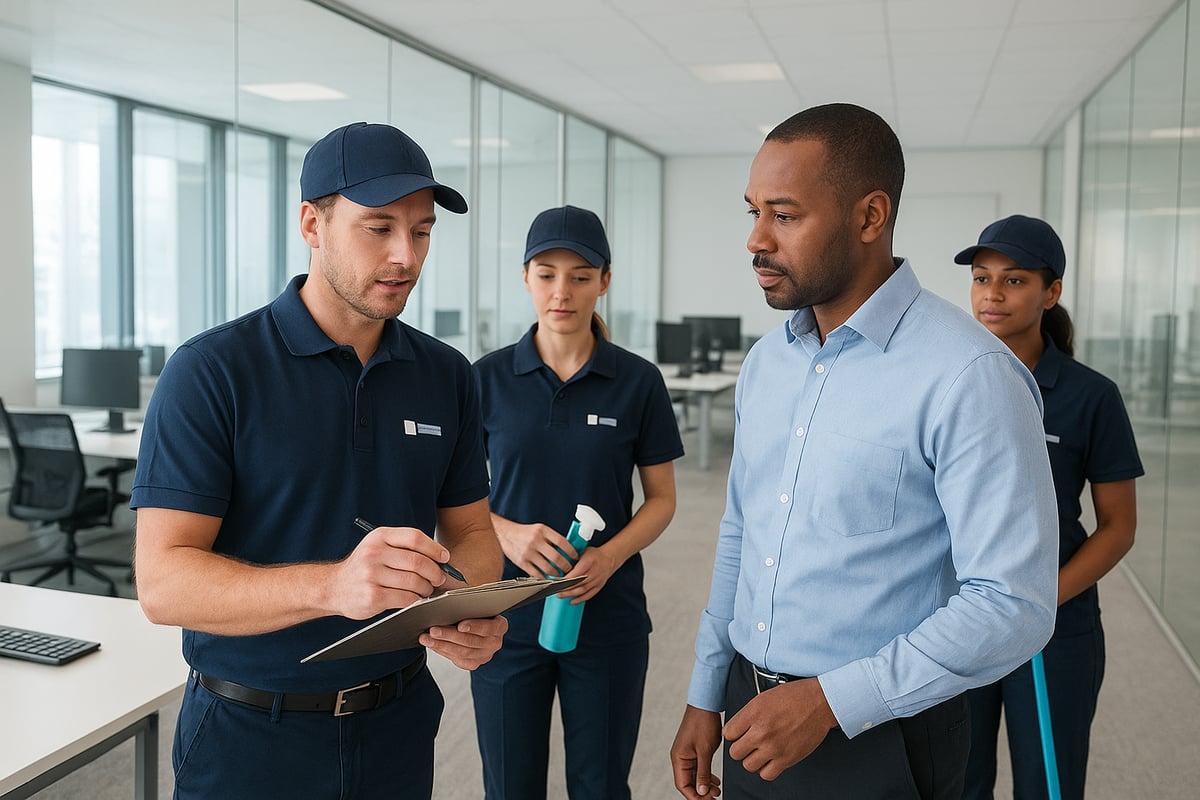
Quality assurance is vital for maintaining standards in cleaning office buildings. Supervisors should:
Conduct regular inspections and audits
Gather employee feedback for continuous improvement
Keep detailed records of all cleaning activities
Documented processes support compliance and transparency, while ongoing feedback ensures service evolves with client expectations. Consistent oversight reduces risk and enhances workplace satisfaction.
Advanced Cleaning Technologies and Equipment for 2025
Modern cleaning office buildings in 2025 requires more than just traditional tools. Today’s facilities demand advanced technologies to meet higher standards, improve efficiency, and align with sustainability goals. Let’s explore the innovations transforming commercial cleaning.
Automation and Robotics
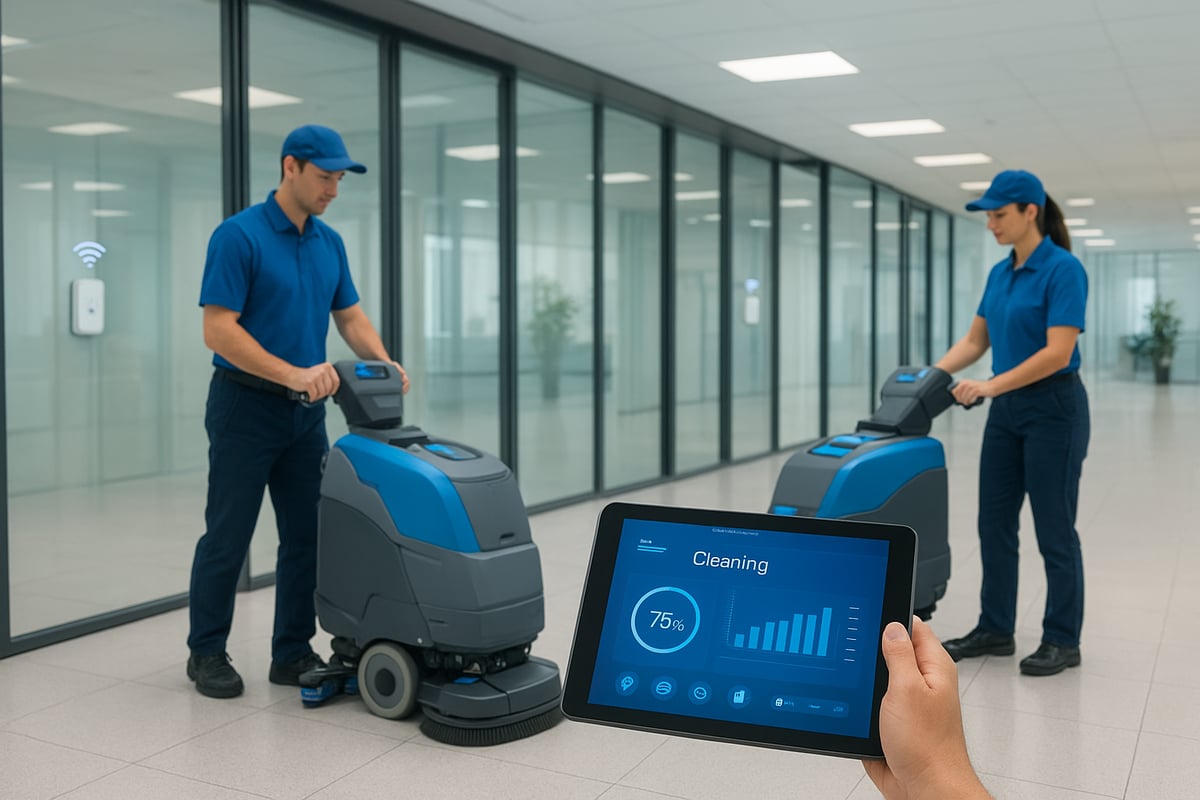
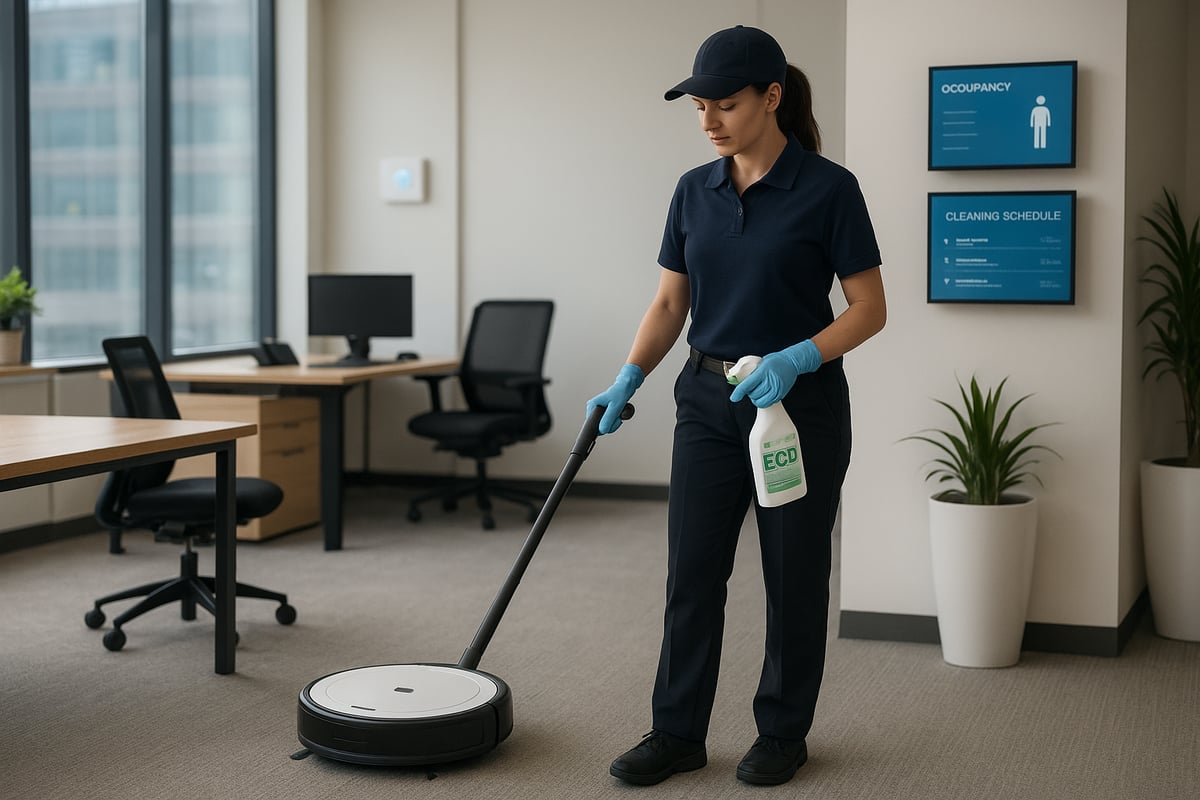
Robotic vacuums, floor scrubbers, and automated window cleaners are now common in cleaning office buildings. These machines operate autonomously, handling repetitive tasks while staff focus on detailed work. UK offices increasingly use robotics to cover large areas efficiently, reducing labour costs and human error.
Benefits include:
Consistent, thorough coverage of large spaces
Real-time monitoring for maintenance alerts
Integration with facility management systems
Technological advancements like these align with How Clean is ‘Clean Enough’ in 2025?, highlighting how automation meets evolving cleanliness standards in commercial environments.
Smart Cleaning Systems and IoT
IoT-enabled dispensers and occupancy sensors are revolutionizing cleaning office buildings. These devices track usage and foot traffic, triggering on-demand cleaning for high-traffic zones. Data-driven insights help optimise cleaning routes, manage supply levels, and reduce resource waste.
Key features include:
Automated supply monitoring
Custom cleaning schedules based on real-time occupancy
Seamless integration with building automation systems
This approach ensures cleaning resources are allocated precisely where and when they are needed, improving both efficiency and hygiene.
Eco-Friendly and Sustainable Equipment
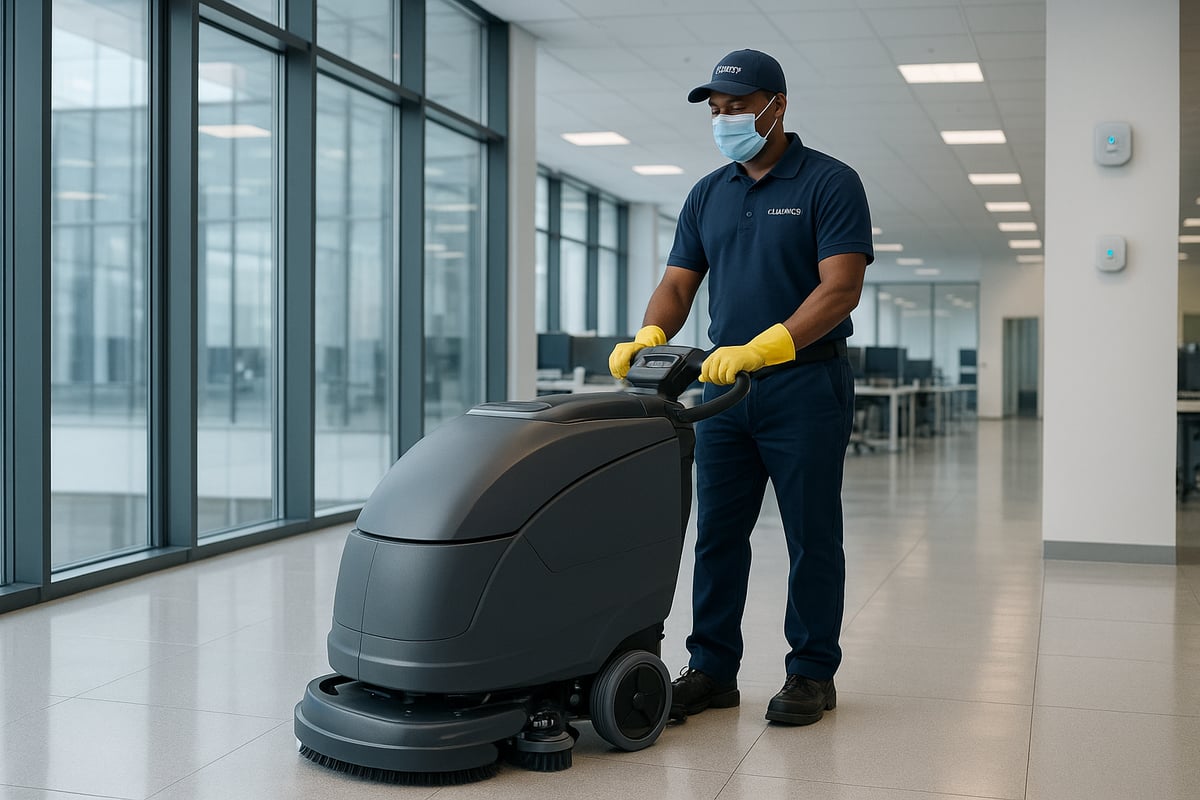
Sustainability is central to cleaning office buildings today. Equipment like HEPA-filtered vacuums and low-water-use scrubbers minimize environmental impact. Battery-powered and low-emission machines reduce energy consumption and air pollution.
Look for green certifications such as EU Ecolabel or Green Seal to ensure equipment meets strict environmental standards. Using sustainable equipment not only supports corporate social responsibility but also appeals to eco-conscious clients.
Disinfection and Air Quality Solutions
Office hygiene now relies on advanced disinfection and air purification. Electrostatic sprayers distribute disinfectant evenly over surfaces, while UV-C light devices target high-risk areas for germ elimination. Air purifiers with HEPA filters maintain healthy indoor air quality by capturing allergens and pathogens.
These solutions are vital for maintaining a safe workplace, especially in shared spaces where the risk of illness transmission is higher. Regular use of such technologies reassures both staff and visitors.
Training and Safety for New Technologies
Adopting new equipment for cleaning office buildings requires thorough staff training. Personnel must learn correct operation and safety procedures for robotics, IoT devices, and advanced disinfectants. COSHH compliance is essential when introducing new chemicals or technologies.
Ongoing education programs ensure cleaning teams stay current with evolving equipment and safety standards. This commitment to training not only boosts performance but also reduces the risk of accidents or regulatory breaches.
Eco-Friendly and Sustainable Cleaning Practices
Modern businesses recognise that eco-friendly and sustainable cleaning practices are essential for maintaining healthy workspaces and meeting stakeholder expectations. As the demand for responsible cleaning office buildings grows, commercial cleaning services are adapting to deliver greener solutions that support both the environment and business goals.
Green Cleaning Products and Materials
Switching to biodegradable and non-toxic cleaning agents is a cornerstone of sustainable cleaning office buildings. Look for certifications such as the EU Ecolabel, Green Seal, and BREEAM compliance to ensure products meet strict environmental standards.
Biodegradable cleaning chemicals
Reusable microfiber cloths and mops
Low-impact packaging
Reducing exposure to harsh chemicals benefits both cleaning staff and building occupants. For more details on sustainable solutions, see Eco-Friendly Cleaning Services.
Waste Reduction and Recycling
Effective waste management is crucial for sustainable cleaning office buildings. Implement recycling programs for paper, plastics, and glass, and ensure proper segregation of materials.
Clearly labelled recycling bins
Regular staff training on waste separation
Composting organic waste from kitchens and breakrooms
According to BICS, 70% of UK offices now have established recycling initiatives, reducing landfill impact and supporting corporate responsibility.
Water and Energy Conservation
Adopting low-water cleaning methods and energy-saving equipment can significantly cut resource consumption in cleaning office buildings.
Microfiber technology for efficient cleaning
Battery-powered, energy-efficient machines
Scheduling tasks during off-peak hours
Smart meters help monitor water and energy use, enabling offices to track progress and identify new savings opportunities.
Staff Training in Sustainable Methods
Ongoing education ensures cleaning teams understand and implement green protocols. Incentivising sustainable practices, such as rewarding teams for resource conservation, fosters a culture of responsibility.
Workshops on eco-friendly cleaning techniques
Sharing case studies of reduced environmental impact
Regular updates on best practices
A well-trained team is essential for maintaining consistent sustainability standards in cleaning office buildings.
Communicating Sustainability to Stakeholders
Transparency about green cleaning efforts builds trust with clients and employees. Share achievements in sustainability reports and marketing materials to demonstrate commitment.
Publish green cleaning policies and achievements
Offer sustainability updates in client communications
Highlight eco-friendly initiatives during office tours
Promoting your sustainable approach to cleaning office buildings can provide a competitive edge and foster long-term loyalty.
Step-by-Step Guide: Cleaning Office Buildings in 2025
Keeping up with the demands of cleaning office buildings in 2025 requires a structured, modern approach. With new technologies, regulations, and sustainability requirements, following a step-by-step process is essential for consistent results and compliance.
Step 1: Initial Assessment and Planning
The first step in cleaning office buildings is a thorough site assessment. Start by walking through the premises and noting high-traffic areas, shared equipment, and surfaces that require frequent attention. Conduct a risk assessment to identify potential hazards or compliance needs.
Develop a tailored cleaning plan based on office layout, occupancy, and business activities. Include cleaning frequencies, product choices, and areas needing special attention. Many businesses benefit from consulting professional Office and Commercial Cleaning Services to design effective plans.
A well-crafted plan keeps cleaning office buildings efficient, compliant, and responsive to evolving workplace needs.
Step 2: Daily Maintenance and Hygiene Protocols
Daily routines are the backbone of cleaning office buildings. Prioritize desks, restrooms, lobbies, and communal areas with high-touch surfaces. Use color-coded cloths and mops to prevent cross-contamination between spaces such as kitchens and washrooms.
Ensure staff follow proper hand hygiene, wear appropriate PPE, and use approved disinfectants. Regularly empty waste bins, sanitize door handles, and replenish hygiene supplies. Referencing Workplace Cleanliness Best Practices for 2025 can help standardize your daily cleaning office buildings processes.
Consistent daily protocols help maintain a healthy, productive environment for all occupants.
Step 3: Deep Cleaning and Disinfection
Deep cleaning office buildings involves scheduled, intensive tasks. Plan weekly or monthly sessions for carpets, upholstery, and hard floors, using advanced equipment like HEPA vacuums or steam cleaners. Pay special attention to high-risk areas such as break rooms and meeting spaces.
Apply advanced disinfection techniques, such as electrostatic spraying or UV-C light, to critical zones. Maintain detailed records of all deep cleaning activities for compliance and audit purposes.
Regular deep cleaning office buildings ensures long-term hygiene and meets regulatory expectations.
Step 4: Waste Management and Recycling
Managing waste is integral to cleaning office buildings. Set up clearly labeled bins for recycling, general waste, and hazardous items. Train staff on correct segregation and disposal methods to maximize recycling rates and minimize contamination.
Monitor waste output and report volumes for sustainability tracking. Encourage composting of organic waste from kitchens and breakrooms where possible.
Step 5: Quality Assurance and Continuous Improvement
Quality assurance is crucial for cleaning office buildings to remain effective and compliant. Conduct regular supervisory inspections, gather client and employee feedback, and update protocols as regulations evolve.
Use digital tools for real-time reporting, checklist management, and accountability. Benchmark performance against industry standards and adjust processes as needed.
For ongoing improvement, reference Workplace Cleanliness Best Practices for 2025 to stay ahead of industry trends and expectations. Continuous improvement ensures cleaning office buildings remains efficient and future-proof.
Outsourcing vs. In-House Cleaning: Making the Right Choice
Balancing quality, compliance, and value is crucial when deciding how to manage cleaning office buildings. Should you outsource to a commercial cleaning provider or build an in-house team? Let us break down the key considerations to help you make an informed choice.
Pros and Cons of Outsourcing
Outsourcing cleaning office buildings brings expertise and access to advanced equipment, but it is important to weigh the flexibility and control you might give up. Here is a quick comparison:
Factor
Outsourcing
In-House
Expertise
High, professional staff
Varies, requires training
Equipment
Latest technology provided
Investment needed
Flexibility
Service can be scaled as needed
Less flexible, fixed staff
Control
Less day-to-day oversight
Full control
Compliance
Managed by provider
Must be managed internally
Outsourcing is often ideal for large or multi-site cleaning office buildings needing consistent standards.
In-House Cleaning Teams: Benefits and Challenges
Managing your own cleaning team gives direct oversight and the ability to tailor routines. Small offices may benefit from cost savings and a familiar team. However, recruitment, training, and equipment costs can add up quickly.
You will need to handle all compliance and documentation internally. Staff turnover and absence can disrupt routines, impacting cleaning office buildings if not managed proactively.
Cost Considerations and ROI
When evaluating cleaning office buildings, compare all costs: wages, equipment, cleaning supplies, and management time. Outsourcing typically reduces HR overhead and training expenses, but may include premium fees for specialist services.
Hidden costs, such as increased absenteeism due to substandard cleaning, can impact productivity and reputation. A professional approach can deliver long-term value by protecting staff health and business image.
Service Level Agreements and Performance Metrics
Clear service level agreements (SLAs) are essential for accountability. SLAs outline cleaning frequencies, response times, and performance standards for cleaning office buildings. Key performance indicators might include quality audits, incident response, and client feedback.
Regular reviews and transparent reporting ensure your provider delivers as promised. Referencing standards such as the National standards of healthcare cleanliness 2025 can help benchmark your cleaning protocols for offices requiring higher hygiene levels.
Choosing the Right Cleaning Partner
Selecting a partner for cleaning office buildings involves assessing experience, accreditations, and client references. Look for providers who offer tailored solutions and demonstrate local expertise.
Before signing a contract, ask about staff training, sustainability practices, and digital reporting tools. For a comprehensive overview of what a professional service can deliver, review Cleaning Services for Commercial Buildings to ensure your office meets the highest standards.
After exploring the latest cleaning standards, technologies, and sustainable practices for office buildings in 2025, you’re now equipped with expert insights to create a healthier, more productive workspace. If you want tailored support or have questions about putting these strategies into action, our experienced team at Ablou Facilities is here to help. With over 30 years of expertise serving Devon and surrounding areas, we offer professional solutions that prioritize your security, compliance, and cleanliness goals. Let’s work together to elevate your office environment—Contact the team today to discuss your needs or request a bespoke consultation.
The commercial cleaning industry is experiencing a major transformation, making 2025 a turning point for cleaning contractors and the businesses that depend on them. As organizations adapt to new challenges in hygiene, sustainability, and efficiency, the right cleaning contractors are more critical than ever.
This comprehensive guide explains how to hire, manage, and get the most value from cleaning contractors in 2025. You will discover key industry trends, what to look for when choosing a partner, the impact of technology, compliance essentials, cost factors, and strategies for building strong, productive partnerships.
Prepare to navigate new expectations, seize emerging opportunities, and ensure your business achieves outstanding results with cleaning contractors.
The Evolving Role of Cleaning Contractors in 2025
The landscape for cleaning contractors is transforming rapidly as we approach 2025. Businesses now expect more than just routine cleaning; they demand specialized expertise, sustainability, and measurable value. Understanding these shifts is key for companies looking to partner with the right cleaning contractors and ensure their facilities meet the highest standards.
Industry Trends and Market Growth
Commercial cleaning contractors are experiencing a surge in demand as businesses prioritize health and cleanliness post-pandemic. According to recent 2025 Commercial Cleaning Industry Insights, the market is set to grow significantly, with specialized cleaning for sectors like healthcare, education, and hospitality leading the way.
Sustainability is now a central focus. Many cleaning contractors are adopting green cleaning solutions, reducing waste, and using eco-friendly products to align with client values. Service offerings are expanding, with contractors providing not just basic cleaning but also full facilities management. This includes maintenance of common areas, waste management, and hygiene services.
Hybrid workspaces are also reshaping the industry. Businesses require flexible contracts to accommodate fluctuating occupancy, leading cleaning contractors to offer on-demand and scalable services. Integration of technology, such as automated scheduling and IoT-enabled equipment, is making operations more efficient and transparent. These trends shape the expectations and capabilities of cleaning contractors in 2025.
New Expectations from Businesses
Today’s businesses expect much more from their cleaning contractors than ever before. Transparency in processes, flexible service models, and measurable outcomes are now the norm. Clients increasingly request proof of disinfection protocols, especially in high-traffic environments such as offices and schools.
Health and safety compliance is a top priority. Cleaning contractors must demonstrate rigorous staff training and adherence to regulations. Many organizations require contractors to integrate with building management systems, allowing seamless coordination of cleaning schedules and facility operations.
There’s also a rising demand for 24/7 availability and rapid response to incidents. Clients want cleaning contractors that can adjust quickly to unexpected needs, ensuring minimal disruption to daily operations. By meeting these new expectations, cleaning contractors can build long-term, trusted partnerships with commercial clients.
How to Select the Right Cleaning Contractor
Choosing the right cleaning contractors is crucial for maintaining a safe, healthy, and productive workspace. An effective selection process helps businesses ensure quality results, compliance, and value for money. Here is a step-by-step approach to guide your decision.
Defining Your Cleaning Needs
Start by clearly identifying what your business requires from cleaning contractors. Consider the type of environment—office, industrial, educational, or healthcare—as each has unique standards and regulations.
Next, determine how often cleaning is needed. Some businesses prefer daily cleaning, while others opt for weekly or after-hours services. If your company operates across multiple locations, you may need tailored schedules for each site.
Specialized needs are another key factor. For example, you might require deep carpet cleaning, window washing, or disinfection services. A multi-site business may need contractors who can adapt to varying schedules and service requirements, ensuring consistent results at every location.
Evaluating Contractor Credentials
Once you have defined your needs, evaluate the credentials of potential cleaning contractors. Look for certifications such as ISO or Safe Contractor, which demonstrate adherence to industry standards. Verify that contractors carry adequate insurance and have all necessary accreditations.
Staff training is vital. Well-trained teams are more likely to deliver reliable and safe services. Check for evidence of ongoing staff development and up-to-date health and safety training.
Review the contractor’s track record by reading client testimonials and requesting references. If possible, conduct site visits to see their work firsthand. According to recent surveys, over 70% of businesses prioritize certified cleaning contractors when making their choice.
Comparing Proposals and Pricing
When reviewing proposals from cleaning contractors, transparency is essential. Seek itemized lists of services, clear descriptions of what is included, and flexibility to adjust as needs change.
Understand the different pricing models: some contractors charge per hour, others by square foot, or on a contract basis. Always clarify what is included to avoid hidden fees. Comparing two contractors’ quotes side by side can reveal important differences in value and clarity. For a comprehensive overview of what to expect from reputable providers, visit the Commercial cleaning contractors overview.
A simple comparison table can help:
Contractor
Services Included
Pricing Model
Flexibility
References Provided
Contractor A
Detailed
Per Hour
High
Yes
Contractor B
Basic
By Contract
Medium
Yes
Thoroughly assessing each proposal will help you choose cleaning contractors who deliver both quality and value.
Compliance, Health & Safety, and Legal Considerations
Staying compliant is critical for cleaning contractors in 2025. With increased scrutiny from clients and regulators, businesses must ensure their contractors meet all legal, health, and safety obligations. Failing to do so can lead to operational disruptions, fines, or reputational damage.
Regulatory Requirements in 2025
Commercial cleaning contractors face a complex landscape of regulations in 2025. Core requirements include the Control of Substances Hazardous to Health (COSHH), local health codes, and industry-specific standards. Contractors must ensure all cleaning agents and processes comply with safety guidelines to protect both staff and building occupants.
Proper staff training is non-negotiable. Every member must understand safe chemical handling, equipment use, and emergency procedures. Regular risk assessments and method statements are essential, forming part of the documentation that businesses should request from their cleaning contractors.
New regulations introduced after 2020 have elevated expectations, especially around infection control and environmental sustainability. For example, many clients now require documented proof of disinfection protocols and sustainable product usage as standard practice.
All these requirements mean that only well-prepared cleaning contractors can consistently deliver safe, legal, and high-quality service. Reviewing a contractor’s documentation upfront is a key step in the selection process.
Ensuring Contractor Compliance
Verifying that cleaning contractors remain compliant is an ongoing responsibility. Businesses should request evidence of regular audits, up-to-date certifications, and comprehensive insurance coverage. Site visits and reference checks can further validate a contractor’s commitment to compliance.
Ongoing staff training is equally vital. Contractors must update their teams as regulations evolve, ensuring best practices are always followed. Handling incidents—such as chemical spills or workplace injuries—requires clear reporting procedures and swift corrective action.
Data from industry reports show that common compliance failures, like poor documentation or inadequate training, can lead to lost contracts and increased liability. Partnering with providers known for their transparency and commitment to compliance, such as those highlighted in reputable office and commercial cleaning services, can help businesses avoid costly pitfalls.
Regular communication and performance reviews will further support a culture of safety and compliance, protecting both staff and business reputation.
Integrating Technology and Innovation in Cleaning Contracts
Commercial cleaning contractors are transforming how businesses maintain their environments in 2025. Technology is now central to delivering efficient, reliable, and measurable results. Companies working with cleaning contractors expect more than just routine services—they seek innovation, transparency, and data-driven accountability.
Emerging Cleaning Technologies
Innovative cleaning technologies have become a defining feature for leading cleaning contractors. Robotics and automated equipment are now common, allowing teams to handle repetitive tasks more efficiently and reduce manual labor. IoT-enabled devices, such as smart dispensers and connected vacuum systems, gather real-time data to optimize cleaning schedules and supply usage.
Smart sensors monitor cleanliness levels, triggering targeted cleaning only where needed. This approach helps cleaning contractors deliver measurable results and ensures resources are used effectively. Data analytics platforms allow for performance tracking, providing actionable insights to improve operations and demonstrate value to clients.
For an in-depth look at these advancements, you can review Emerging Commercial Cleaning Trends 2025, which highlights how automation and analytics are shaping the industry.
The benefits of adopting these technologies include increased efficiency, cost savings, and enhanced accountability. Cleaning contractors leveraging innovation are better equipped to meet the evolving demands of commercial spaces.
Digital Communication and Reporting
Digital tools have revolutionized how cleaning contractors interact with clients and manage contracts. Online platforms now streamline contractor selection, communication, and performance reviews, making the entire process more transparent. Automated reporting systems generate detailed dashboards, allowing businesses to monitor service quality and compliance in real time.
Clients can access on-demand reports, track KPIs, and address concerns quickly through these platforms. This level of transparency builds trust and enables cleaning contractors to provide consistently high standards across multiple sites. Digital solutions also facilitate rapid issue resolution and proactive management, further enhancing the client experience.
Adoption rates for these technologies are rising, with cleaning contractors recognizing that digital innovation is essential for long-term success. As expectations continue to grow, businesses should prioritize working with partners who invest in these tools and can demonstrate measurable improvements.
Cost Factors and Budgeting for Cleaning Services
Budgeting for cleaning contractors in 2025 requires a clear understanding of the variables that impact service costs. With commercial cleaning needs evolving, businesses must evaluate both direct and indirect expenses to ensure value for money.
What Influences Cleaning Contractor Pricing?
Several factors contribute to the pricing structure of cleaning contractors. Labor costs remain the largest component, especially in regions where wages are rising. Materials and equipment also add to the total, particularly when eco-friendly products or advanced machinery are used. The frequency and timing of services, such as daily cleaning or after-hours work, can influence labor allocation and therefore the overall cost.
Specialized services, like deep cleaning or hazardous material handling, require additional expertise and may involve premium charges. Regional differences play a significant role, as cleaning contractors in cities like London often charge more than those in smaller areas. For instance, according to Professional cleaning services in Devon, regional expertise can lead to more competitive rates outside major metropolitan hubs.
Market competition also affects pricing, with some contractors offering discounts to secure long-term contracts. Here is a simple comparison:
City
Average Cost per Hour (£)
Specialized Services Surcharge (%)
London
18–25
15
Manchester
15–20
10
Devon
13–18
8
Understanding these factors helps businesses make informed decisions when hiring cleaning contractors.
Strategies for Cost-Effective Cleaning Contracts
To maximise value, businesses should explore strategies that align with their cleaning contractors' offerings. Bundling multiple services—such as daily cleaning, window washing, and floor care—often results in better rates than purchasing services separately. Negotiating flexible contracts, whether seasonal or on-demand, enables companies to adjust service levels based on occupancy or shifting needs.
Monitoring contractor performance is crucial. Regular reviews ensure that the agreed standards are met and allow for timely adjustments. Data from industry reports show that bundled contracts can save companies up to 20% annually compared to piecemeal arrangements.
Clear communication of expectations, combined with periodic cost assessments, ensures that businesses continue to receive value from their cleaning contractors. By following these best practices, organisations can maintain high standards of cleanliness without overspending.
Best Practices for Working with Cleaning Contractors
Building a strong, reliable relationship with cleaning contractors is essential for maintaining a clean, healthy commercial environment. Businesses benefit from a structured approach that fosters collaboration and accountability while adapting to new industry standards.
Building Productive Partnerships
The foundation of a successful partnership with cleaning contractors starts with clear expectations. Define the scope of work, service levels, and measurable KPIs from the outset. This ensures both parties understand deliverables and standards.
Establish regular communication channels, such as scheduled check-ins or digital platforms
Provide detailed feedback, both positive and constructive, to foster continuous improvement
Set up periodic performance reviews to measure results and adjust as needed
Modern businesses are increasingly leveraging digital tools to streamline contractor management and reporting. Staying updated on facility management and cleaning trends for 2025 can help companies adopt best practices and innovative solutions. For example, a facility that implemented monthly reviews with its cleaning contractors saw a marked improvement in cleanliness scores and occupant satisfaction.
Strong partnerships also provide flexibility, allowing for quick response to changing business needs or unforeseen challenges. Investing time in this relationship pays off in operational efficiency and workplace morale.
Handling Issues and Continuous Improvement
Even with effective planning, challenges may arise in the day-to-day management of cleaning contractors. Establish a straightforward process for addressing complaints or service gaps. Encourage open dialogue so issues can be resolved quickly and constructively.
Document concerns and share them with the contractor promptly
Collaborate on corrective actions and agree on timelines for resolution
Use complaints as opportunities for learning and process refinement
Encouraging innovation is key. Invite cleaning contractors to suggest new methods, technologies, or products that could enhance results or efficiency. Their industry expertise can drive ongoing improvements and ensure your facility remains at the forefront of hygiene and safety standards.
Data shows that businesses with proactive contractor management report higher workplace satisfaction and lower incident rates. By nurturing a culture of continuous improvement, companies can maximize the value and impact of their cleaning contractors.
The Future of Commercial Cleaning Contractors: What to Expect Beyond 2025
The landscape for cleaning contractors is set to change dramatically as we look beyond 2025. Businesses will need to stay agile and informed to leverage new opportunities in commercial cleaning. Understanding what lies ahead is vital for leaders aiming to future-proof their facilities and maintain high standards of cleanliness.
Anticipated Industry Changes
The future for cleaning contractors promises significant transformation driven by technology and evolving client needs. Automation will reshape the workforce as robotics and AI-driven solutions take over routine tasks, allowing staff to focus on specialized services and quality control. Sustainability will become a non-negotiable requirement, with clients demanding eco-friendly products and transparent supply chains.
Integrated facilities management will emerge as the standard, with cleaning contractors offering comprehensive packages that go beyond basic cleaning. Early adopters are already piloting AI-powered scheduling and smart sensor systems that monitor cleanliness in real time. According to 2025 Cleaning Industry Trends and Insights, demand for data-driven performance and measurable results is rising, with clients expecting detailed reporting and proactive problem-solving.
Expect to see growing pressure for transparency in every aspect of service delivery, from labor practices to environmental impact. Companies that invest in upskilling their teams and adopting innovative solutions will lead the market for cleaning contractors.
Preparing Your Business for the Future
To thrive in this new era, businesses should take proactive steps in selecting and managing cleaning contractors. Stay updated on industry trends and regulatory changes by subscribing to reputable resources and participating in professional networks. Build long-term relationships with contractors who demonstrate adaptability, a commitment to sustainability, and a willingness to invest in new technology.
Consider the following strategies for future readiness:
Regularly review and update cleaning protocols to align with industry best practices.
Invest in staff training and digital tools that improve efficiency and accountability.
Collaborate with cleaning contractors to explore integrated service models and flexible contracts.
By prioritizing innovation and open communication, you can ensure your organization benefits from the next generation of cleaning contractors. As the market grows and evolves, those who act early will gain a competitive edge, positioning their businesses for success in the years to come.
As you look ahead to 2025, it's clear that choosing the right cleaning contractor is more than just ticking a box—it's about ensuring your business stays safe, compliant, and welcoming for everyone who walks through the door. With evolving industry standards, innovative technology, and the need for reliable 24 7 support, having an experienced partner makes all the difference. If you're ready to put these best practices into action and want guidance tailored to your unique needs across Devon and beyond, contact the team today. We're here to help you get the most out of your cleaning contractor partnership.
A recent study revealed that 82% of businesses now consider workplace hygiene a top operational priority, highlighting a major shift since 2020. As commercial environments face stricter standards and new challenges, understanding how to choose and collaborate with commercial cleaning contractors has never been more critical. This essential guide is designed for business owners, facilities managers, and decision-makers who want to navigate the evolving world of commercial cleaning in 2025. Explore industry trends, selection criteria, compliance essentials, technological advancements, budgeting tips, and best practices for ongoing management. Ready to safeguard your workplace and enhance operational excellence? Read on for expert insights.
The Evolving Landscape of Commercial Cleaning in 2025
The world of commercial cleaning contractors is rapidly evolving as businesses face new expectations for hygiene, safety, and sustainability. In 2025, the sector continues to adapt, driven by shifting regulations, technological advancements, and heightened awareness around workplace health. Understanding these changes is crucial for choosing the right partner and ensuring your facility meets modern standards.
Key Industry Trends and Drivers
The demand for commercial cleaning contractors has surged as businesses place greater emphasis on deep cleaning and disinfection. Heightened health awareness, particularly after 2020, has led to increased budgets and more frequent cleaning schedules. According to a 2024 survey, 68% of UK businesses reported boosting their cleaning budgets post-pandemic.
Regulatory standards for workplace hygiene have become more stringent, requiring commercial cleaning contractors to adopt new protocols. Sustainability is another key driver, with clients seeking eco-friendly cleaning solutions to reduce their environmental impact. Outsourcing of cleaning services continues to grow among both SMEs and large enterprises, as organizations recognize the efficiency and expertise that professional contractors bring.
Technology is transforming the way commercial cleaning contractors deliver their services. Automated equipment, such as robotic vacuums and floor scrubbers, are now common in large facilities. IoT sensors provide real-time data on cleanliness and occupancy, enabling more responsive and efficient cleaning schedules.
Digital platforms for scheduling and reporting have improved transparency, giving clients instant access to service records and performance metrics. Innovations like UV-C disinfection and electrostatic spraying are also becoming standard, offering superior pathogen control. Facilities that use smart sensors have reported a 30% reduction in cleaning costs, highlighting the tangible benefits of adopting new technologies.
The Impact of Regulations and Standards
Compliance has become a central concern for commercial cleaning contractors and their clients. Updated COSHH, BICSc, and ISO standards now set the benchmark for safe and effective cleaning practices. Contractors must demonstrate adherence to these regulations to protect both legal standing and reputation.
Recent years have seen increased penalties for non-compliance, underscoring the importance of selecting contractors with strong audit and certification records. Third-party audits and industry certifications play a crucial role in contractor selection, providing assurance that all legal and safety requirements are met. By prioritizing compliance, businesses safeguard their operations and maintain a positive workplace environment.
How to Choose the Right Commercial Cleaning Contractor
Selecting the right commercial cleaning contractors is a crucial step for any business seeking a hygienic and professional environment. The process involves more than just comparing prices. You must consider your unique facility requirements, assess contractor qualifications, and understand the nuances of service proposals. Let’s break down the key steps to make an informed choice.
Assessing Your Cleaning Needs and Priorities
Begin by evaluating the specific needs of your premises. Consider the size of your facility, the frequency of cleaning required, and areas that demand extra attention. High-traffic zones, kitchens, or laboratories often need specialized cleaning routines.
Custom cleaning plans are essential, as a one-size-fits-all approach rarely delivers optimal results. For instance, an office setting has different hygiene standards compared to a healthcare facility, where infection control is paramount. Clearly outlining your expectations helps commercial cleaning contractors tailor their services for maximum effectiveness.
Think about whether you need daily, weekly, or monthly cleaning. Do you require deep cleaning, carpet care, or window washing? Identifying these factors at the outset simplifies the selection process and ensures nothing is overlooked.
Evaluating Contractor Credentials and Experience
Once your needs are clear, focus on evaluating the credentials and expertise of potential commercial cleaning contractors. Check for industry accreditations such as BICSc, ISO 9001, and SafeContractor, which demonstrate a commitment to quality and safety standards.
Experience in your specific sector is invaluable. Contractors with a proven track record in offices, schools, or healthcare settings understand unique challenges and compliance requirements. Reviewing client testimonials and case studies is a practical way to gauge reliability and satisfaction levels.
For more details on available cleaning solutions and industry certifications, explore the office and commercial cleaning services page. Remember, established contractors with over a decade in the field typically retain clients longer, reflecting consistent performance and trust.
Comparing Proposals and Pricing Models
After narrowing down your options, request detailed proposals from shortlisted commercial cleaning contractors. Carefully examine the cost structure—whether it’s hourly, per square foot, or a fixed retainer. Make sure you understand what is included, such as supplies, equipment, or specialist services.
Transparent pricing and clearly written contracts are non-negotiable. Evaluate proposals side by side, looking for differences in scope, flexibility, and additional charges. Here’s a simple table to help you compare two sample proposals for a 10,000 sq ft office:
Feature
Proposal A
Proposal B
Cost per Month
£1,200
£1,350
Supplies Included
Yes
No
Deep Cleaning
Quarterly
Bi-Annual
Emergency Support
24/7
Business Hours
Selecting the best fit involves more than just cost. Weigh service quality, transparency, and responsiveness to ensure a lasting partnership.
What to Expect from a Professional Commercial Cleaning Contractor
Partnering with professional commercial cleaning contractors sets a high standard for workplace hygiene and operational efficiency. Businesses can expect a comprehensive suite of services, rigorous quality measures, and responsive communication tailored to their unique needs.
Standard Services and Deliverables
Professional commercial cleaning contractors provide a wide range of routine and specialist tasks designed for business environments. Services typically include daily, weekly, and periodic cleaning, such as dusting, vacuuming, surface sanitizing, floor care, and restroom maintenance. Deep cleaning, window washing, and carpet treatments are also available for more intensive needs.
Experienced teams use commercial-grade equipment and approved cleaning agents, ensuring thorough results and compliance with health standards. For a more detailed overview of the scope of services, see these cleaning services for commercial buildings.
A typical checklist for a medium-sized office might include:
Desk and surface disinfection
High-touch point cleaning (door handles, switches)
Breakroom and kitchen sanitation
Floor vacuuming and mopping
Restroom replenishment and cleaning
By choosing commercial cleaning contractors, businesses gain access to tailored cleaning plans that address the specific requirements of each facility.
Quality Assurance, Training, and Staff Vetting
Reputable commercial cleaning contractors invest in staff training and vetting to maintain service excellence. Teams undergo background checks before assignment, ensuring safety and trust within your premises. Ongoing training covers health, safety, and the latest cleaning protocols.
Firms often implement formal quality assurance programs. Supervisors conduct regular inspections, and contractors encourage client feedback to address concerns promptly. Notably, contractors with structured QA programs report up to 25 percent fewer complaints, reflecting their commitment to consistent results.
This focus on rigorous standards makes commercial cleaning contractors reliable partners for businesses prioritizing hygiene and compliance.
Communication, Flexibility, and Problem Resolution
Clear communication is a hallmark of professional commercial cleaning contractors. Clients benefit from dedicated contacts, online portals, and responsive support via email or phone. These channels ensure that cleaning schedules can be adjusted quickly to accommodate changing business needs.
Flexibility extends to handling unforeseen issues, such as urgent spill cleanup or late-night requests. Contractors follow established procedures for logging and resolving complaints, often meeting response time benchmarks to minimize disruption.
Choosing commercial cleaning contractors who prioritize communication and flexibility ensures ongoing satisfaction and a proactive approach to workplace cleanliness.
Compliance, Health & Safety in Commercial Cleaning
Maintaining compliance and prioritising health and safety is non-negotiable for commercial cleaning contractors in 2025. With evolving standards, both clients and providers must ensure that their operations not only meet but exceed regulatory requirements. This safeguards everyone on the premises and protects reputations in a highly scrutinised sector.
Key Regulatory Requirements for 2025
The regulatory landscape for commercial cleaning contractors continues to tighten. Updated UK health and safety laws, such as the Health and Safety at Work Act and the Control of Substances Hazardous to Health (COSHH), require strict handling, storage, and documentation of cleaning chemicals.
Contractors need to stay current with British Institute of Cleaning Science (BICSc) guidelines and ISO standards, which set benchmarks for hygiene quality and risk management. Regular reporting and maintaining compliance records are essential, especially as random inspections by the Health and Safety Executive (HSE) become more frequent.
Recent enforcement actions have shown that non-compliance can result in substantial fines or even contract termination. For example, in 2024, several commercial cleaning contractors faced penalties for improper chemical storage and lack of proper staff training. Keeping up with these regulations not only protects your business but also builds trust with clients.
Contractor Responsibilities and Client Obligations
Both commercial cleaning contractors and their clients share responsibility for a safe and compliant workplace. Contractors are expected to provide thorough risk assessments, up-to-date safety data sheets, and ensure all staff are trained to handle cleaning agents and equipment safely.
Clients must facilitate safe access to the premises, communicate site-specific risks, and support joint safety initiatives. Coordinating safety training sessions, fire drills, and emergency response plans is crucial for seamless operations.
For a more in-depth look at how to evaluate and partner with reliable commercial cleaning contractors, you can refer to this commercial cleaning services company page, which outlines the importance of compliance and transparent communication in contractor selection.
A collaborative approach, where both parties regularly review and update safety protocols, leads to fewer incidents and a healthier working environment. Case studies show that joint safety drills between contractor teams and facility staff greatly improve emergency readiness.
Ensuring Safe and Sustainable Cleaning Practices
Modern commercial cleaning contractors are expected to adopt eco-friendly products and sustainable waste management protocols. This includes using biodegradable cleaning agents, minimising single-use plastics, and optimising processes to reduce water and chemical consumption.
Personal protective equipment (PPE) and strict infection control measures are standard practice, especially in high-risk environments. Monitoring indoor air quality and reducing chemical exposure help safeguard both cleaning staff and building occupants.
A notable example is a zero-waste cleaning initiative launched in 2024, where a contractor achieved landfill-free operations by recycling all waste streams and switching to refillable cleaning supplies. These best practices not only meet regulatory demands but also align with client expectations for responsible, modern commercial cleaning contractors.
The Role of Technology in Modern Commercial Cleaning
Technology is transforming how commercial cleaning contractors deliver value in today's workplaces. New digital tools and smart equipment are streamlining operations, ensuring higher standards, and supporting better client experiences. As we look to 2025, staying ahead with the latest innovations is essential for both contractors and facilities managers.
Digital Tools for Scheduling, Reporting, and Transparency
Digital transformation is reshaping how commercial cleaning contractors manage their services. Online portals and mobile apps allow clients to book appointments, track progress, and provide feedback in real time. These tools create transparency and reduce administrative burdens for both parties.
Real-time tracking of staff attendance
Automated compliance and audit reporting
Easy communication between clients and service providers
For example, a facility using digital scheduling platforms reduced admin time by 40 percent. To explore more on this trend, visit Facility Management and Cleaning Trends 2025. Embracing these solutions helps commercial cleaning contractors build trust and deliver consistently high-quality results.
Innovations in Cleaning Equipment and Products
Modern commercial cleaning contractors use advanced equipment to enhance efficiency and safety. Robotic vacuums and floor scrubbers automate large-area cleaning, while HEPA filtration systems improve indoor air quality. Touchless dispensers and green cleaning agents support hygiene and sustainability goals.
Equipment Type
Benefit
Robotic Scrubbers
Clean 20 percent more space/hr
Touchless Dispensers
Reduce germ transmission
HEPA Filtration
Enhance air quality
By adopting these innovations, commercial cleaning contractors can address diverse facility needs and support regulatory compliance. Investing in the right technology also helps attract eco-conscious clients.
Data-Driven Cleaning and Predictive Maintenance
Data analytics is enabling commercial cleaning contractors to optimize resource allocation and improve service delivery. IoT sensors monitor occupancy and cleanliness, allowing teams to focus on high-traffic zones. Predictive maintenance powered by analytics reduces downtime and prolongs equipment life.
Sensors trigger cleaning only where needed
Maintenance alerts prevent costly breakdowns
Analytics inform staffing and supply planning
A facility using predictive maintenance reported a 15 percent reduction in equipment downtime. Leveraging data-driven strategies empowers commercial cleaning contractors to provide measurable value, efficiency, and reliability in a competitive market.
Cost Factors and Budgeting for Commercial Cleaning Services
Budgeting for commercial cleaning contractors requires a clear understanding of what drives costs. The size and layout of your facility, cleaning frequency, and the complexity of tasks all shape your bottom line. Specialist services, such as deep cleaning for high-traffic areas or compliance-driven environments like healthcare, can increase expenses. Contract length and scope also play a role, with longer agreements often providing better rates for ongoing service.
Hidden costs are another critical consideration. Consumables, such as soap and paper products, may not always be included in proposals. Emergency call-outs and after-hours cleaning can also add to your final invoice. Transparent, written contracts help avoid surprises, allowing you to compare what is and is not covered. According to 2025 Cleaning Industry Trends and Insights, rising expectations and technology adoption are influencing pricing models industry-wide, making it essential to review all terms carefully when selecting commercial cleaning contractors.
To illustrate budgeting, consider this sample breakdown for a multi-site business:
Cost Factor
Monthly Estimate
Notes
Base Cleaning (per site)
£1,200
Standard daily/weekly cleaning
Specialist Services
£400
Floor care, window cleaning
Consumables
£150
Soap, paper, bin liners
Emergency Call-outs
£100
As needed
After-hours Cleaning
£200
Optional, for extended access
Total (per site)
£2,050
Excluding VAT and adjustments
Investing in reputable commercial cleaning contractors brings measurable returns, from improved employee health and reduced absenteeism to an enhanced business image. Prioritise value and proven expertise over the lowest price. When negotiating, clarify service level agreements, response times, and escalation procedures. For tailored solutions and regional expertise, explore providers like Professional cleaning services in Devon to ensure your needs are met efficiently.
After exploring the latest trends, regulations, and smart solutions shaping commercial cleaning in 2025, you’re now better equipped to make informed decisions for your business. We understand that every workplace is unique, and finding a cleaning partner who truly understands your needs makes all the difference. At Ablou Facilities, our experienced team is dedicated to providing tailored, professional cleaning and maintenance services throughout Devon and beyond. If you’re ready to elevate your workplace hygiene and security, or simply want advice on your next steps, Contact the team—we’re here to help you create a cleaner, safer environment.
A spotless office does more than look good—it energizes teams, boosts productivity, and leaves a lasting impression on every client who walks through the door. As we move into 2025, expectations for cleanliness and hygiene in commercial spaces are higher than ever.
This guide is designed to help facility managers and business owners master office cleaning services, creating healthier and more efficient workplaces. You will find actionable strategies that address new cleaning trends, step-by-step planning, selecting the right service provider, ensuring compliance, and measuring your return on investment.
Discover how expert guidance can transform your workspace into a competitive advantage this year.
The Evolving Landscape of Office Cleaning Services in 2025
The world of office cleaning services is evolving rapidly as 2025 approaches. Businesses now expect more than just a tidy workspace. They look for innovation, sustainability, and measurable health benefits. This section explores the trends shaping modern commercial cleaning and what facility managers should know to stay ahead.
Emerging Trends and Technologies
In 2025, office cleaning services are embracing smart technologies to boost performance and efficiency. IoT-enabled cleaning equipment, automated vacuums, and robotics are becoming the new norm. These tools minimize human error and optimize results, especially when paired with data-driven analytics.
Eco-friendly cleaning agents are also on the rise. More businesses now prefer biodegradable and non-toxic products, reflecting a growing commitment to sustainability. Occupancy sensors help identify high-traffic zones, ensuring high-touch areas receive extra attention when needed.
A recent report notes that 72% of businesses plan to increase investment in green cleaning. For a comprehensive overview of current and future trends, see 2025 Cleaning Industry Trends & Growth Statistics. As technology continues to advance, office cleaning services will become more precise and impactful for modern workplaces.
Health, Safety, and Hygiene Priorities
Health and safety are at the forefront of office cleaning services today. Post-pandemic standards have reshaped expectations, requiring enhanced disinfection protocols and strict adherence to government guidelines such as BSI and Safe Contractor.
Air quality is now a top priority. Many cleaning routines incorporate air purifiers and improved ventilation to create a healthier environment. Regular sanitization of shared spaces, like kitchens and meeting rooms, helps reduce the spread of illness and supports employee wellness.
A healthier workspace not only reduces absenteeism but also boosts morale. Facility managers who prioritize health-focused office cleaning services will see tangible benefits in staff satisfaction and business continuity.
Sustainability and Environmental Impact
Sustainability is a key driver in the selection of office cleaning services for 2025. Companies increasingly demand providers who use sustainable methods, like microfiber cloths and reusable supplies, to limit waste.
Certifications such as ISO and BSI demonstrate a provider’s commitment to eco-friendly practices. This is becoming a deciding factor for many clients. In fact, 60% of UK businesses now cite sustainability as a top selection criterion when choosing their cleaning partner.
By adopting environmentally responsible office cleaning services, organizations not only reduce their ecological footprint but also appeal to eco-conscious clients and employees.
The Role of Professional Service Providers
The trend towards outsourcing office cleaning services continues to grow. More organizations are shifting away from in-house teams to benefit from the expertise and reliability of professional providers.
Local companies now offer tailored, accredited solutions that address the unique needs of each business. These partnerships provide access to the latest innovations and ensure compliance with industry standards.
By working with professional office cleaning services, businesses gain peace of mind, knowing their workplace is maintained to the highest standards and ready for the demands of the future.
Blueprint for Planning Your Office Cleaning Strategy
Creating an effective plan for office cleaning services is essential for maintaining a productive and healthy workplace. A tailored approach ensures your facility remains spotless, supports business goals, and adapts to the unique demands of your environment.
Assessing Your Office Cleaning Needs
Start by evaluating your workspace to determine the scope of your office cleaning services. Consider the size, layout, and how different areas are used throughout the day. Identify high-traffic zones and frequently touched surfaces, such as entryways, kitchens, and meeting rooms.
Map out open-plan vs. private office areas
List high-touch points (e.g., doorknobs, elevator buttons)
Review frequency needs: daily, weekly, or monthly
Customization is key. For example, an open-plan office may require more frequent cleaning of shared desks than private suites. Using resources like the Office Space Cleaning Services Overview can help you align your assessment with industry best practices. Proper evaluation prevents both over-cleaning and missed areas, ensuring your office cleaning services are efficient and effective.
Setting Cleaning Goals and Priorities
Align your office cleaning services with your business objectives. Do you want to boost employee wellness, create a positive impression for clients, or address specific hygiene concerns? Define measurable key performance indicators (KPIs), such as cleanliness scores or the number of complaints received.
Establish a cleaning checklist for communal spaces like kitchens and restrooms. This ensures consistency and accountability. Clear goals help your team focus on what matters most, driving tangible results.
For instance, if employee wellness is a priority, prioritize disinfection of shared equipment and air quality improvements. Strategic goal setting makes your office cleaning services more responsive and impactful.
Budgeting and Resource Allocation
When planning office cleaning services, calculate all associated costs: labor, supplies, and equipment. Balancing quality and cost-effectiveness is crucial. Consider the difference between managing cleaning in-house versus outsourcing to a professional provider.
Approach
Average Cost
Pros
Cons
In-house
Higher
Direct control
Training, HR, equipment cost
Outsourced
Lower
Expertise, reliability
Less direct oversight
Outsourcing can reduce cleaning costs by up to 20 percent while providing access to advanced tools and trained staff. Investing in quality office cleaning services pays off in long-term savings and improved workplace standards.
Scheduling and Workflow Optimization
Efficient scheduling is essential for minimizing disruption in your office. Develop cleaning routines that align with your facility’s workflow, including flexible options for peak periods or special events. Integrate cleaning schedules with your facility management system for seamless operations.
Night-time office cleaning services are ideal for reducing interference with daily business activities. Maintain flexibility to accommodate seasonal deep cleans or urgent needs. Smart scheduling not only boosts productivity but also enhances overall satisfaction among employees and visitors.
A well-organized workflow ensures that your office cleaning services support a thriving, efficient workplace.
How to Choose the Right Office Cleaning Service Provider
Selecting the right partner for office cleaning services is a crucial decision for any commercial workspace. The right provider delivers more than just cleanliness—they ensure compliance, boost reputation, and support your business goals. Here is how to evaluate your options in 2025.
Key Selection Criteria
Begin by assessing the core credentials of any office cleaning services provider. Look for accreditations such as BSI, Safe Contractor, or ISO, which show a commitment to industry standards. Years in business and a strong reputation, backed by client testimonials, are also essential.
Examine the range of services on offer. Do they cover standard needs, like daily cleaning, and specialized tasks, such as kitchen or window cleaning? Reliable providers, like those showcased in Business Cleaning Services Expertise, offer portfolios with references to local businesses. Choosing a partner with proven credibility ensures your workplace is in safe hands.
Evaluating Customization and Flexibility
No two offices are the same, so your office cleaning services should not be one size fits all. Check if providers offer tailored packages that reflect your unique requirements—whether you run a large open-plan space or a smaller suite.
Adaptability is crucial. As your business grows or changes, your cleaning needs will too. Seek flexible contracts that can be adjusted without hassle. Providers that prioritize customization and flexibility deliver the best value and long-term satisfaction.
Assessing Staff Training and Vetting
A professional office cleaning services team is only as good as its staff. Review provider policies on recruitment and ongoing training. Check for qualifications like COSHH training and ensure background checks are standard practice.
Ongoing professional development is a strong indicator of quality. Providers with robust training and vetting programs maintain high standards. In fact, 85% of clients rate staff professionalism as their top priority, highlighting the value of well-trained teams for your commercial environment.
With over 30 years' experience in Devon and the South West, Ablou Facilities is a trusted name in office cleaning services. Their accredited teams deliver tailored solutions for offices of every size, offering 24/7 availability and rapid response.
Ablou Facilities' client list includes schools, councils, and major businesses, proving their ability to meet complex needs. Fully qualified staff and flexible service packages make them a reliable choice for any commercial office.
Step-by-Step Implementation: Launching Your Office Cleaning Program
Launching effective office cleaning services involves a strategic, stepwise approach. A well-planned rollout ensures your workspace remains clean, compliant, and welcoming for staff and visitors. Follow these four essential steps to guarantee a seamless start and long-term success.
Step 1: Initial Consultation and Site Assessment
The first step in implementing office cleaning services is a comprehensive site assessment. This involves a walkthrough of your facility with the cleaning provider. During this stage, you will identify unique cleaning challenges, such as high-traffic lobbies, open-plan workspaces, or shared kitchens.
A detailed evaluation helps the provider understand your office’s specific needs and ensures every area receives appropriate attention. For example, high-touch points like door handles and communal tables may require more frequent disinfection than less-used spaces.
This step sets the foundation for a tailored plan, ensuring office cleaning services are both thorough and efficient. A well-executed assessment prevents overlooked areas and supports compliance with health and safety standards.
Step 2: Service Agreement and Customization
Once the assessment is complete, formalizing your office cleaning services through a service agreement is the next priority. The contract should outline the scope of work, cleaning frequency, and key performance indicators (KPIs). It’s important to include any client-specific requirements, such as using eco-friendly cleaning products or accommodating flexible schedules.
Customization is essential for aligning services with your operational needs. For example, you might request additional cleaning before major client visits or after company events. Clarity in the agreement helps avoid misunderstandings and sets measurable expectations.
To explore tailored solutions for your workplace, visit Office and Commercial Cleaning Services for more details on specialized offerings and flexible packages.
Step 3: Staff Induction and Training
Introducing the cleaning team to your premises is crucial for a smooth start. During staff induction, the provider will present their team, review cleaning protocols, and conduct site-specific health and safety training. This often includes COSHH training for safe handling of cleaning chemicals and equipment.
Proper onboarding ensures the team understands your office layout, security procedures, and any restricted zones. For instance, training staff on the use of eco-friendly agents reduces risks to both people and assets.
When office cleaning services prioritize staff training, studies show a 30 percent reduction in workplace accidents. Well-prepared teams consistently deliver high standards of cleanliness and safety.
Step 4: Ongoing Monitoring and Feedback
Continuous monitoring is key to maintaining the quality of office cleaning services. Regular inspections, performance reviews, and open feedback channels should be established. Monthly review meetings with the cleaning supervisor allow you to address issues and discuss improvements.
Digital logs and checklists make it easy to track completed tasks, ensuring accountability. Encouraging feedback from employees helps pinpoint areas for enhancement, such as adjusting cleaning frequencies or focusing on specific zones.
This ongoing process ensures your office cleaning services evolve with your business needs, delivering sustained satisfaction and operational excellence.
Compliance, Health & Safety in Commercial Office Cleaning
Maintaining compliance and health and safety in office cleaning services is crucial for any commercial environment. The right protocols not only protect staff and visitors but also ensure your business operates within the law. As expectations for workplace hygiene rise, staying ahead of regulations and best practices is essential for every facility manager.
Regulatory Standards and Legal Obligations
Adhering to UK health and safety regulations is a non-negotiable aspect of office cleaning services. Facility managers must ensure compliance with key standards such as Safe Contractor, British Standards Institution (BSI), and Control of Substances Hazardous to Health (COSHH) when handling chemicals. These accreditations are proof that your cleaning provider meets strict safety and operational benchmarks.
For instance, COSHH compliance means staff are trained to use and store cleaning agents safely, reducing risks to health. Many businesses rely on accredited providers for peace of mind and legal protection. Working with a partner who understands these requirements, such as those offering cleaning services for commercial buildings, ensures your workplace remains safe and fully compliant.
Clear understanding of obligations not only prevents fines but also builds trust with staff and clients. Establishing a robust compliance culture is a vital foundation for any office cleaning services contract.
Risk Management and Incident Prevention
Effective risk management is central to high-quality office cleaning services. Identifying hazards like wet floors, unsecured equipment, or blocked exits helps prevent accidents before they occur. Staff training is key, with clear emergency procedures and use of safety signage during cleaning routines.
For example, displaying caution signs when mopping floors or using electrical equipment minimizes slip and trip incidents. According to recent industry statistics, 40% of workplace accidents are linked to inadequate cleaning practices.
Proactive risk management not only protects your workforce but also reduces insurance claims and operational disruptions. Investing in training and regular hazard assessments keeps commercial spaces safer and more productive.
Documentation and Audit Trails
Maintaining thorough records is a best practice in office cleaning services. Detailed documentation of cleaning schedules, inspections, and incident reports helps demonstrate compliance during audits and supports insurance claims if needed.
Digital logs make it easy to track completed tasks, flag issues, and access historical data quickly. For example, many facility managers now use cloud-based systems to monitor and review cleaning performance in real time.
Accurate audit trails increase accountability and transparency between clients and providers. This approach streamlines compliance checks and supports continuous improvement in service delivery.
Promoting a Culture of Safety
Building a culture of safety within office cleaning services involves engaging all staff in regular safety briefings and updates. When employees are empowered and informed, they are more likely to follow protocols and report potential hazards.
Routine communication reinforces the importance of safety and helps prevent complacency. A strong safety-first mindset reduces absenteeism and compensation claims, protecting your business and supporting workplace wellbeing.
Measuring the ROI of Office Cleaning Services
A clean, well-maintained office delivers much more than visual appeal. The value of professional office cleaning services extends to measurable returns, influencing productivity, employee wellness, and your bottom line. Understanding ROI is crucial for business owners and facility managers looking to justify their investment in a modern cleaning program.
Direct and Indirect Benefits
Investing in office cleaning services can boost employee productivity and morale. Studies show that clean environments encourage focus, reduce stress, and even foster creativity. A tidy workplace also leaves a strong impression on clients, reinforcing your business’s reputation for professionalism and care.
For example, research links clean offices to up to 15 percent higher productivity. This is supported by 2025 Cleaning Industry Trends to Know for a Thriving Business, which highlights the growing demand for premium cleaning standards and their direct impact on business outcomes.
Cleanliness is no longer a luxury, but a competitive advantage in attracting and retaining both talent and clients.
Cost Savings and Efficiency Gains
One of the most tangible returns from office cleaning services is reduced absenteeism. By maintaining high hygiene standards, businesses see fewer sick days and lower rates of illness transmission. Regular professional cleaning also lowers maintenance costs, as preventive care extends the lifespan of carpets, flooring, and office equipment.
Effective cleaning means your assets last longer, and your team spends less time managing unexpected repairs or deep cleans.
Performance Metrics and KPIs
To measure the ROI of office cleaning services, set clear performance metrics. Common KPIs include cleanliness scores, customer satisfaction ratings, and incident rates related to hygiene or safety.
KPI
Description
Example Benchmark
Cleanliness score
Regular audit of office standards
95%+
Complaint rate
Number of cleaning-related issues
<2 per month
Absenteeism rate
Staff sick days due to illness
Below 3%
Tracking these metrics against industry benchmarks helps justify your investment. For instance, a reduction in complaints after implementing a new cleaning protocol demonstrates direct improvement.
Leveraging Feedback for Continuous Improvement
The most successful office cleaning services rely on regular feedback from both staff and clients. Gathering input allows you to refine cleaning protocols and address emerging needs before they become problems.
Encourage open communication, such as monthly surveys or review meetings with your provider. This feedback loop ensures that your cleaning services evolve alongside your business, supporting ongoing efficiency and satisfaction.
As you look ahead to mastering office cleaning in 2025, remember that a well-maintained workspace isn’t just about appearances—it’s about creating an environment where your team thrives and your clients feel confident in your commitment to excellence. With Ablou Facilities’ decades of experience, tailored solutions, and 24 7 support, you can elevate your cleaning strategy and stay ahead of new standards. If you’re ready to put these insights into action and take the next step toward a healthier, more productive workplace, Contact the team today. We’re here to help you build your blueprint for success.
A spotless office isn’t just about appearances, it is the backbone of productivity, health, and company image in 2025. In today’s fast-paced business landscape, mastering office space cleaning services is no longer optional, it is essential for ongoing success.
This comprehensive guide empowers business owners, facility managers, and office administrators to understand, select, and optimize commercial office space cleaning services. By following a proven, step-by-step blueprint, you will create a safe, efficient, and welcoming work environment for your team and visitors.
Explore the latest standards in office cleanliness, discover key service types, learn how to evaluate and manage providers, and stay ahead with innovative trends shaping 2025. With 90% of employees believing a clean office boosts productivity, can you afford to settle for less? Unlock the practical strategies you need to transform your workspace and make a lasting impression.
The Evolving Standards of Office Space Cleaning in 2025
As we move into 2025, office space cleaning services are under more scrutiny than ever before. Employers and staff alike expect not just a tidy workspace but a meticulously maintained environment that supports health, productivity, and a positive corporate reputation. Evolving legislation, rising sustainability demands, and rapid technological advancement are all reshaping what it means to keep a modern office clean.
The Importance of Cleanliness in Modern Workspaces
The standard for office space cleaning services has dramatically increased since the pandemic. Employees now expect their work environment to be thoroughly sanitized and safe. This shift is more than just a trend; it directly impacts productivity and staff well-being. For example, companies that implemented enhanced cleaning protocols reported a 20 percent reduction in sick days.
Regulatory compliance, such as meeting BSI and ISO standards, is now essential for any reputable business. A spotless office not only protects health but also strengthens brand reputation. Clients and visitors judge a company by its cleanliness, making professional cleaning a business imperative.
Key Regulatory Changes and Compliance Requirements
In 2025, UK businesses face stricter regulations for office space cleaning services. Updated COSHH and HSE guidelines require careful management of cleaning chemicals and procedures. Over 60 percent of companies revised their cleaning policies in 2024 to address these new legal demands.
Documentation and regular audits are vital for compliance. Companies failing to meet standards face significant fines and reputational damage. For example, a large office in London was penalized after a surprise inspection revealed gaps in their cleaning records. Staying informed about 2025 Commercial Cleaning Insights Report helps businesses remain compliant and competitive.
The Shift Toward Sustainable and Eco-Friendly Cleaning
There is a growing demand for sustainable office space cleaning services. Businesses are increasingly choosing eco-friendly, biodegradable cleaning products to reduce chemical footprints. Employees and clients now expect clear sustainability initiatives as part of daily operations.
Companies adopting green cleaning practices have seen a 15 percent rise in client satisfaction scores. Achieving certifications like SafeContractor and BREEAM demonstrates a commitment to responsible cleaning. This trend is not only good for the environment but also for employee morale and business reputation.
Impact of Technology and Automation
Technology is transforming office space cleaning services in 2025. Smart equipment such as robotic vacuums and IoT-enabled dispensers are now common in commercial offices. Data-driven cleaning schedules ensure that high-traffic areas are always prioritized.
In fact, 35 percent of UK offices use at least one automated cleaning device. These advancements improve efficiency, consistency, and quality assurance, setting a new standard for modern office cleaning.
Core Office Cleaning Services Explained
A thorough approach to office space cleaning services is essential for every modern workplace. The right mix of daily routines, specialist treatments, and infection control protocols guarantees a safe, presentable, and productive environment for staff and visitors.
Daily, Weekly, and Periodic Cleaning Tasks
Routine office space cleaning services form the backbone of a healthy workspace. Daily tasks include emptying bins, vacuuming floors, wiping desks, and disinfecting high-touch points like door handles and shared equipment. Restrooms and kitchens require special attention, with sanitization and replenishment of supplies every day.
Weekly deep cleans target less obvious areas, such as behind furniture, and periodic tasks might include window cleaning or air vent dusting. Offices adopting weekly deep cleans report a 40 percent reduction in allergen levels. According to recent data, 75 percent of offices now opt for daily office space cleaning services to maintain these standards. For a detailed breakdown of these solutions, explore Office and commercial cleaning services.
Specialized Cleaning Services for Offices
Beyond routine tasks, office space cleaning services often include specialized treatments. Carpet and upholstery cleaning removes deep-seated dirt and allergens, helping extend carpet life by up to 30 percent when performed quarterly. Window and glass partition cleaning ensures a streak-free, professional look, while hard floor maintenance restores shine and prevents wear.
Some offices require post-renovation cleans or move-in and move-out services. These specialized office space cleaning services address dust, debris, and construction residue, preparing spaces for immediate use. Choosing the right mix of services depends on office layout, materials, and foot traffic.
Disinfection and Infection Control Protocols
Modern office space cleaning services prioritize infection control. Enhanced sanitization, especially in high-traffic areas, is achieved using hospital-grade disinfectants. Many providers use electrostatic spraying technology to ensure even coverage on all surfaces.
Offices implementing robust infection control protocols have reported fewer outbreaks and improved staff well-being. Compliance with government health guidelines is non-negotiable, ensuring every cleaning process meets regulatory standards. Digital checklists and scheduled audits help maintain consistent infection control.
Value-Added and Customizable Solutions
No two offices are alike, so office space cleaning services must be adaptable. Providers offer tailored cleaning plans for unique layouts and flexible scheduling to minimize disruption, such as after-hours cleaning for tech companies.
These customizable solutions ensure every workspace stays clean, safe, and welcoming, regardless of business hours or office design.
Step-by-Step: How to Select the Right Office Cleaning Service
Selecting the right office space cleaning services is a strategic process that safeguards productivity, health, and your company’s reputation. A methodical approach ensures you meet regulatory standards, control costs, and foster a welcoming environment for staff and visitors.
Assessing Your Office’s Cleaning Needs
Start by conducting a thorough site audit to identify the unique requirements of your workspace. Evaluate high-traffic zones, shared equipment, restrooms, and communal areas. Pinpoint high-priority spots where dirt and germs accumulate, such as kitchens and meeting rooms.
A clear needs analysis is essential. In fact, 80% of cleaning inefficiencies stem from poorly defined scopes. Compare open-plan offices, which need daily touchpoint disinfection, with private offices that may require less frequent service. Document your observations and set clear expectations for office space cleaning services.
Involve staff in identifying pain points. Their input can reveal overlooked issues, ensuring every corner is covered in your cleaning plan.
Evaluating Cleaning Companies: What to Look For
After defining your needs, research providers with proven experience in similar environments. Ensure each company holds relevant certifications like SafeContractor, BSI, and COSHH compliance. These credentials confirm adherence to industry best practices and regulatory requirements.
Staff training, background checks, and insurance coverage are critical. Data shows that 65% of businesses prefer cleaning firms with at least five years’ experience. Look for a strong local reputation and check testimonials for reliability.
For those seeking tailored solutions, Professional cleaning services for businesses offer insight into regional expertise and flexible service packages, aligning with your specific office space cleaning services needs.
Comparing Proposals and Getting the Best Value
Request detailed, itemized quotes from shortlisted providers. Scrutinize what is included and excluded—hidden costs can lurk in basic packages. Evaluate the value offered, balancing price with service quality and reliability.
Use a comparison table to organize key details:
Provider
Certifications
Years Experience
Insurance
Cost
Extras
Company A
SafeContractor
6
Yes
£X
After-hours
Company B
BSI, COSHH
10
Yes
£Y
Green cleaning
Negotiate clear service level agreements (SLAs) that define response times and quality benchmarks. Remember, the right office space cleaning services provider delivers both transparency and value.
Onboarding and Transitioning to a New Provider
Smooth onboarding is crucial for minimizing disruption. Set clear expectations, communication protocols, and a schedule for the initial deep clean. Arrange a walkthrough with your new team to review procedures and address any questions.
If necessary, provide brief training to staff on new cleaning protocols. Monitor performance closely during the first month. Create feedback loops to address issues promptly—offices that manage transitions well see 50% less disruption.
A successful switch to new office space cleaning services ensures continuity, compliance, and a consistently clean environment for everyone.
Innovative Trends and Technologies Shaping Office Cleaning in 2025
The commercial cleaning industry is witnessing rapid transformation as new technologies and best practices redefine office space cleaning services. Staying ahead of these innovations ensures your workspace remains safe, efficient, and aligned with the highest standards expected in 2025.
Smart Cleaning Tools and Automation
Smart automation is reshaping office space cleaning services across the UK. Robotic vacuums and floor scrubbers are now common sights, handling routine tasks with precision and freeing up cleaning teams for more detailed work. IoT-enabled dispensers for soap and sanitiser allow facility managers to monitor supply levels and usage patterns remotely.
Real-time monitoring apps give supervisors visibility into cleaning progress, ensuring quality assurance and rapid response. According to the Contract Cleaning Services Market Analysis, the adoption of AI and automation in office space cleaning services is expected to accelerate through 2025, driving efficiency and measurable improvements in cleanliness.
Sustainable Cleaning Innovations
Sustainability is now at the core of office space cleaning services. Water-saving cleaning systems help reduce consumption and costs, while chemical-free steam cleaning offers a safer alternative for staff and occupants. Biodegradable consumables, such as compostable bin liners and eco-friendly paper products, are increasingly preferred.
Companies adopting these green solutions often see tangible benefits. For instance, switching to sustainable cleaning can cut waste disposal costs by up to 20 percent. Certifications like BREEAM and SafeContractor further validate an organisation’s commitment to environmentally responsible practices.
Data-Driven Cleaning and Quality Assurance
The integration of data analytics is revolutionising how office space cleaning services are managed. Cleaning schedules can be optimised using occupancy data and sensor feedback, ensuring resources are allocated where needed most. Digital checklists allow teams to track completed tasks and instantly report issues.
Mobile apps support remote quality audits, making it easier to maintain high standards without constant onsite supervision. Offices using data-driven cleaning processes consistently report higher satisfaction rates from both employees and visitors.
The Human Touch: Training and Upskilling Cleaning Staff
Despite the rise of automation, the human element remains essential in office space cleaning services. Ongoing training ensures cleaning teams stay current with new technologies and protocols. Emphasis on customer service and professionalism helps foster positive relationships with building occupants.
Offices that invest in upskilling their staff often experience lower turnover and a more consistent standard of cleanliness.
Partnering with a Local Expert: Ablou Facilities
When it comes to office space cleaning services, partnering with a trusted local provider is crucial for consistent quality and peace of mind. Ablou Facilities has built a reputation as a leading expert in Devon and the South West, delivering excellence in commercial cleaning for over 30 years.
Their fully trained, COSHH-compliant staff are available 24/7, ensuring your office is spotless and compliant at all times. Tailored cleaning plans are crafted for businesses in Exeter, Torquay, Plymouth, and surrounding areas to address unique layout and scheduling needs.
Ablou Facilities offers free consultations and flexible service packages, making it simple for your team to maintain a safe, welcoming work environment. Accredited by SafeContractor, BSI, and ICO, Ablou guarantees both quality and compliance. To explore their full range of cleaning services for commercial buildings, visit their site and discover how your office can benefit from expert care.
Maximizing Value: Best Practices for Managing Office Cleaning Services
A strategic approach to managing office space cleaning services is essential for efficiency, cost-effectiveness, and a healthy workplace. By following best practices, you can ensure your office remains spotless and your cleaning investment delivers maximum value.
Setting Clear Expectations and KPIs
Clear expectations are the foundation of successful office space cleaning services. Define measurable standards such as response times and cleanliness levels. Utilize checklists and service logs to track daily and weekly performance.
KPI Example
Target Standard
Response Time
Address requests within 2 hrs
Cleanliness Score
95%+ on weekly audit
Complaint Rate
Fewer than 2 per month
Regular performance reviews help identify areas for improvement. Offices that set precise KPIs for office space cleaning services see 35% fewer complaints and higher satisfaction among staff and visitors.
Communication and Collaboration with Cleaning Teams
Strong communication with your cleaning provider ensures needs are met and issues are resolved quickly. Assign a point of contact for both your organization and the cleaning team to streamline reporting and feedback.
Encourage two-way feedback to improve the quality of office space cleaning services. Handle special requests or emergencies through established channels. For offices with shared spaces, effective protocols are vital; learn more about best practices for communal area cleaning to support high-traffic areas and minimize disruption.
A collaborative approach fosters trust and helps your team respond swiftly to changing requirements.
Continuous Improvement and Adapting to Change
Continuous improvement is crucial for maintaining the value of your office space cleaning services. Conduct regular audits and satisfaction surveys to gauge effectiveness.
Stay current with regulations and advancements in cleaning technology. Adjust cleaning plans as your office layout or headcount evolves. Offices that update protocols annually report higher employee retention and cleaner environments.
Encourage feedback from staff and cleaning providers to refine and optimize routines.
Budgeting and Cost Optimization
Optimize your budget by reviewing service contracts and ensuring all needs are addressed efficiently. Bundling services and negotiating long-term agreements can reduce annual costs by up to 15%.
Stay informed about market trends; the Contract Cleaning Services Market Growth Forecast offers insight into industry developments and pricing benchmarks. These insights help you make informed decisions and maximize the value of your office space cleaning services.
Regularly assess spending and look for opportunities to improve efficiency without sacrificing quality.
As you plan your office cleaning strategy for 2025, it’s clear that the right partner makes all the difference—whether you’re prioritizing health standards, embracing sustainable practices, or seeking seamless integration of new technologies. With over 30 years of experience, the team at Ablou Facilities has supported businesses across Devon with custom solutions that truly fit local needs. If you’re ready to elevate your workspace and see tangible benefits in productivity and wellbeing, we’re here to help you every step of the way. Contact the team and let’s build a cleaner, safer office together.
To provide the best experience, we use cookies to store and/or access device information. Consenting to these technologies will allow us to process data such as browsing behaviour or unique IDs on this site. Not consenting or withdrawing consent, may adversely affect certain features and functions.
Functional
Always active
The technical storage or access is strictly necessary for the legitimate purpose of enabling the use of a specific service explicitly requested by the subscriber or user, or for the sole purpose of carrying out the transmission of a communication over an electronic communications network.
Preferences
The technical storage or access is necessary for the legitimate purpose of storing preferences that are not requested by the subscriber or user.
Statistics
The technical storage or access that is used exclusively for statistical purposes.The technical storage or access that is used exclusively for anonymous statistical purposes. Without a subpoena, voluntary compliance on the part of your Internet Service Provider, or additional records from a third party, information stored or retrieved for this purpose alone cannot usually be used to identify you.
Marketing
The technical storage or access is required to create user profiles to send advertising, or to track the user on a website or across several websites for similar marketing purposes.